
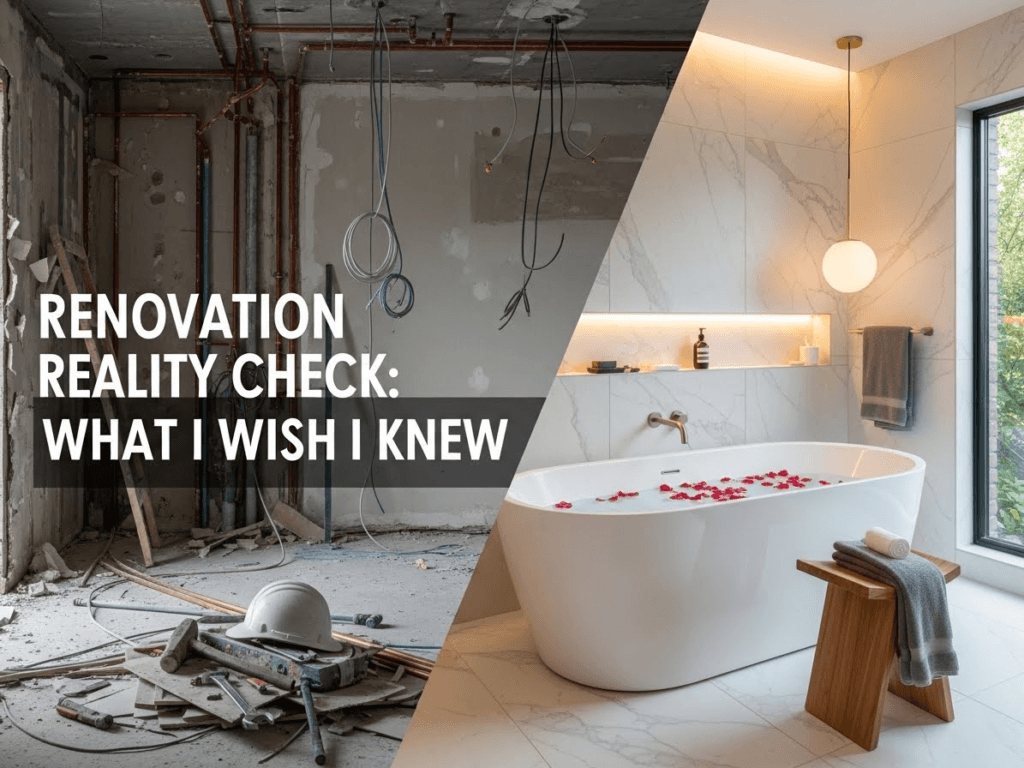
Let’s be real for a second. The fantasy of a bathroom renovation involves swinging a sledgehammer in slow motion, followed by a magical montage where you suddenly have a spa-like oasis with heated floors and fluffy towels.
The reality? It’s eating takeout on the floor of your living room while dust coats your eyelashes, realizing your “standard” plumbing fixtures don’t actually fit your pipes, and crying over grout samples at 2 AM.
I’ve been there. After ten years of flipping houses and styling interiors, I’ve learned that the bathroom is the most expensive room per square foot to renovate—and the easiest to screw up. It’s not just about picking pretty tiles; it’s a game of Tetris involving water, electricity, and very tight spaces.
If you are planning a bathroom remodel, put down the credit card. Read this first. These are the hard lessons I learned so you don’t have to pay for them.
The “Why”: It’s Not Just About Aesthetics
Why is the bathroom so tricky? Because unlike a bedroom where you can just move the dresser if you don’t like the layout, in a bathroom, the layout is cemented in place (literally).
Every inch counts. A vanity that is two inches too deep can block a door. A light fixture placed too high casts shadows under your eyes that make you look like you haven’t slept since 2012. This guide covers the logistics, the look, and the inevitable “oops” moments.
Lesson 1: The “Wet Wall” is Your Wallet’s Best Friend
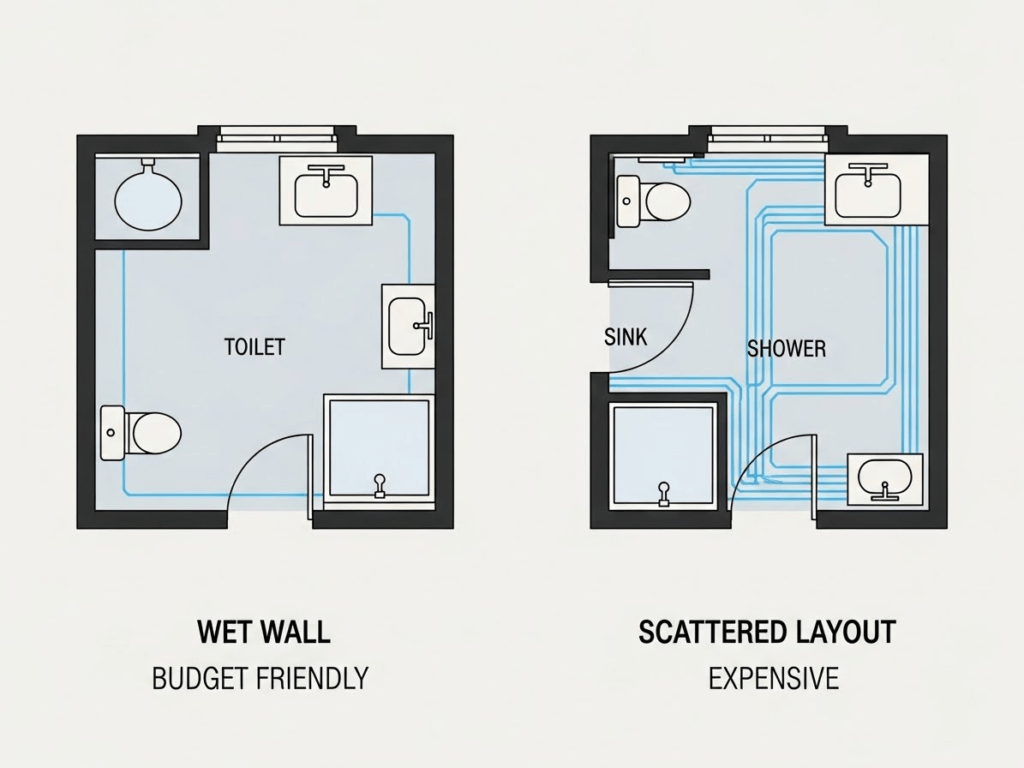
When I sketched my first dream bathroom, I moved the toilet to the opposite wall and the shower to the center of the room. I thought I was a visionary. My plumber thought I was hilarious.
The Reality: Moving plumbing is expensive. Like, really expensive. It involves jackhammering concrete slabs or rerouting major stacks in the walls.
The Fix: Keep the main fixtures (toilet, shower drain, sink) exactly where they are if possible. We call this the “Wet Wall.” You can upgrade the look dramatically without changing the footprint.
- Budget Tip: If you absolutely hate the layout, prioritize moving the sink. It’s usually cheaper to move water supply lines for a vanity than to move a 4-inch waste line for a toilet.
Lesson 2: Lighting is Science, Not Just Decor
I used to think one bright overhead light was enough. “It’s a bathroom,” I thought, “I just need to see.” The result? Downlighting that cast harsh shadows, making shaving dangerous and applying makeup a guessing game.
The Rule: You need Cross-Illumination.
Never rely solely on a ceiling can light. You need light hitting your face from the front, not just the top.
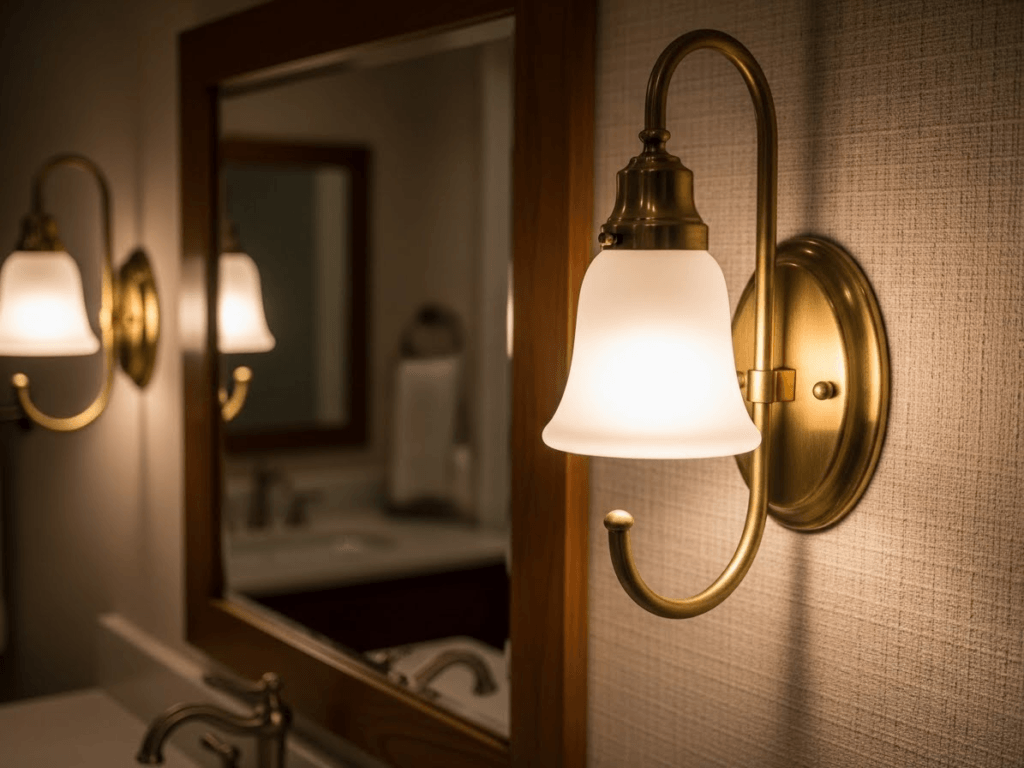
- Sconce Placement: Install sconces on either side of the mirror at eye level (roughly 60-65 inches from the floor).
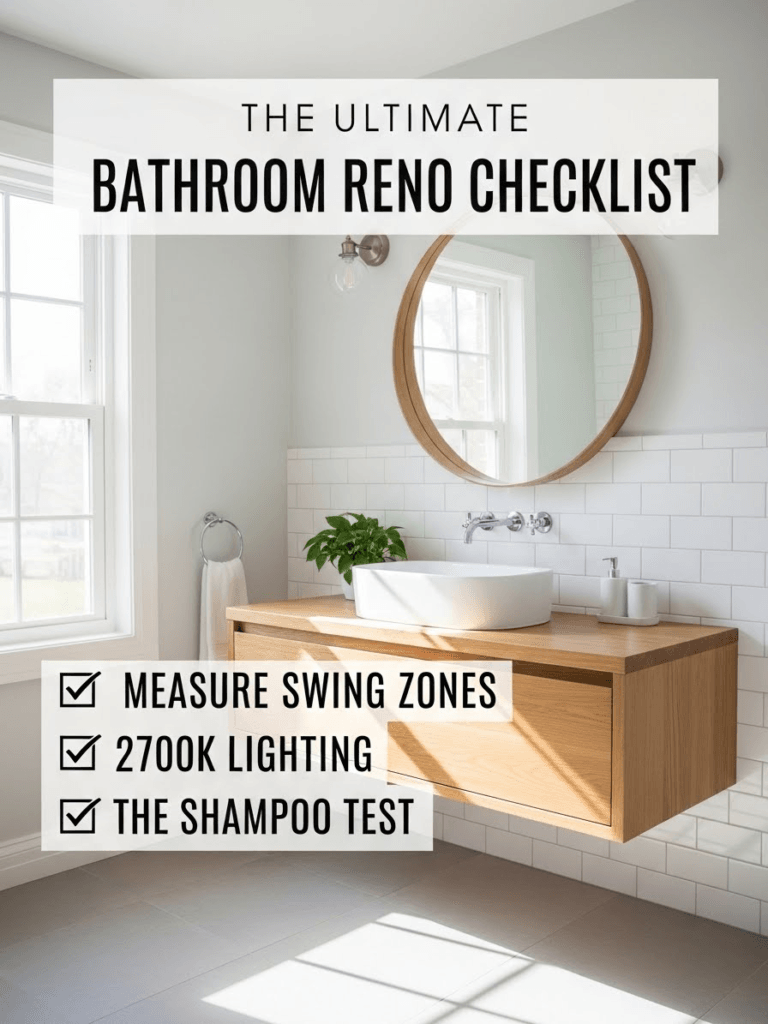
- Color Temperature: This is non-negotiable. Buy bulbs that are 2700K to 3000K. Anything higher (4000K+) looks like a hospital; anything lower looks like a dingy bar.
- Renter Hack: Can’t hardwire sconces? Use “puck lights” stuck inside decorative sconces (the magic light trick) or place tall, thin table lamps on your vanity if space allows.
If you are looking for specific inspiration on fixture styles, check out these luxury bathroom design examples where layering light is key.
Lesson 3: The “Double Sink” Trap
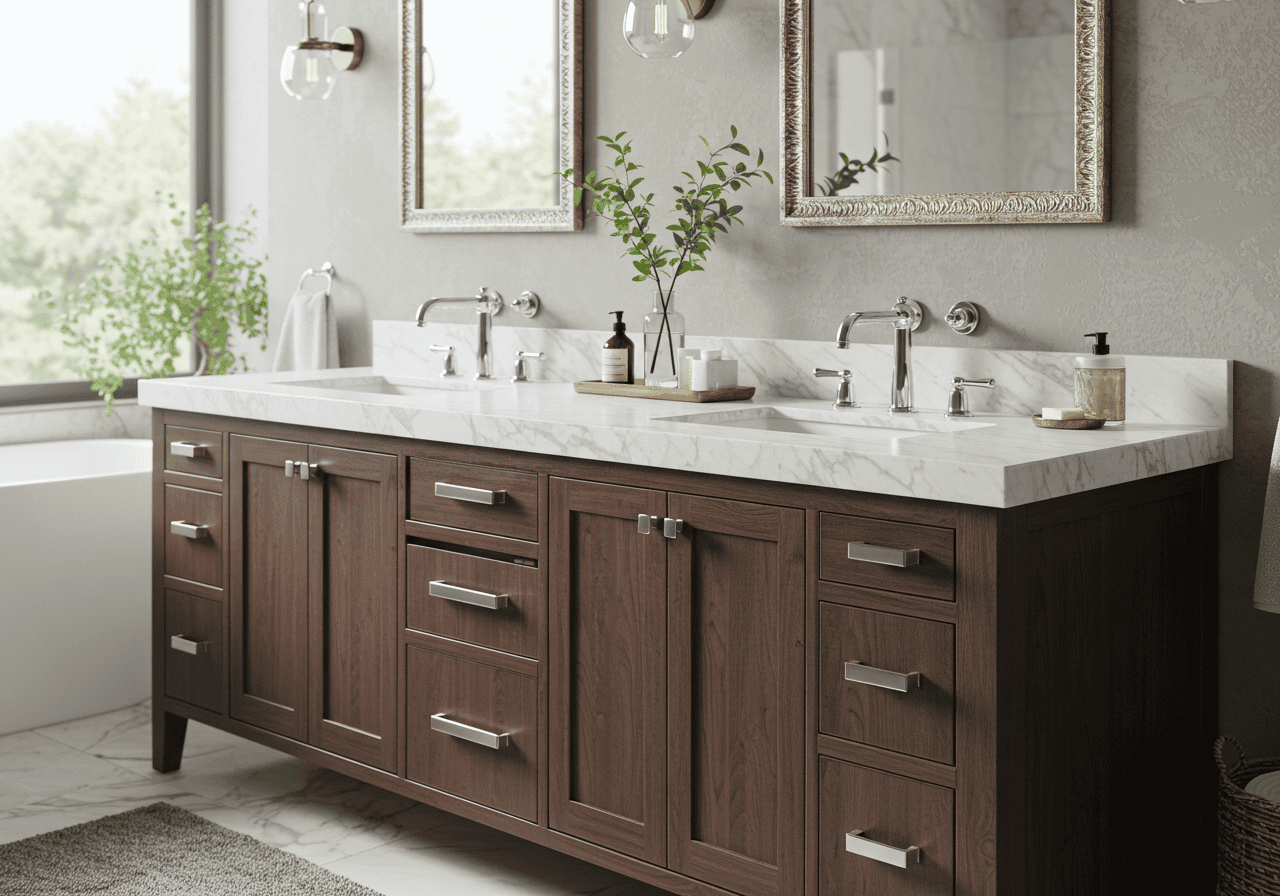
We are conditioned to believe that a double sink bathroom vanity is the pinnacle of a happy marriage. But here is the truth: unless your vanity is at least 60 inches wide (ideally 72 inches), a double sink is a mistake.
Why?
- Counter Space: Two sinks eat up all your counter space. Where do the hair dryer, toothbrush, and skincare products go?
- Storage: You lose drawer space to the second set of plumbing pipes underneath.
The Better Choice: If you have a smaller footprint (48 inches or less), install one gorgeous, large sink. You gain drawer banks on both sides and legitimate counter space. Plus, you save money on the second faucet and plumbing rough-in.
Lesson 4: Tile & Grout—The Relationship You Can’t Break Up With
I once picked a stunning, tiny penny tile for a shower floor because it looked “vintage chic.” Two weeks later, I was scrubbing pink mold out of 4,000 grout lines with a toothbrush.
Actionable Advice:
- The Floor: In wet areas (showers), smaller tiles are actually good for safety because the grout lines provide grip (slip resistance). However, be prepared to seal that grout annually.
- The Walls: Go large. Fewer grout lines mean less scrubbing. Large-format porcelain slabs are trending for a reason.
- The Color: White grout on a floor is a death wish. Even if you are obsessed with the clean look, use a “warm gray” or “silver” grout. It hides dirt and still looks crisp.
If you are stuck on which style to choose, browsing through bathroom tile design ideas can help you visualize how grout color changes the whole vibe.

Lesson 5: Measure Your “Swing” Zones
This is the most common amateur mistake I see. You buy a beautiful glass shower door or a vintage entry door, install everything, and… clunk. The door hits the toilet. Or the vanity drawer hits the door casing.
The Clearance Rules:
- Toilet clearance: You need at least 15 inches from the center of the toilet to any side obstruction (wall or vanity). 18 inches is better.
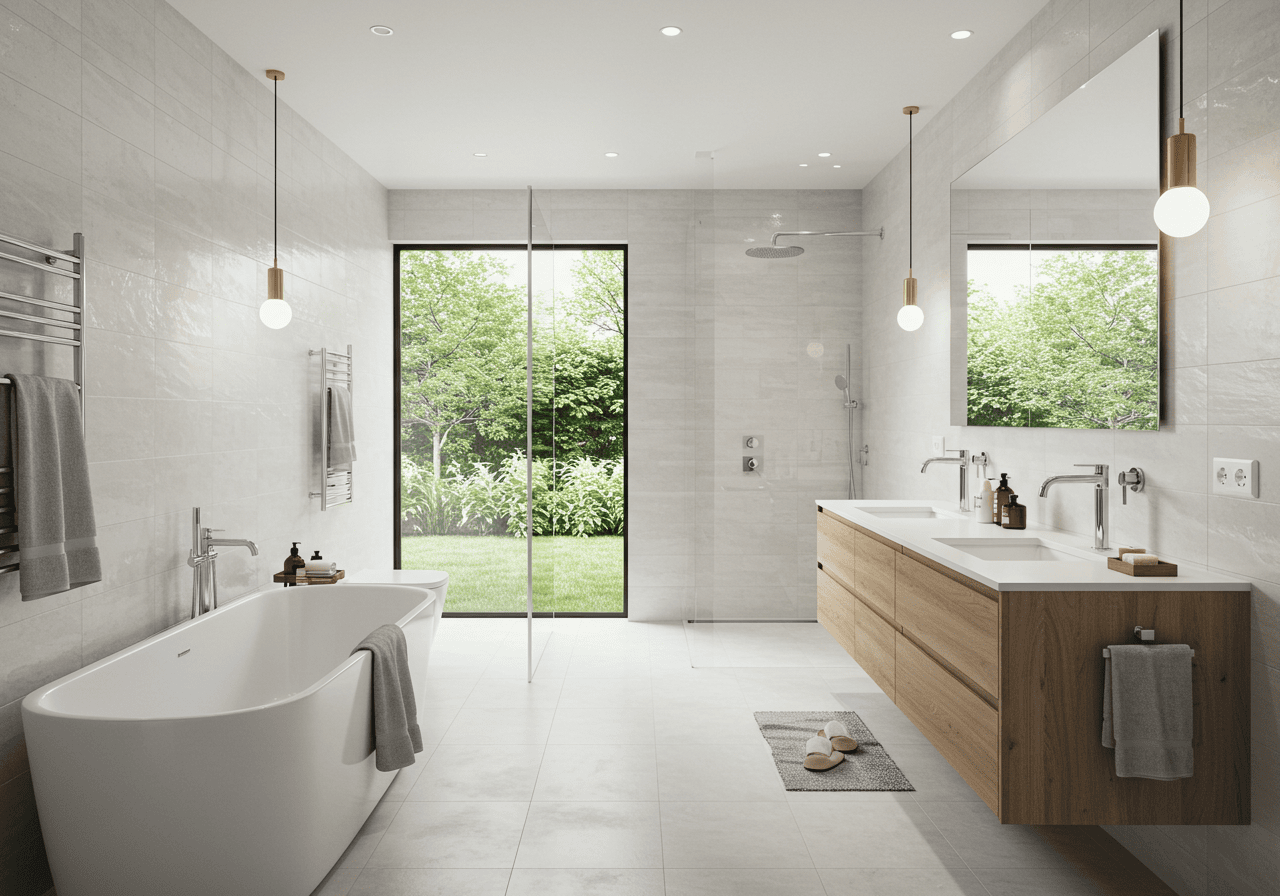
- Shower doors: If you have a small space, skip the swing door. Go for a sliding mechanism or a fixed glass panel (walk-in style).
- Vanity drawers: Open every single drawer on your potential vanity and measure how far they come out. Ensure they don’t hit the door trim or the radiator.
If you are working with tight square footage, these small bathroom walk-in shower ideas utilize fixed panels to save precious swing space.
Lesson 6: Don’t Date Your Bathroom to a Specific Tuesday in 2024
We all love Pinterest trends, but tiling your entire room in a very specific, trendy pattern is a risk. Remember when everyone put mustache decals on everything? Exactly.
The Fix: Mix your eras.
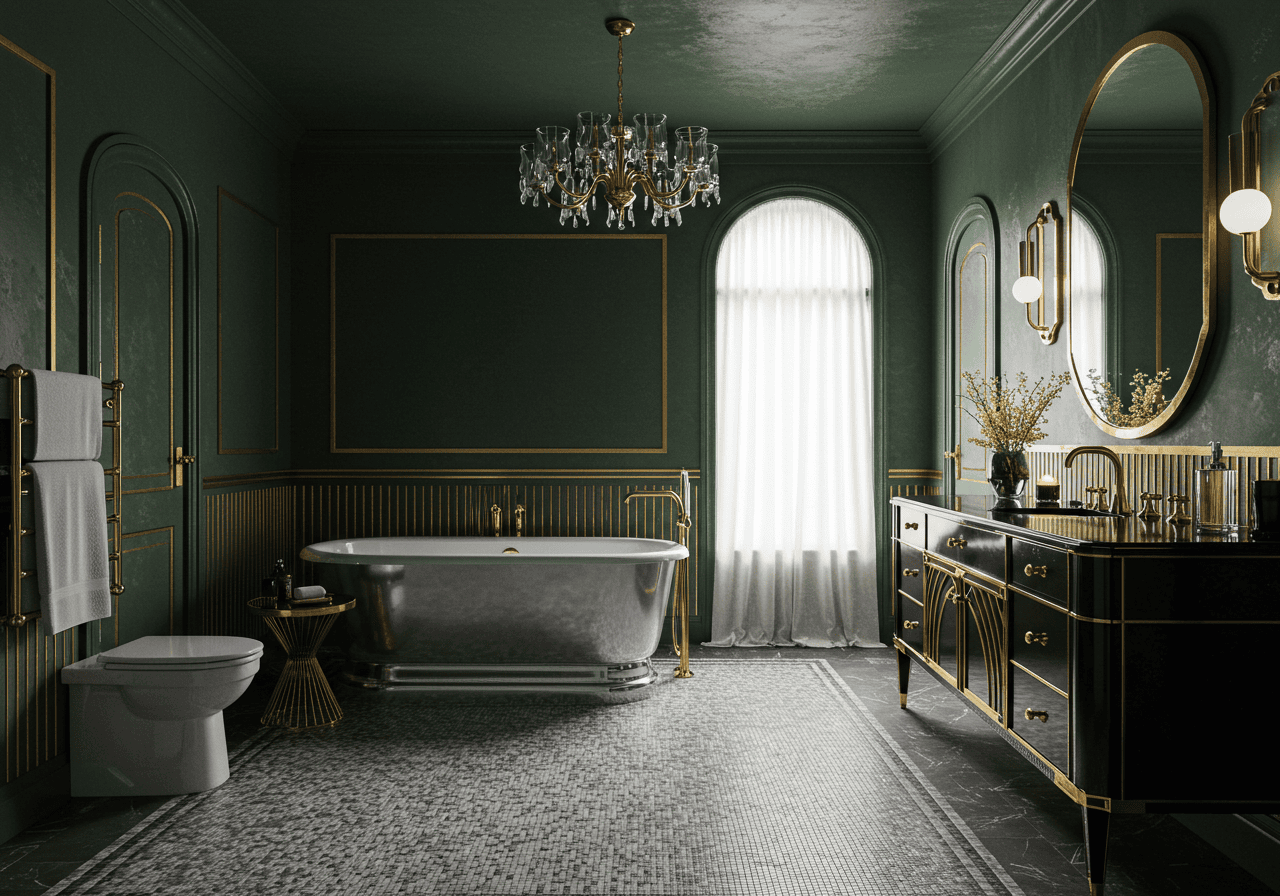
The best bathrooms feel collected, not cataloged. If you love the clean lines of a mid-century modern bathroom, pair a walnut vanity with classic white subway tile. If you are drawn to the drama of an art-deco bathroom, use geometric wallpaper (which is easy to change) rather than committing to permanent geometric floor tiles.
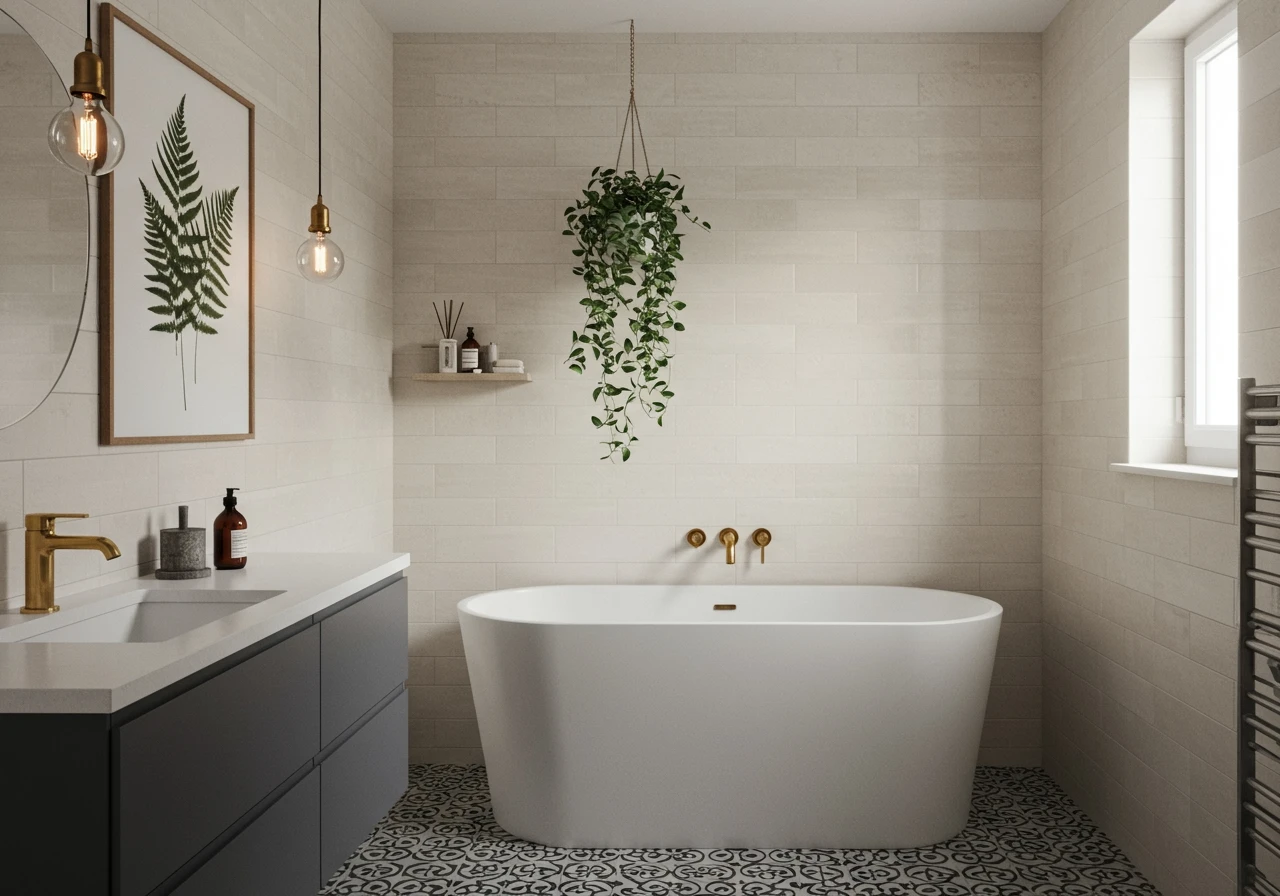
For those who love character, a vintage bathroom style is timeless. Think pedestal sinks and brass faucets—elements that have looked good for 100 years and will look good for 100 more.
Lesson 7: Paint is Cheaper Than Tile (and Easier to Change)
I see people blowing their budget tiling walls that don’t even get wet. Unless you have unlimited funds, save the tile for the shower and floor. Use paint to make the statement.
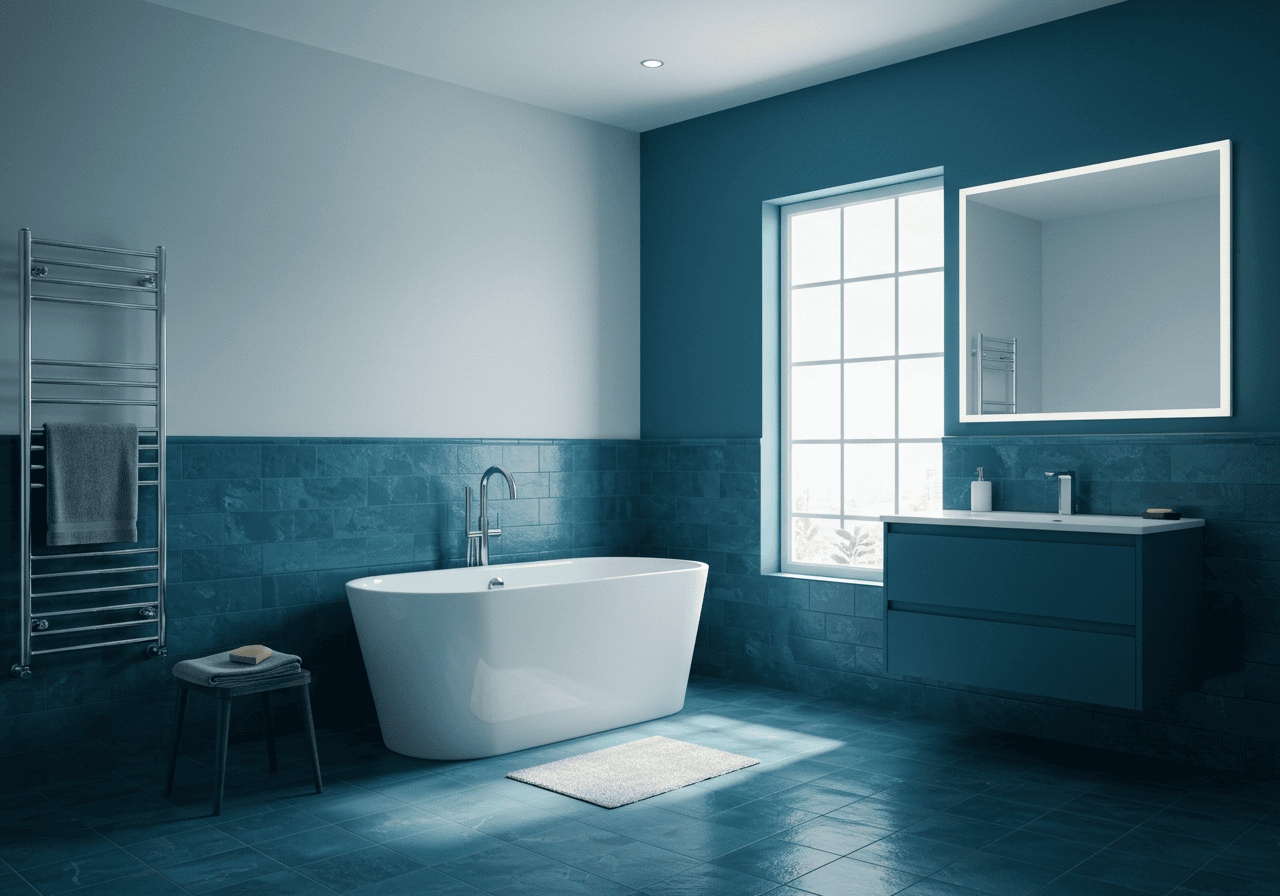
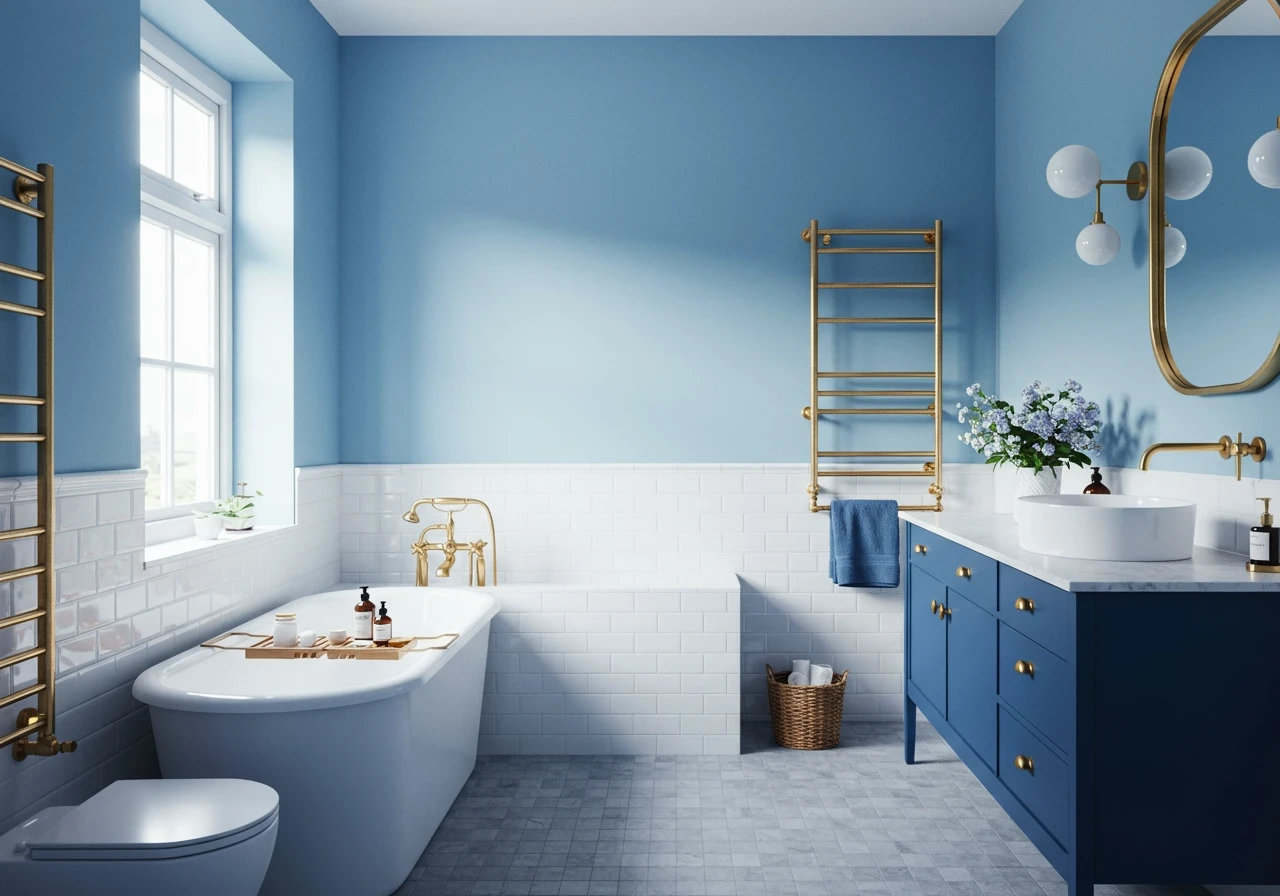
This is where you can get bold. A green bathroom feels organic and spa-like, connecting you to nature even in a windowless city apartment. If you want serenity, look into blue bathroom decor ideas—naval tones pair beautifully with gold hardware.
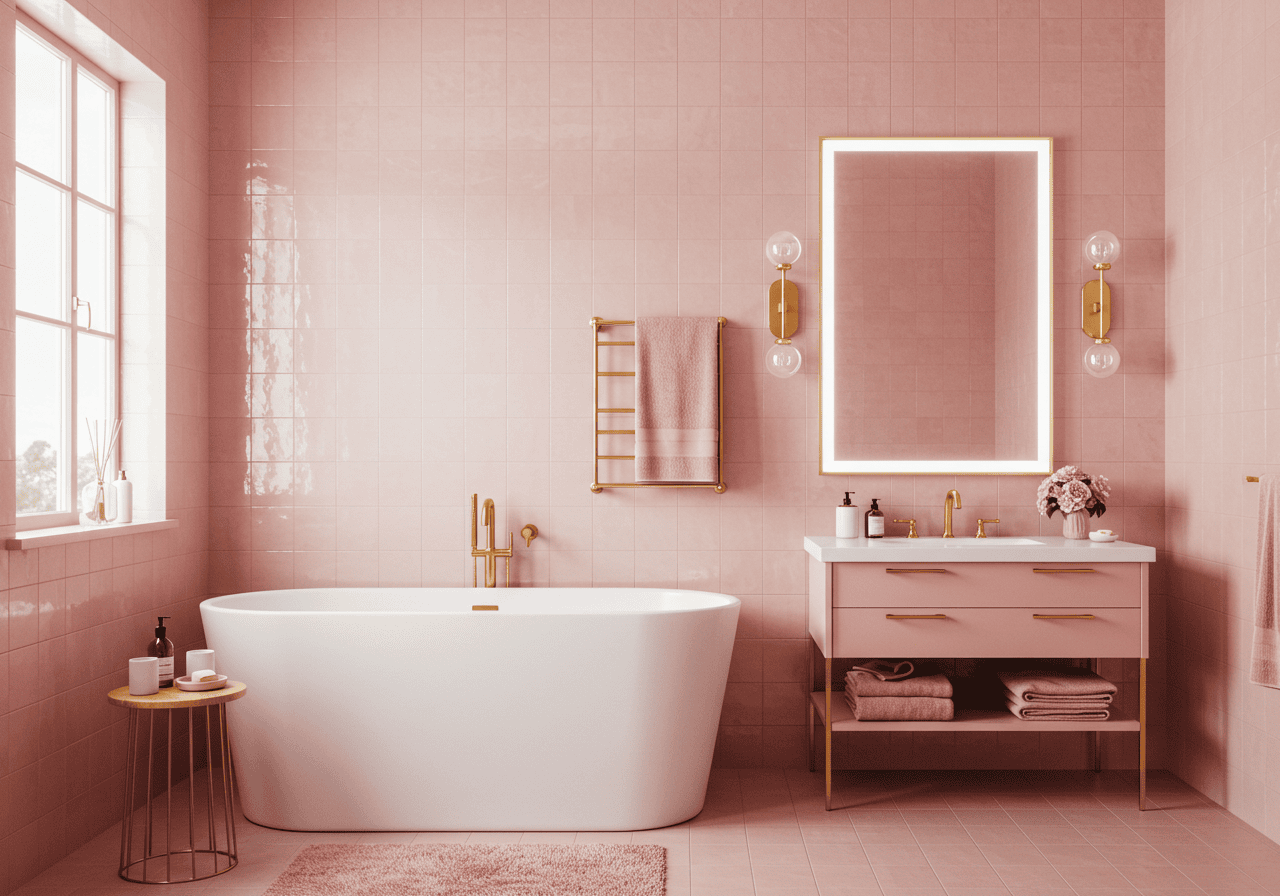
And yes, even a pink bathroom decor scheme can look sophisticated. Forget “Pepto-Bismol” pink; think “dusty rose” or “terracotta” with matte black fixtures.

Expert Tips: The “Secret Sauce” Details
These are the things your contractor might forget to mention, but you will definitely notice once you start living in the space.
1. The Shampoo Bottle Test
This is my number one pet peeve. Contractors often build shower niches at standard heights with standard shelving.
The Fix: Before they frame the wall, buy your tallest bottle of shampoo (usually the Costco size or a pump bottle). Measure it. Add 2 inches. That is the height of your niche shelf.
2. The Fan “CFM” Rule
Mold is the enemy. Most bathroom fans are too weak.
The Rule: Look at the fan’s CFM (Cubic Feet per Minute) rating. You need 1 CFM per square foot of room area. If your bathroom is 80 sq ft, you need an 80 CFM fan.
- Pro Tip: Put the fan on a timer switch. That way, you can leave it running for 20 minutes after your shower to suck out the moisture without having to remember to turn it off.
3. Add Personality (It’s Not a Lab)
Bathrooms often feel sterile. Warm them up!
Even if you aren’t doing a full gut job, adding farmhouse bathroom decor elements like a rustic wooden stool or a woven basket can soften all those hard ceramic surfaces.
Don’t be afraid to try fun bathroom ideas in a powder room. Since you don’t have to worry about shower steam, this is the place to hang quirky art or use busy wallpaper. Browsing through bathroom pictures can give you the confidence to try something weird.
Comparison: The Great Tub vs. Shower Debate
If you only have space for one, which do you choose?
| Feature | Large Walk-In Shower | Bathtub / Shower Combo |
| Resale Value | High (Preferred by adults/seniors) | Essential for families with small kids |
| Space Usage | Makes the room feel huge and open | Can feel bulky in small rooms |
| Maintenance | More glass to clean (squeegee life) | Shower curtains get gross/moldy |
Final Verdict: If this is your only bathroom, keep the tub (for resale). If you have a second bathroom with a tub, turn the master into a luxury walk-in shower.
FAQ: You Asked, I Answered
1. How much does a bathroom renovation actually cost?
In 2024, a “lipstick” remodel (paint, vanity, fixtures) can cost $3k–$8k. A full gut renovation averages $15k–$25k depending on materials and labor costs in your city.
2. Can I use wood flooring in a bathroom?
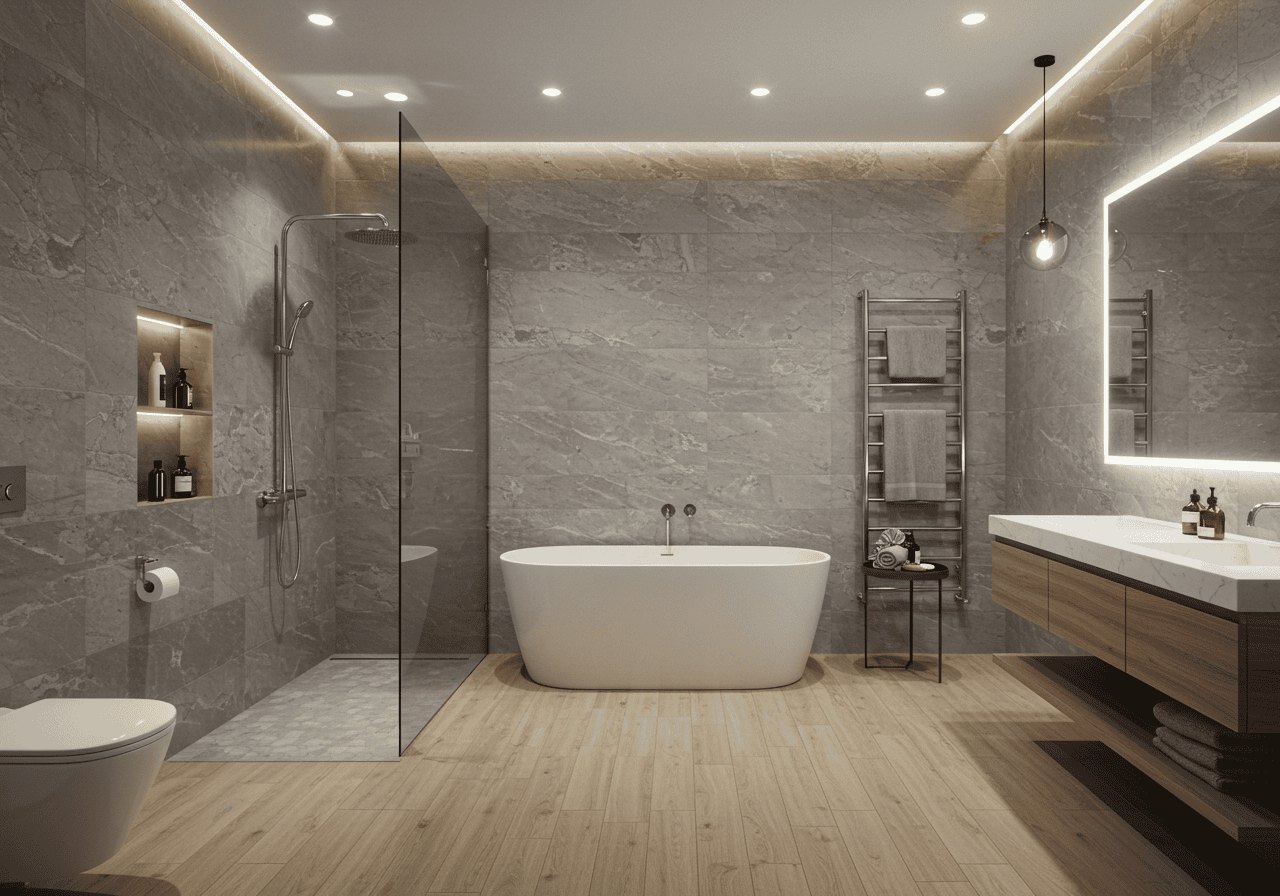
Technically yes, but I don’t recommend it. Water always wins. Even sealed wood will warp if a pipe bursts or the toilet overflows. Go for “wood-look” porcelain tile or luxury vinyl plank (LVP) instead.
3. What is the best height for a vanity?
Standard “comfort height” is now 36 inches (kitchen counter height). Older vanities were 30-32 inches, which feels incredibly low for modern adults.
4. Should I tile the ceiling in the shower?
Yes. If you have a steam shower or low ceilings, tiling the ceiling prevents paint from peeling due to rising moisture. It also makes the shower feel like a high-end cocoon.
5. How do I make a small bathroom look bigger?
Use a floating vanity to show more floor area, use a large mirror to bounce light, and run the floor tiles straight into the shower (curbless) to avoid visual breaks.
Final Thoughts
Renovating a bathroom is messy, loud, and stressful. But the first time you step into that shower with the niche at the perfect height, the lighting making you look like a movie star, and the layout actually making sense? It’s pure bliss.
Take your time planning. Measure twice (seriously, measure the toilet swing). And when in doubt, keep the plumbing where it is and spend that money on amazing tile.
Are you planning a reno? Save this pin for later so you don’t forget the CFM rule!