
Let’s be real for a second: We have all been victimized by the Target “Dollar Spot.”
You walk in for paper towels, and suddenly you’re walking out with three ceramic pumpkins, a garland made of felt hearts, and a sign that says “Fresh Squeezed Lemonade.” It’s cute in the store, but once you get home? It’s just… stuff. And worse, it’s stuff that takes up precious counter space where your toaster needs to live.
I used to have four massive plastic bins labeled by season in my garage. Swapping decor meant an entire weekend of packing and unpacking. I hated it.
So, I stopped.
Over my last decade styling homes, I’ve adopted a “Capsule Decor” mentality for kitchens. The goal isn’t to overhaul the room four times a year; it’s to swap specific high-impact, low-storage elements that change the vibe without eating up your prep space.
If you love a festive kitchen but hate the clutter (and the dusting), this guide is for you.
The “Why”: Functionality First
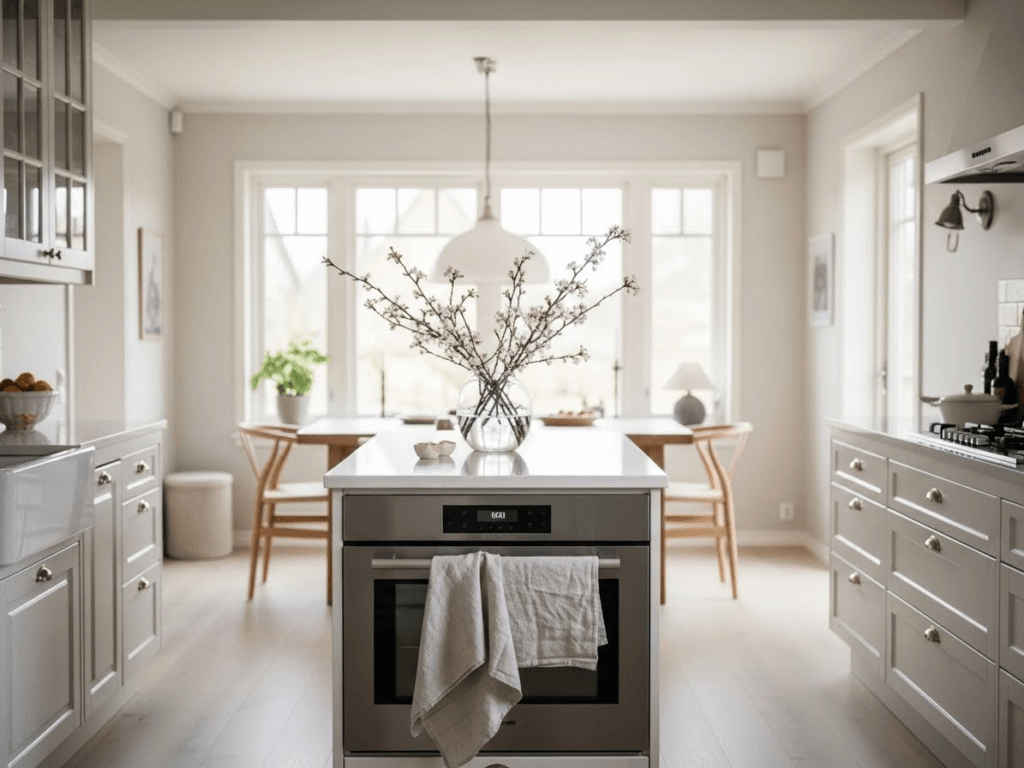
The kitchen is a workspace. Unlike a living room mantel, your kitchen island needs to be ready for dough rolling, homework, and wine spills.
If you have to move a vignette of decorative gourds every time you want to chop an onion, the design has failed. The strategy we are using today focuses on consumables and textiles. These are things that fold flat or get washed down the drain, meaning you don’t need a storage unit to keep your kitchen looking current.
What You’ll Need: The “Capsule” Elements
Instead of buying new tchotchkes, invest in high-quality “vessels” and interchangeable accents.
- The Anchors (You buy these once):
- One statement vase (clear or white ceramic works best).
- A high-quality wooden riser or pedestal.
- A neutral fruit bowl (stone, wood, or wire).
- Glass soap dispensers (refillable).
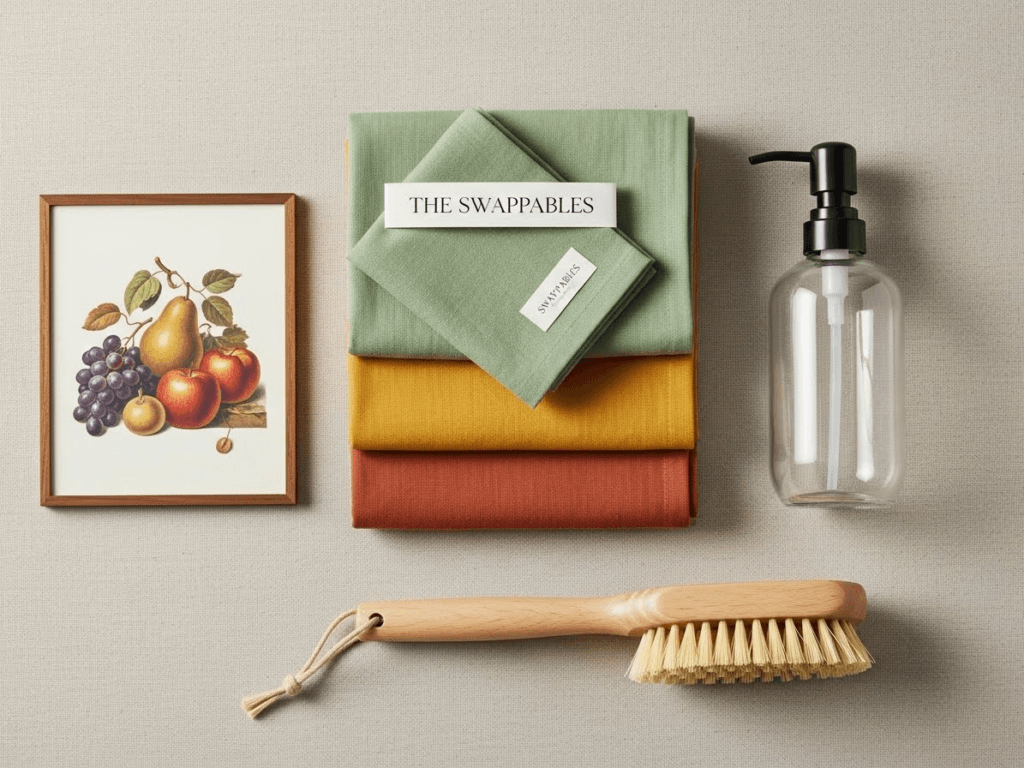
- The Swappables (These change seasonally):
- Textiles: Tea towels and a runner rug.
- Scents: Dish soap and a single candle.
- Botanicals: Fresh or high-quality faux stems.
- Art: A digital print for a single frame or a lean-to cutting board.
Step-by-Step: The Seasonal Swap Routine
Step 1: Establish Your Base Palette
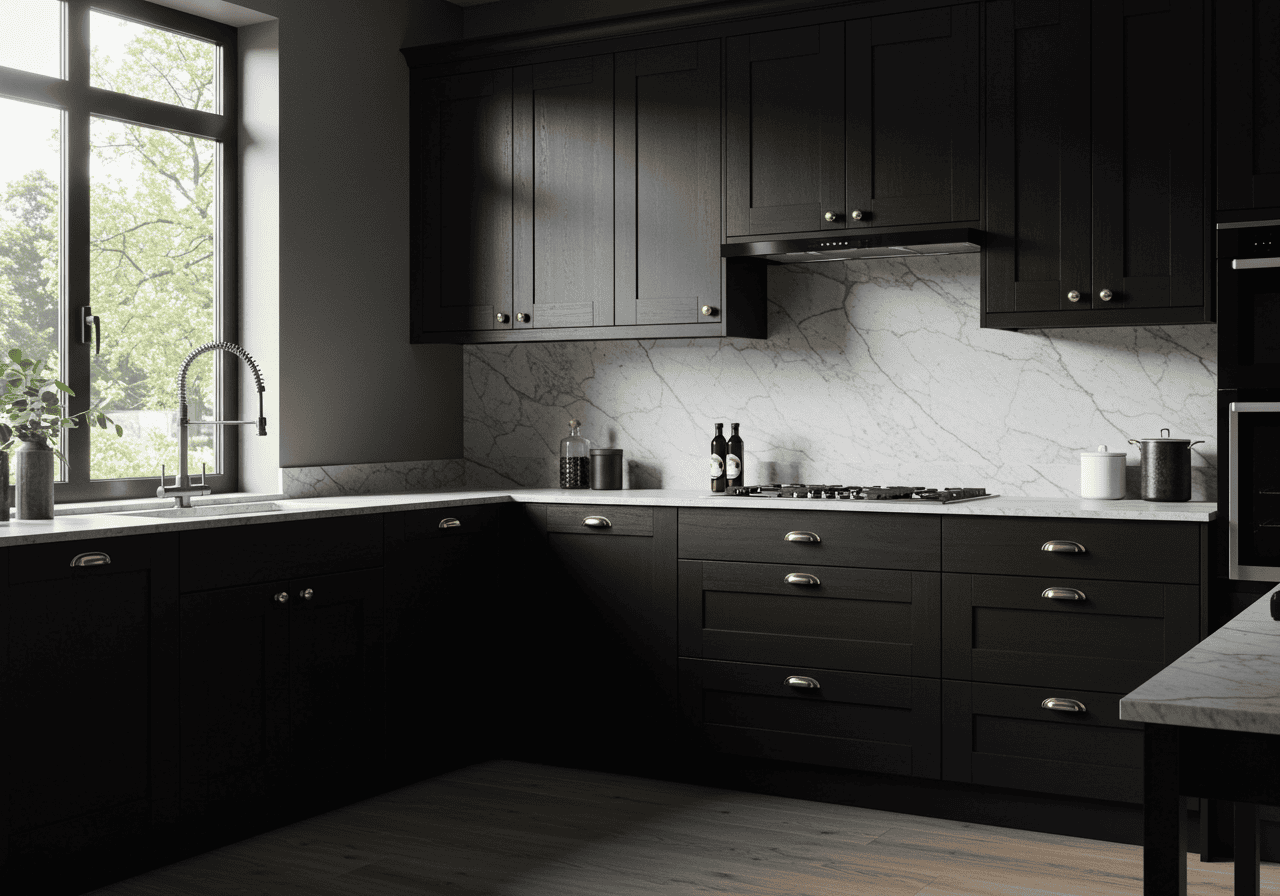
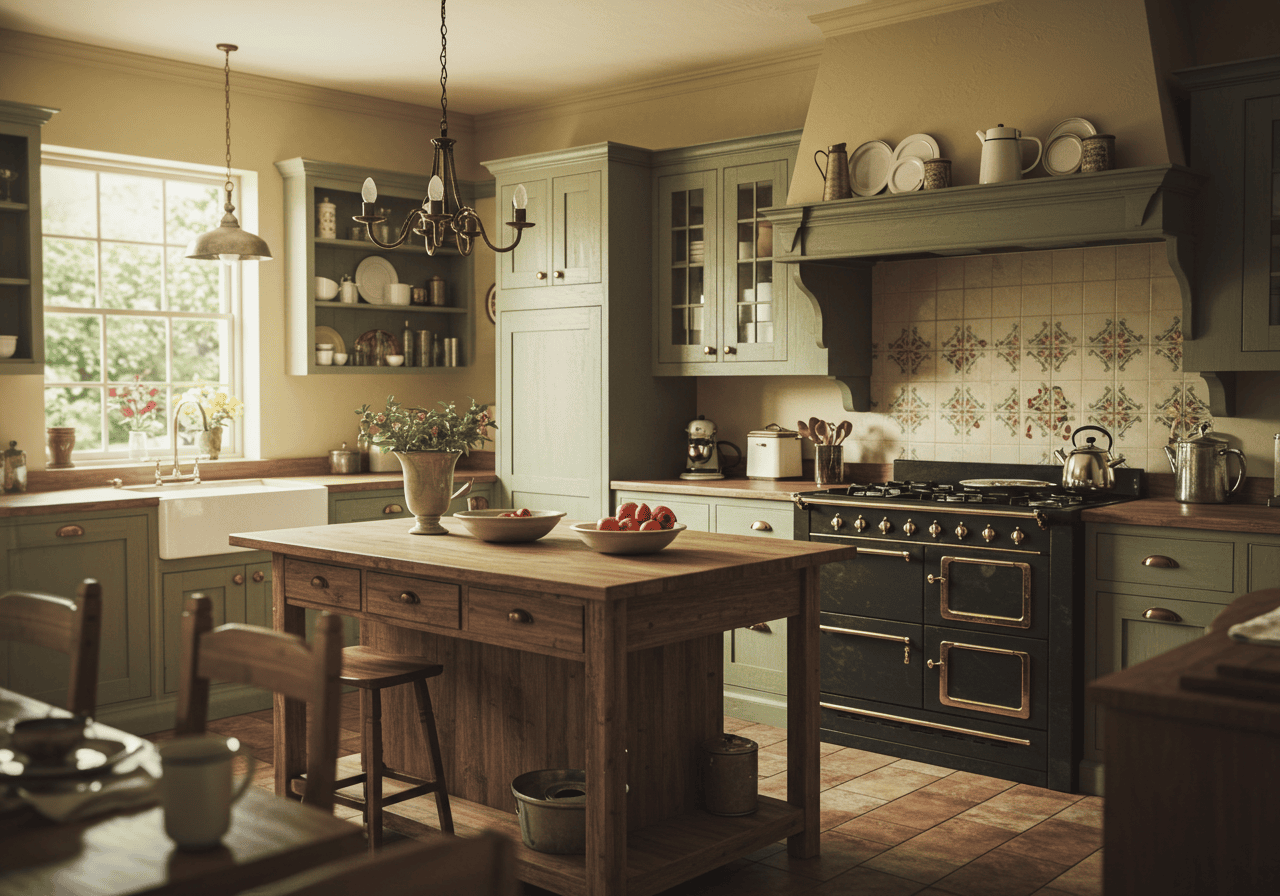
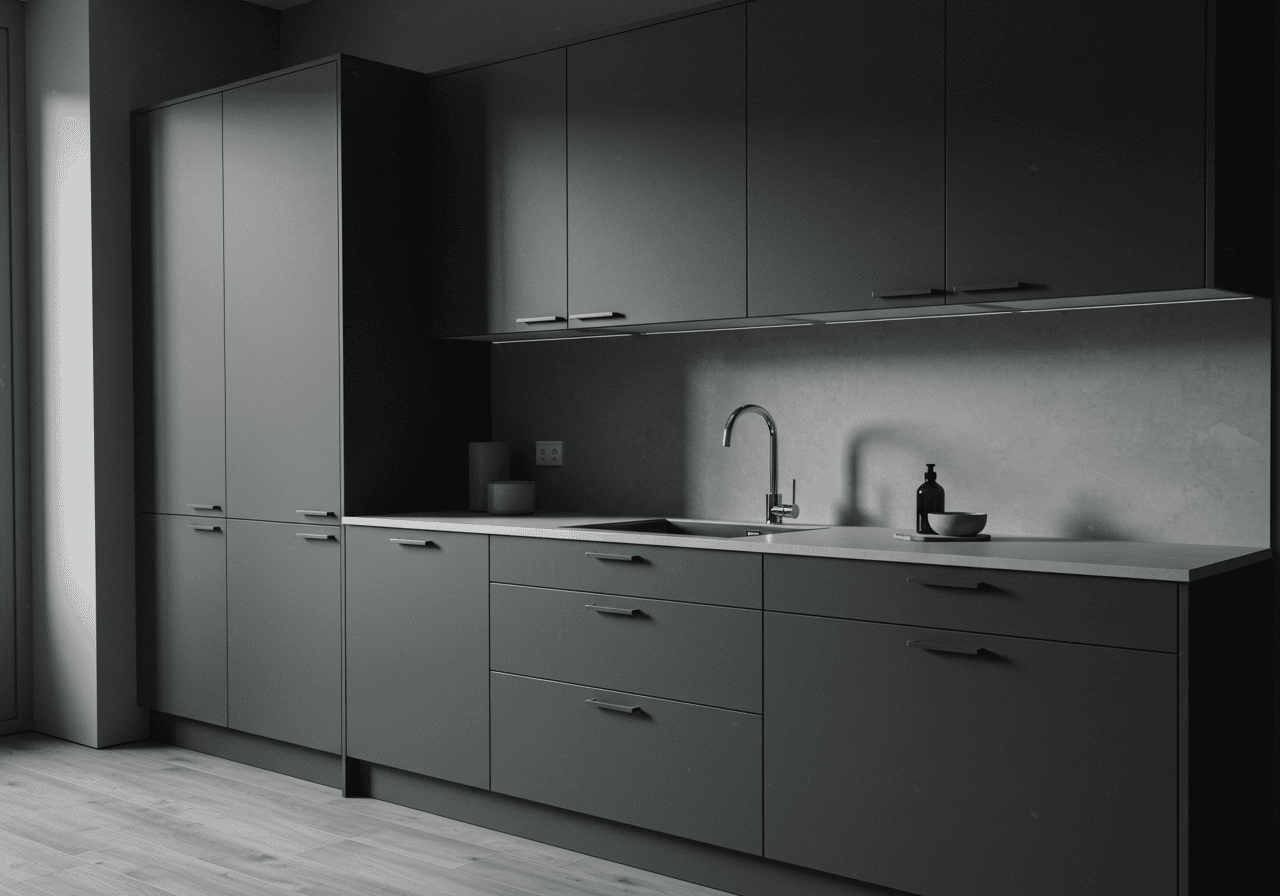
Your permanent fixtures dictate how wild you can get with seasonal color. If you have black kitchen cabinets, you already have a moody, dramatic backdrop that makes autumn oranges and winter whites pop.
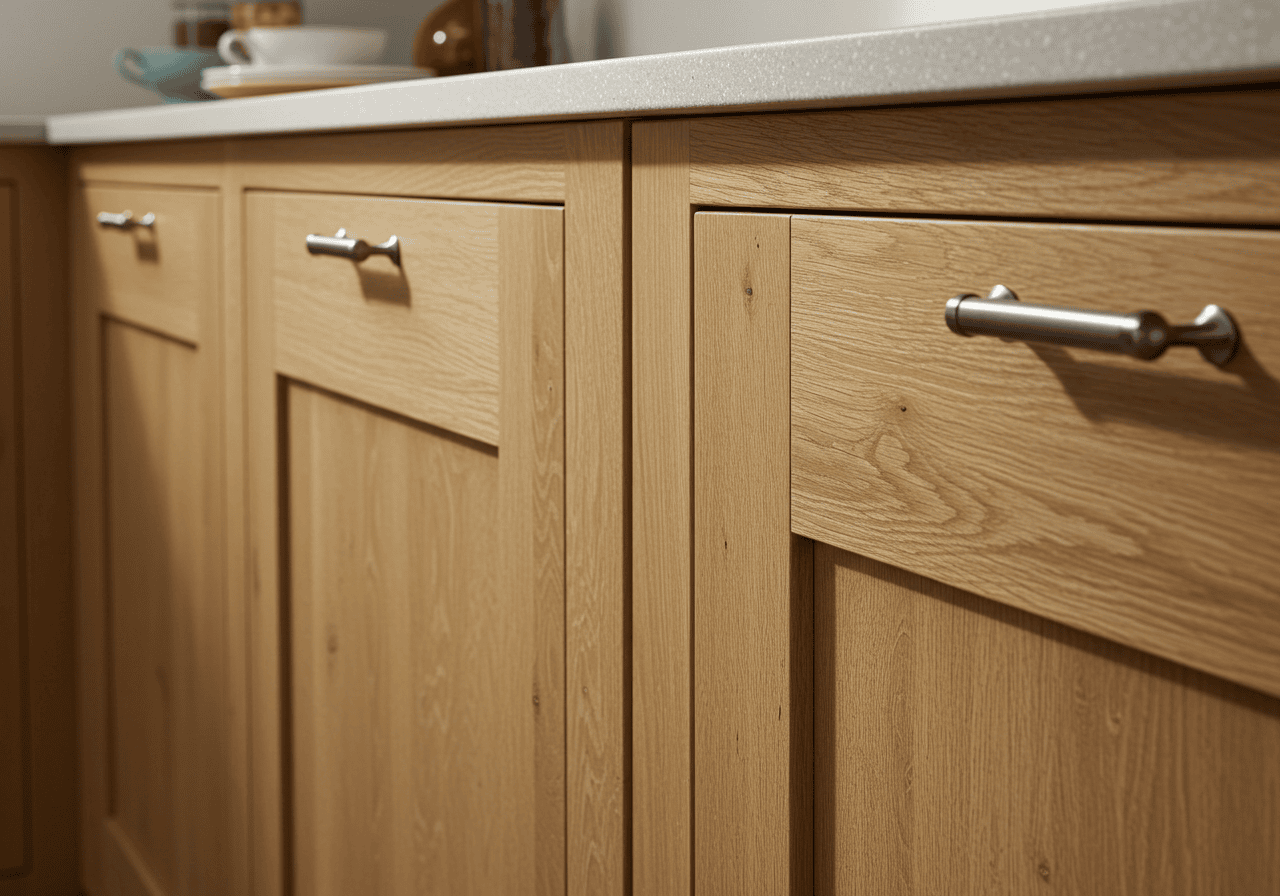
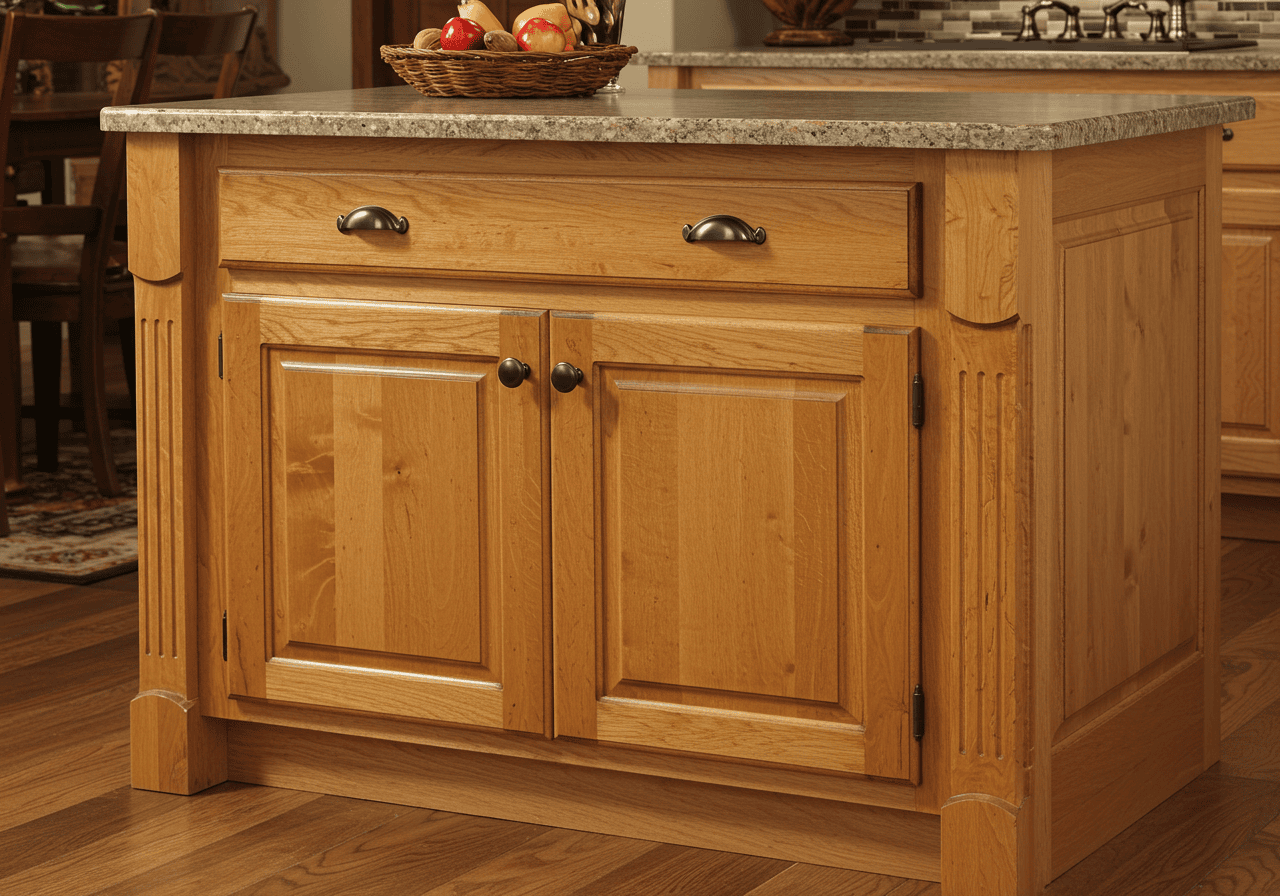
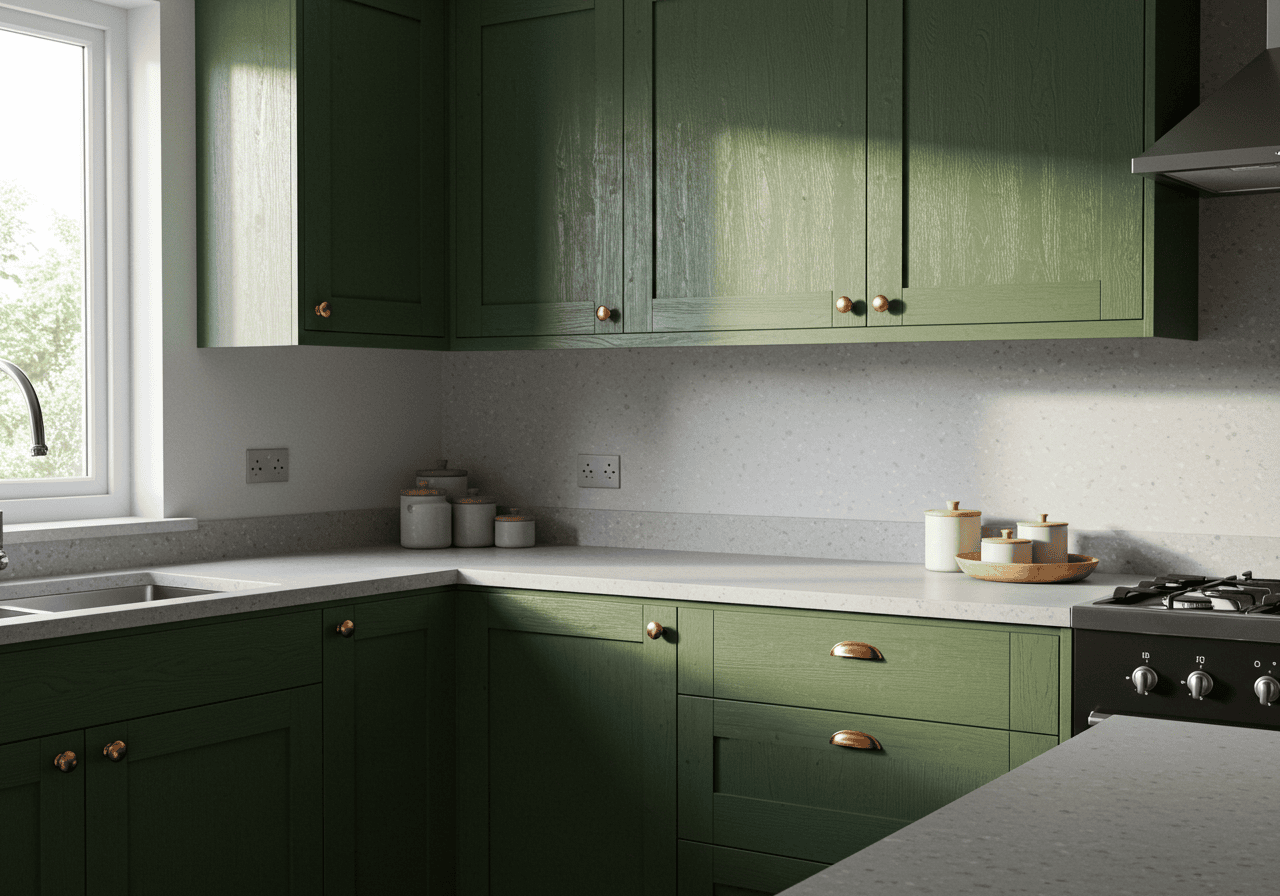
If you are working with trendy dark green kitchen cabinets or classic oak kitchen cabinets, your base is warmer. Keep your permanent items neutral so they don’t fight with the seasonal swaps.
Step 2: The Textile Swap (The “Fold Flat” Rule)
This is the easiest way to change color without clutter.
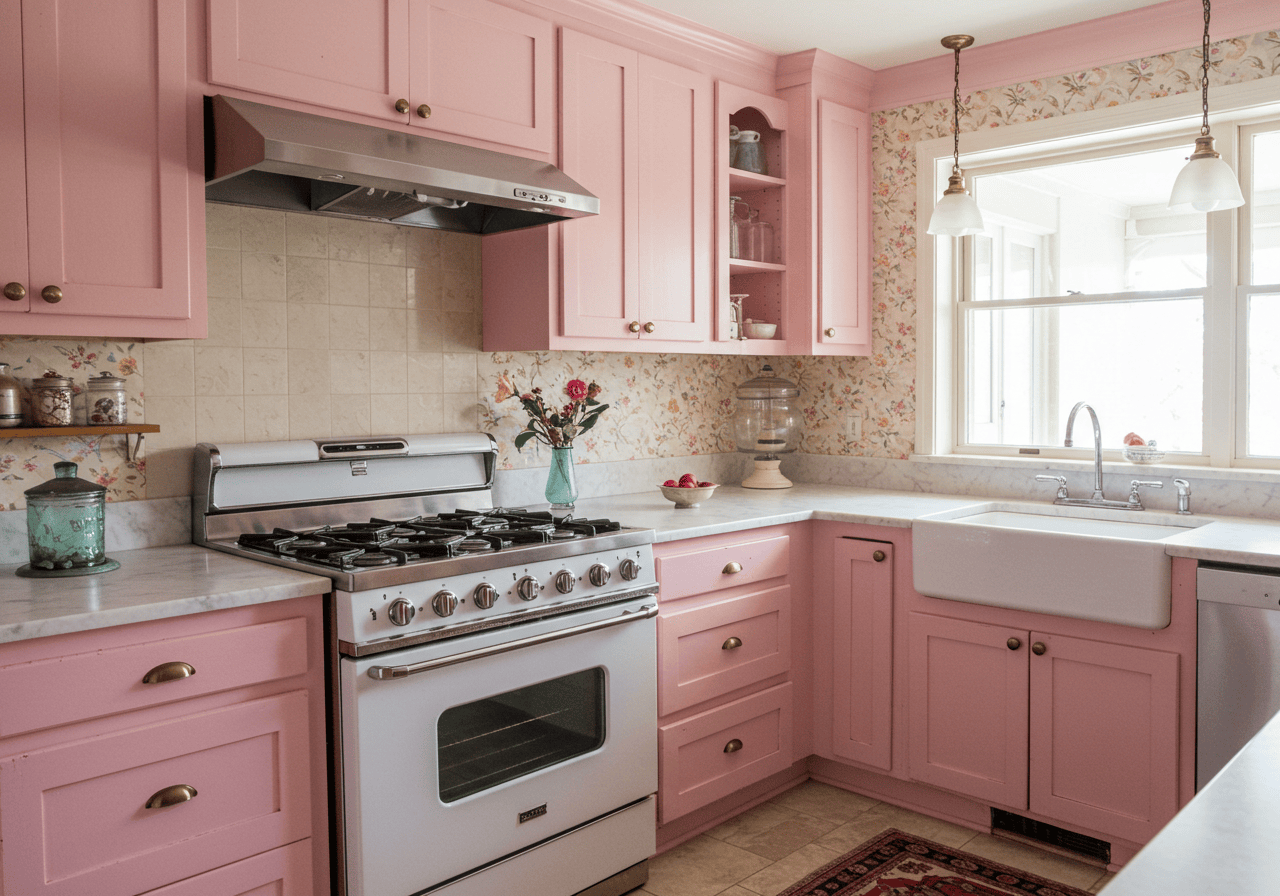
- Spring: Swap heavy textures for linen or cotton in pastel blues or sage. If you have pink kitchen accents, this is their time to shine.
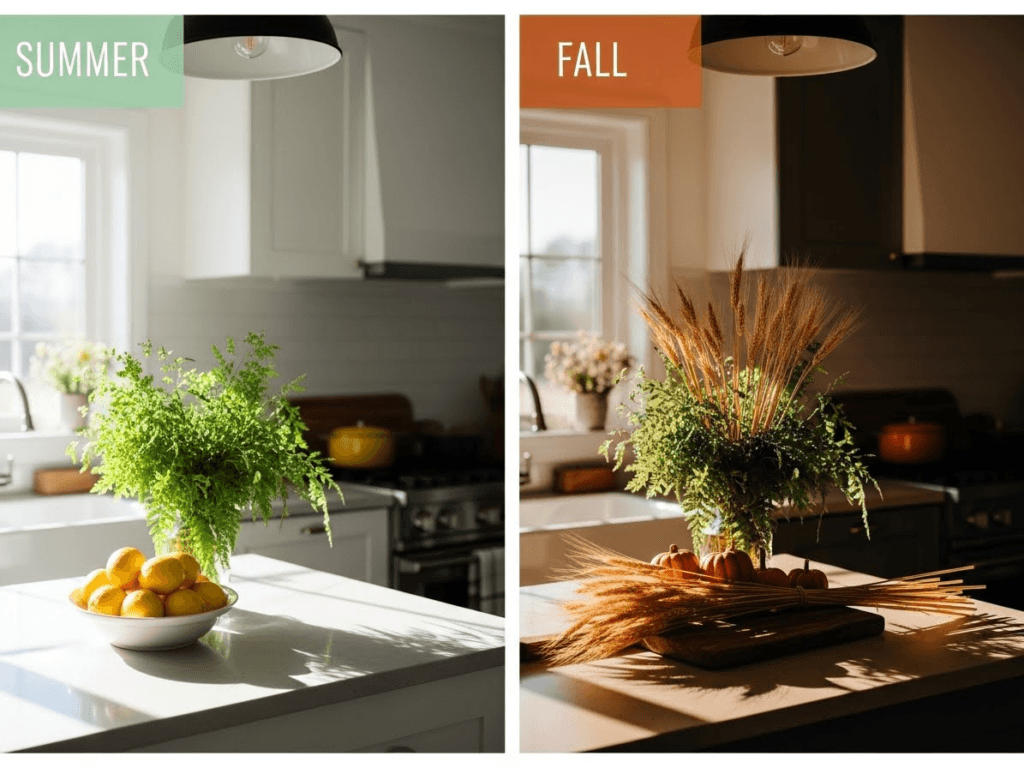
- Summer: Go for bright whites, nautical stripes, or vibrant citrus tones.
- Fall: Bring in the waffle weaves. Burnt orange, mustard, or deep charcoal towels immediately signal “cozy.”
- Winter: Tartan plaids or heavy creams.
Storage win: All of these off-season towels fit in a single shoebox.
Step 3: Functional Consumables
Stop buying decor that just sits there. Buy decor you can use.
- Soap: I switch my dish soap scent every season. Lemon verbena for summer, pine or clove for winter. The amber glass bottles look high-end and reduce visual noise compared to branded plastic bottles.
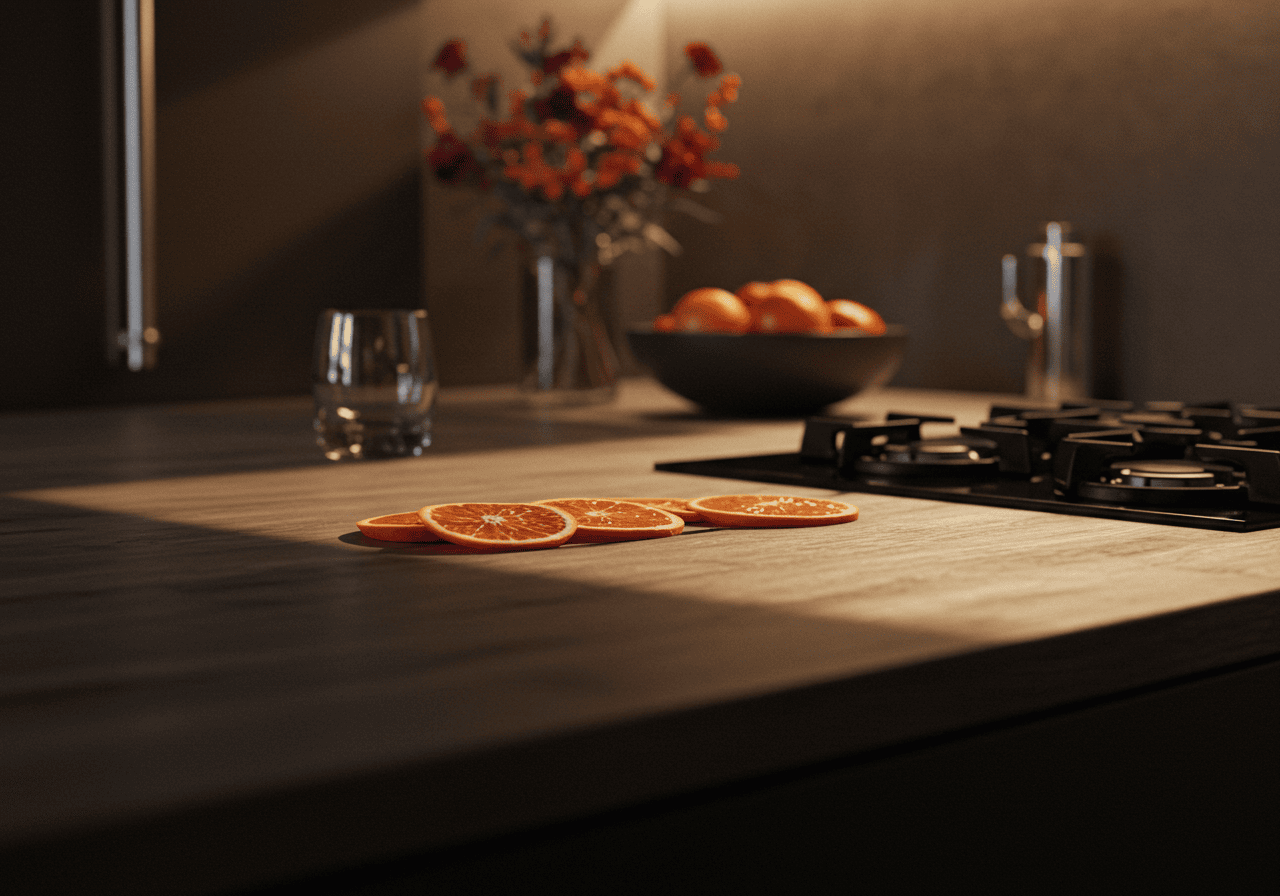
- Food as Decor: A bowl of green apples looks like spring. A bowl of lemons looks like summer. A bowl of pomegranates or artichokes looks like winter. When the season is over? You eat them. Zero storage required.
Step 4: The Lighting Shift
Lighting changes the mood more than pumpkins do.
- Summer: Keep window treatments minimal to let natural light flood in.
- Winter: This is when you rely on layers. If you haven’t audited your kitchen lighting ideas lately, consider adding a small rechargeable table lamp to your countertop. It adds a “hygge” factor that feels incredibly seasonal without being kitschy.
Step 5: The “One Frame” Trick
Designate one spot—usually leaning against the backsplash or on a floating shelf—for art.
Buy one frame. Just one. Then, buy digital downloads from Etsy for $4 each.
- Spring: Vintage botanical print.
- Fall: An oil painting print of a moody landscape.
- Winter: A simple line drawing or a snowy scene.
You just swap the paper inside the frame. The old prints store flat behind the new one.
The Seasonal Cheat Sheet
| Season | The Botanical (Vase) | The Scent (Soap/Candle) | The Textile Color |
| Spring | Cherry Blossoms or Tulips | Basil, Mint, or Lilac | Sage, Blush, Pale Blue |
| Summer | Ferns or Palm Leaves | Lemon, Grapefruit, Sea Salt | Bright White, Navy, Yellow |
| Fall | Dried Wheat or Eucalyptus | Amber, Pumpkin, Clove | Rust, Mustard, Olive |
| Winter | Pine branches or Bare Twigs | Pine, Cinnamon, Vanilla | Cream, Charcoal, Red |
Common Mistakes That Create Clutter
1. Decorating the “Work Triangle”
Never put decor between your sink, stove, and fridge. That is prime real estate. If you have to move a vase to drain pasta, the vase is in the wrong spot. Keep decor to the perimeter or the center of a large island.
2. Ignoring Your Kitchen’s Era
If you have a sleek, handle-less space filled with modern kitchen ideas, a distressed wooden sign that says “Farmhouse” is going to look disjointed. Stick to geometric shapes and glass for modern spaces. Conversely, if you have a rustic kitchen with open shelving, lean into textures like stoneware and wood rather than shiny chrome.
3. The “Theme” Overkill
You don’t need a Santa mug, a Santa rug, and a Santa towel. Pick one literal item (if you must) and support it with color. If you have a Santa mug, pair it with a plain red towel and white flowers. It feels sophisticated, not manic.
Expert Tips: The Secret Sauce
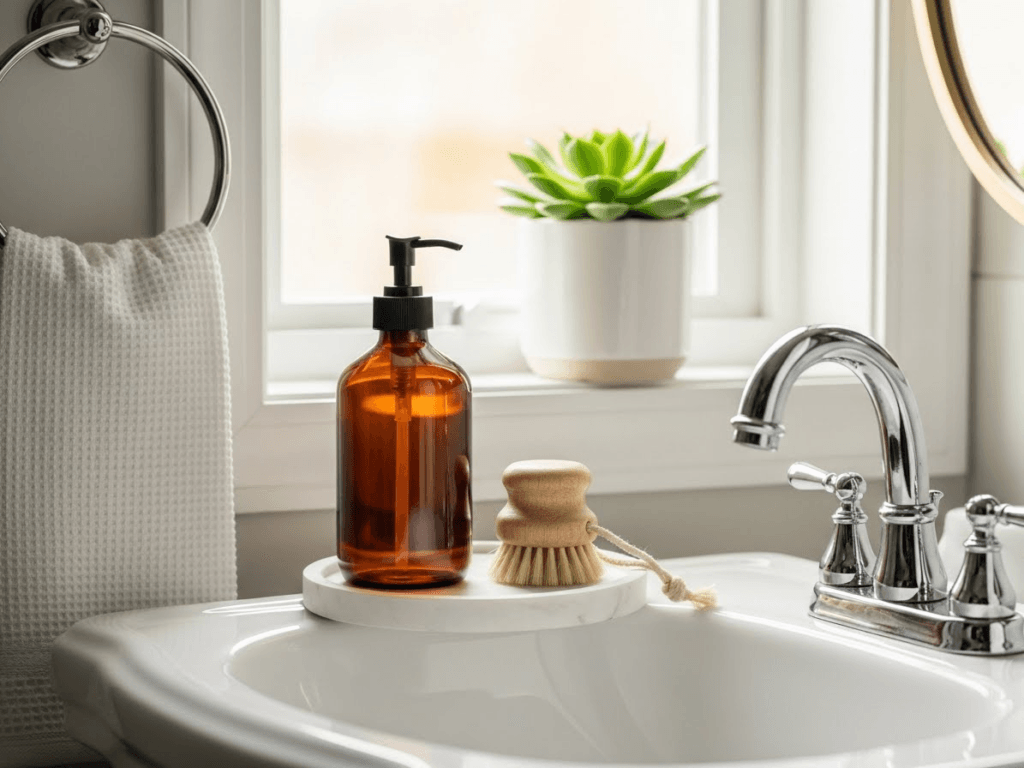
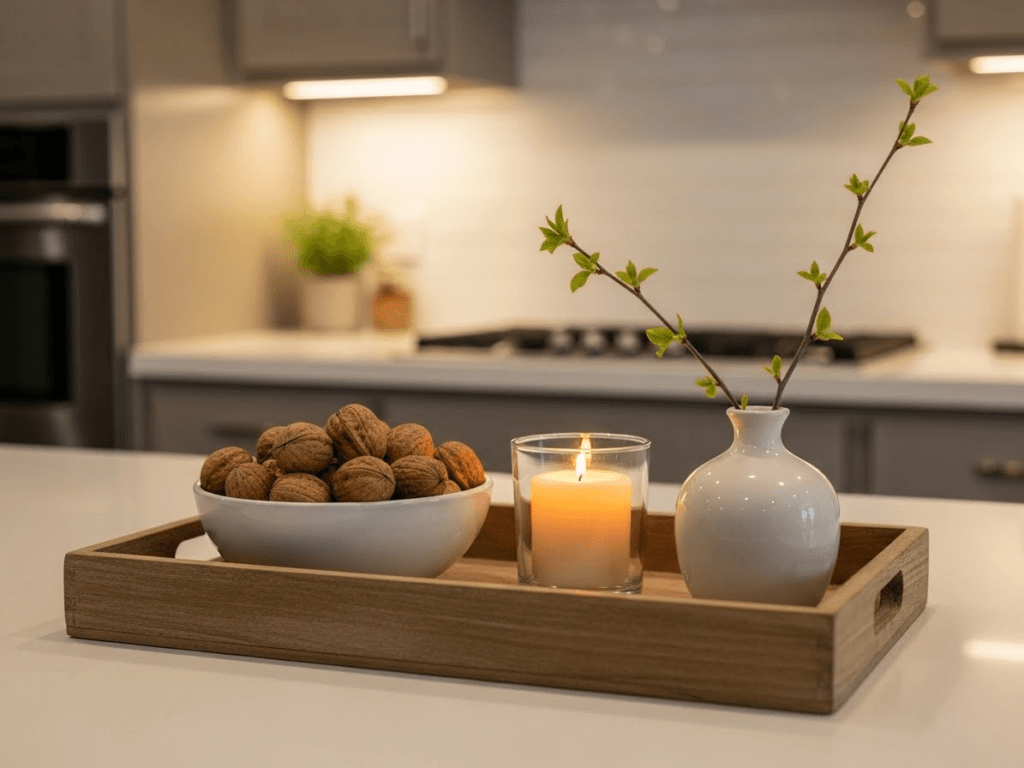
- The Tray Method: Corral your countertop items. A soap dispenser, a candle, and a plant look like “clutter” if they are scattered. Put them all on a small wooden or marble tray, and suddenly it’s a “styled vignette.” This makes cleaning easier too—you just lift the tray to wipe the counter.
- Renter Friendly Hack: If you can’t paint your cabinets, use removable wallpaper on the back of your open shelving or glass cabinets. It changes the backdrop for your dishes seasonally. A moody floral for fall can transform bland rental cabinets. (Check out ideas for vintage kitchen vibes if you’re renting an older place).
- Use Your Hardware: If you have hickory kitchen cabinets or wood tones, swapping hardware is too hard. But you can swap what hangs on them. Tie a small bundle of dried herbs to a cabinet handle or hang a copper measuring cup set for a fall touch.
FAQ: Questions I Get Asked Constantly
1. My kitchen is super small. Where do I put decor?
Go vertical. Use the space above your cabinets (if there is a gap) for a few nice baskets, or use a magnetic hook on the side of the fridge to hang a seasonal wreath. Also, focus on the floor—a seasonal runner rug takes up zero counter space but adds massive color.
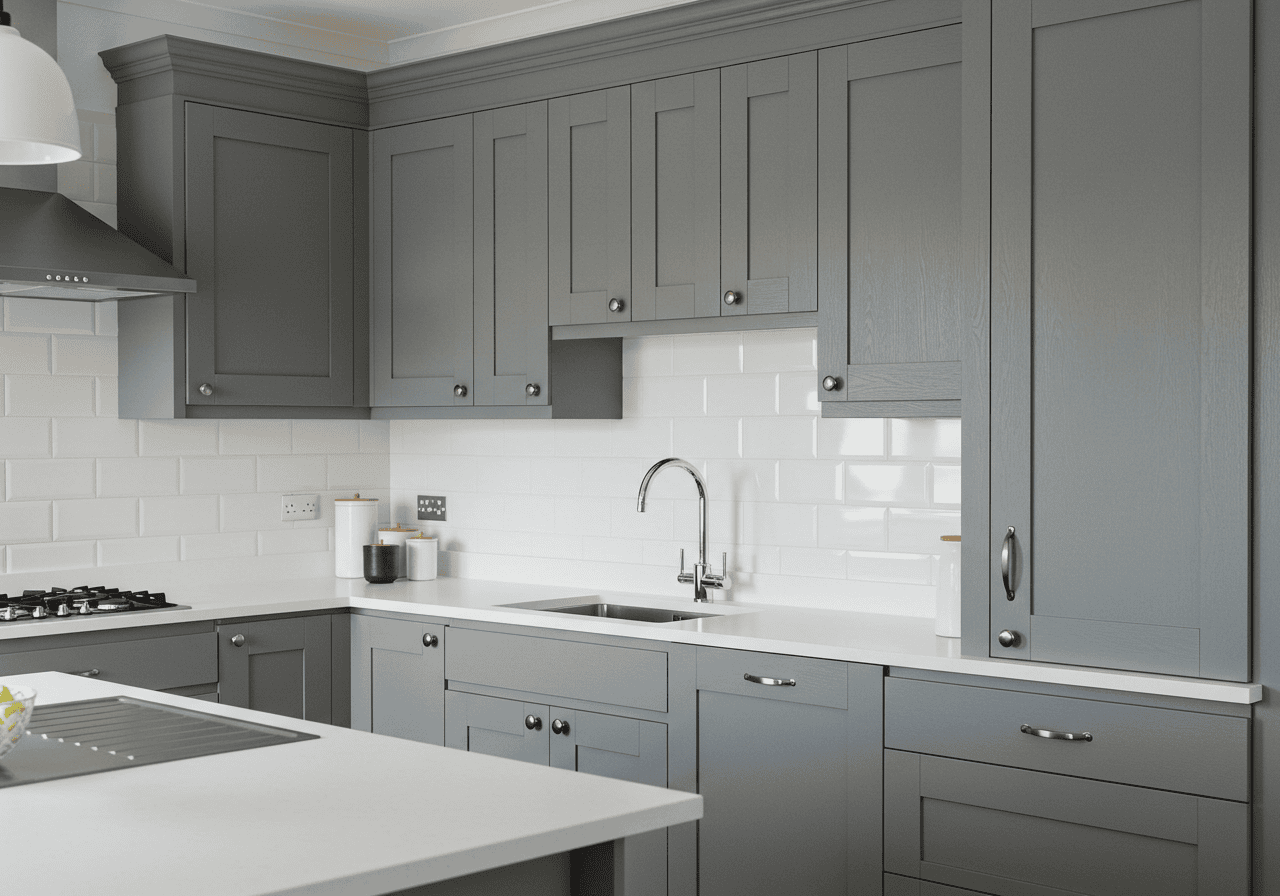
2. How do I make
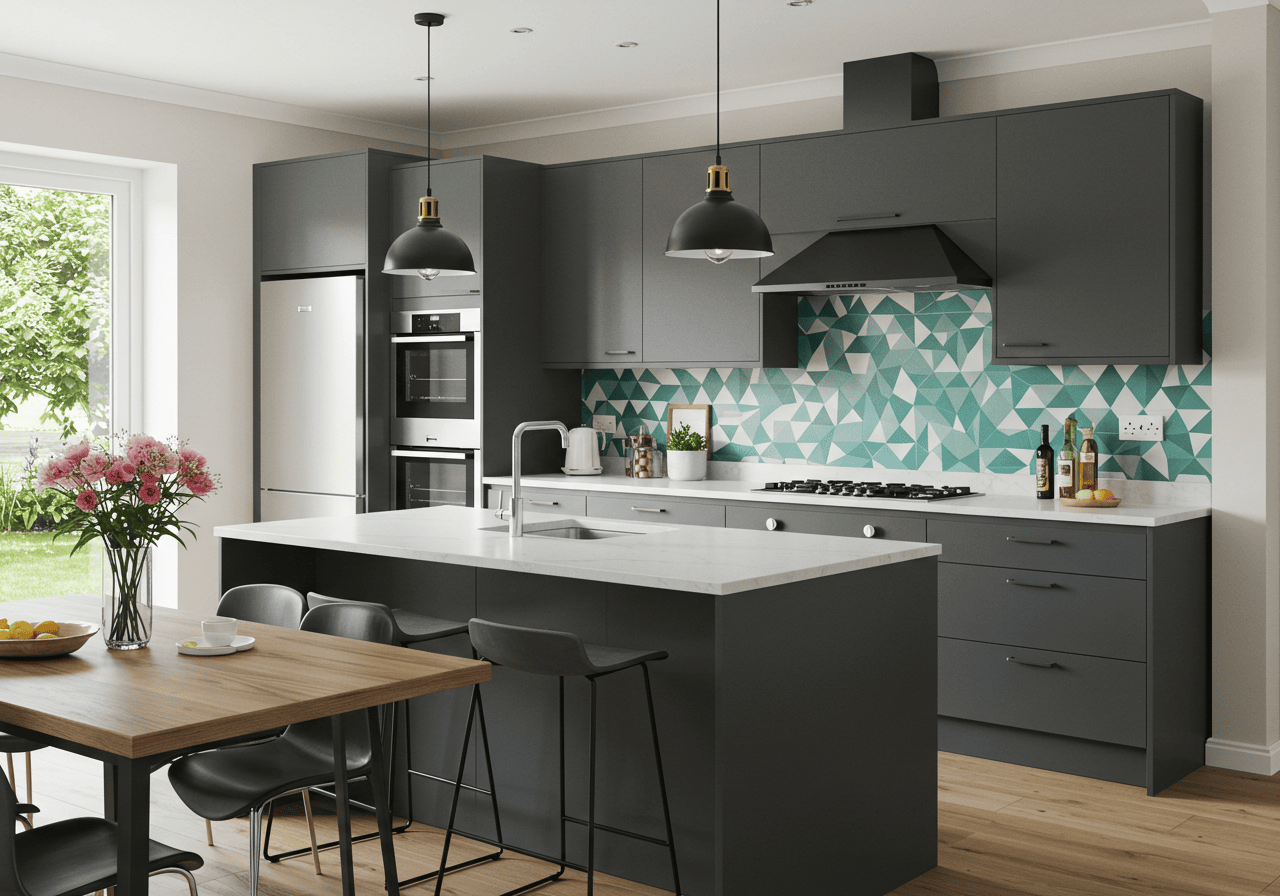
Gray can feel cold. You need to layer in warm wood tones. Add a large wooden cutting board leaning against the backsplash, and use copper or brass accents (like a fruit bowl). The mix of cool gray and warm wood is very mid-century modern kitchen chic.
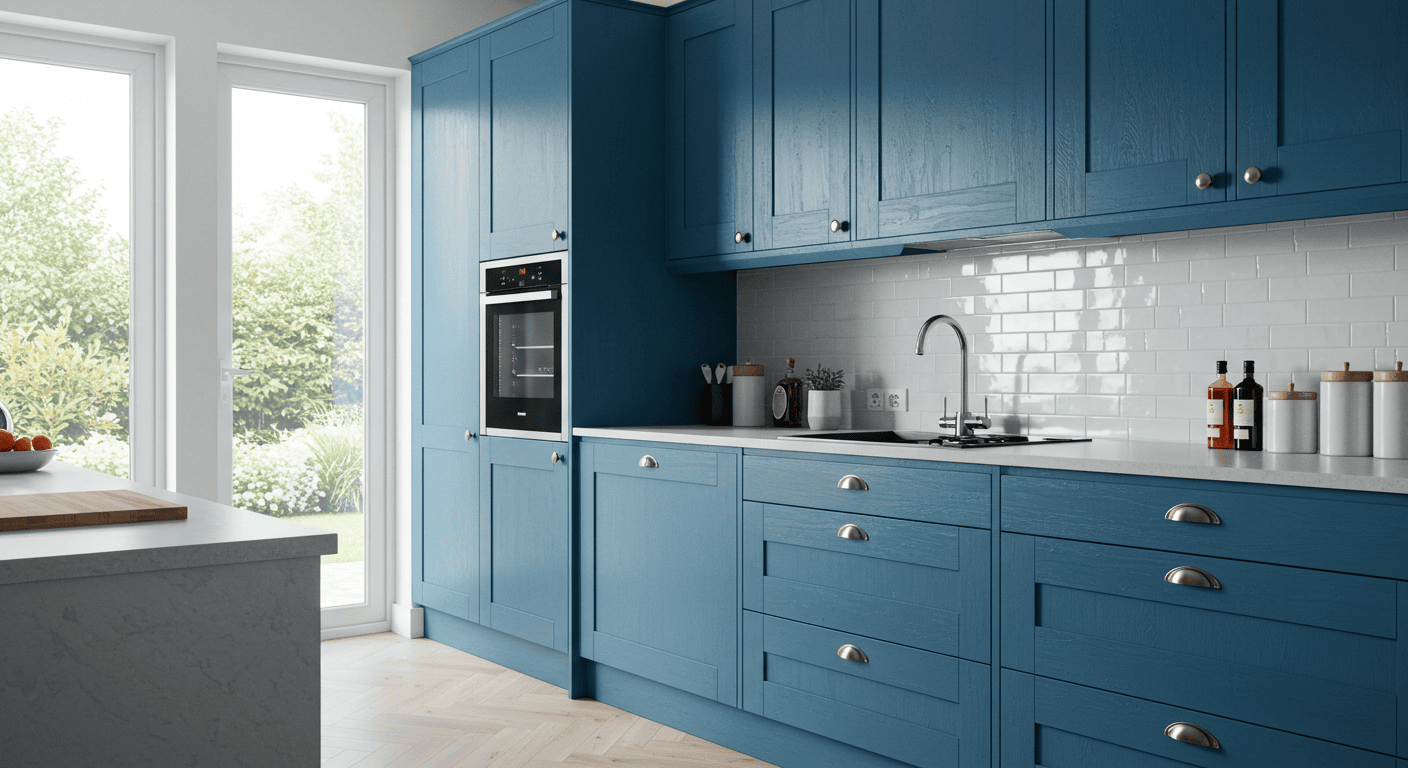
3. What if I have colorful cabinets, like blue?
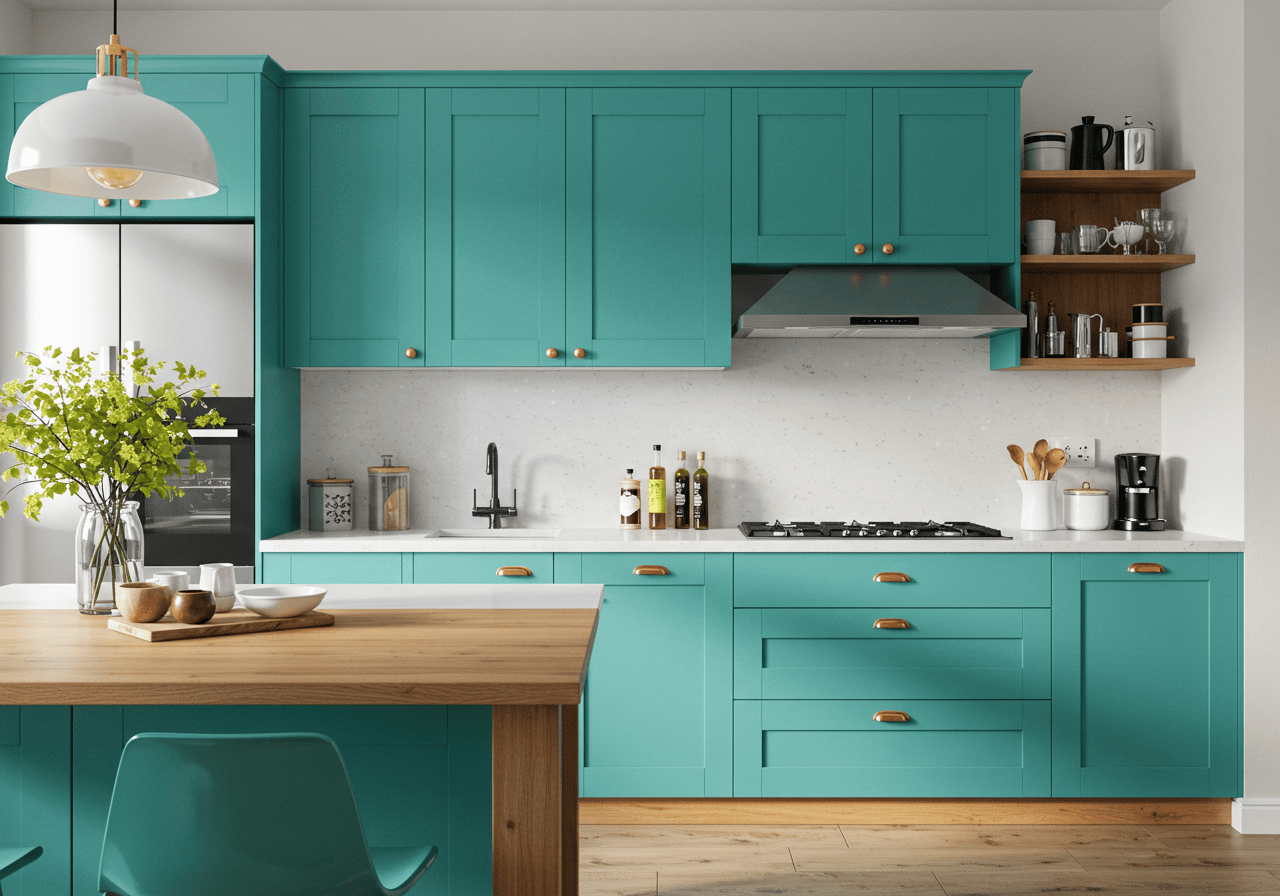
Blue kitchen cabinets are actually very versatile. For fall, use burnt orange (complementary color). For winter, use silver and white. For spring, use yellow. Blue acts as a neutral more often than you think.
4. Is it okay to use faux flowers?
Yes, but spend the money on good ones. Cheap faux flowers gather dust and look plasticky. I prefer using “dried” naturals (like wheat, pampas grass, or eucalyptus) because they look real (because they were!) and last forever.
5. How do I choose a cabinet color that works for all seasons?
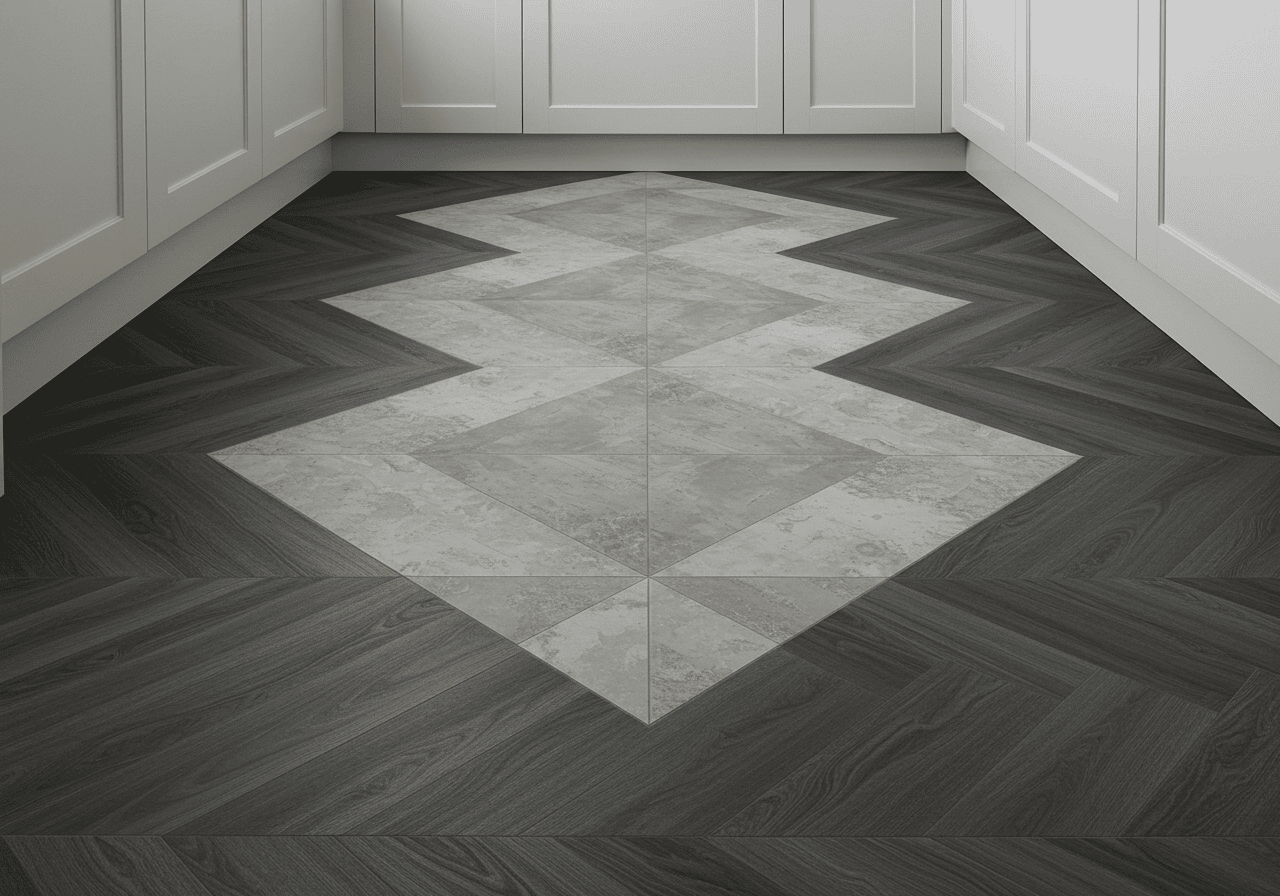
If you are currently renovating, neutral is safest. However, kitchen cabinet color ideas are trending toward earth tones. A “greige” (gray-beige) or a soft sage green transitions beautifully from Christmas red to Summer yellow without clashing. If you want durability alongside style, research kitchen flooring ideas that anchor these colors, like wide-plank oak or slate tile.
Final Thoughts
Seasonal decorating shouldn’t feel like a chore. If you are sweating while dragging bins out of the attic, you’re doing too much.
Focus on the sensory experience—the smell of the soap, the texture of the towel, and the light in the room. Your kitchen is the heart of the home; keep it beating, but keep it tidy.
Ready to refresh your space? Check out my guide to kitchen decorating ideas for more inspiration.