
Feeling cramped in your kitchen? You’re not alone! A small kitchen can feel like a culinary puzzle, but we’re here to tell you it’s a challenge you can absolutely win. The secret isn’t about wishing for more square footage; it’s about a smarter, more strategic layout.
Forget the frustration of cluttered counters and awkward corners. A well-designed small kitchen layout can transform your space from chaotic to chic, making it feel more open, functional, and joyful. Whether you’re whipping up a quick breakfast or hosting an intimate dinner party, the right foundation is everything.
Ready to unlock your kitchen’s true potential? Let’s explore some ingenious layouts that prove you don’t need a huge space to have a highly efficient and beautiful kitchen.
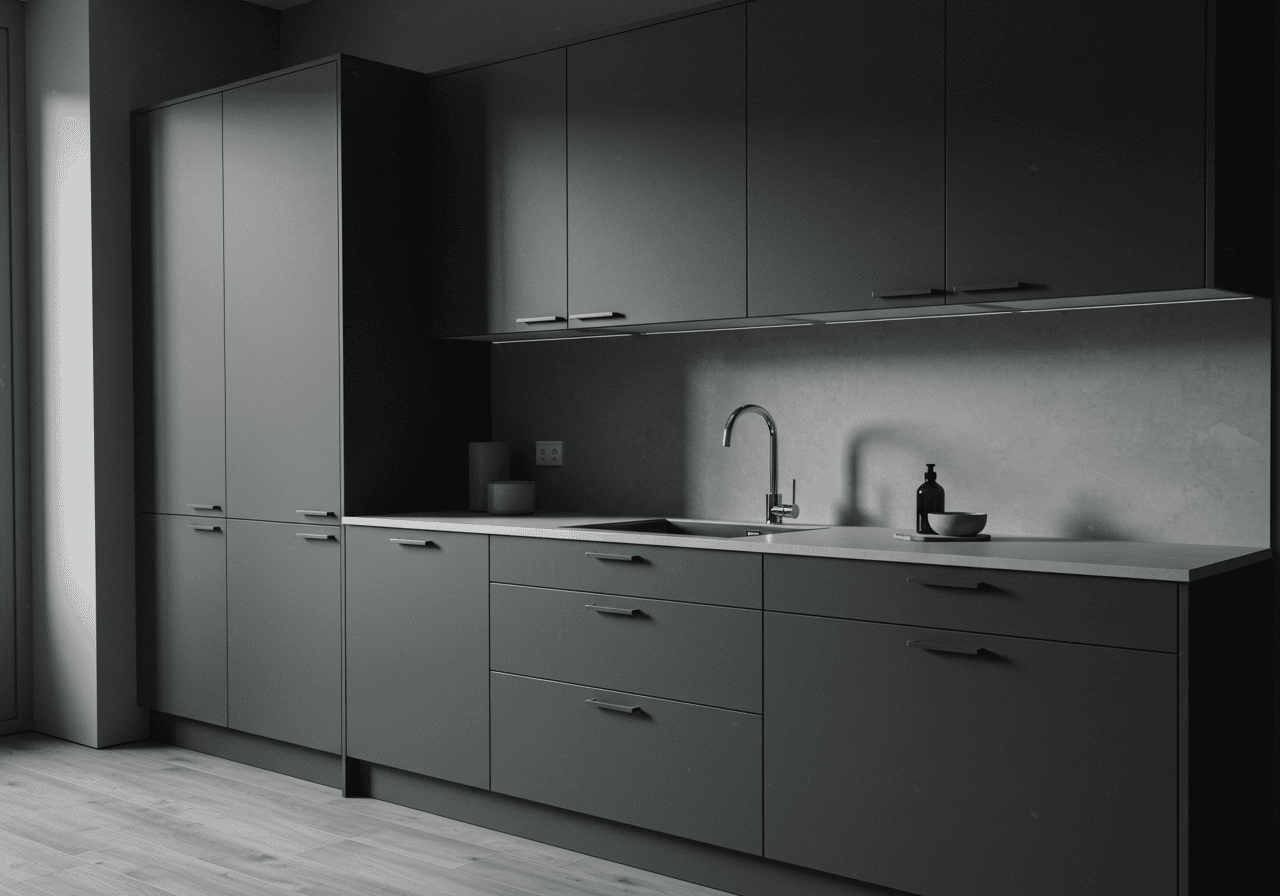
1. The Sleek Single-Wall Superstar
The one-wall kitchen is the ultimate space-saver, perfect for studio apartments, narrow lofts, and open-plan living. By consolidating all your cabinets, countertops, and appliances along a single wall, you free up maximum floor space, making the entire room feel more expansive and airy.
The key to mastering this layout is thinking vertically. It’s all about drawing the eye upward to create an illusion of height and space.
- Go for Height: Install cabinets that go all the way to the ceiling. This not only provides tons of extra storage for less-used items but also eliminates that awkward, dust-collecting gap.
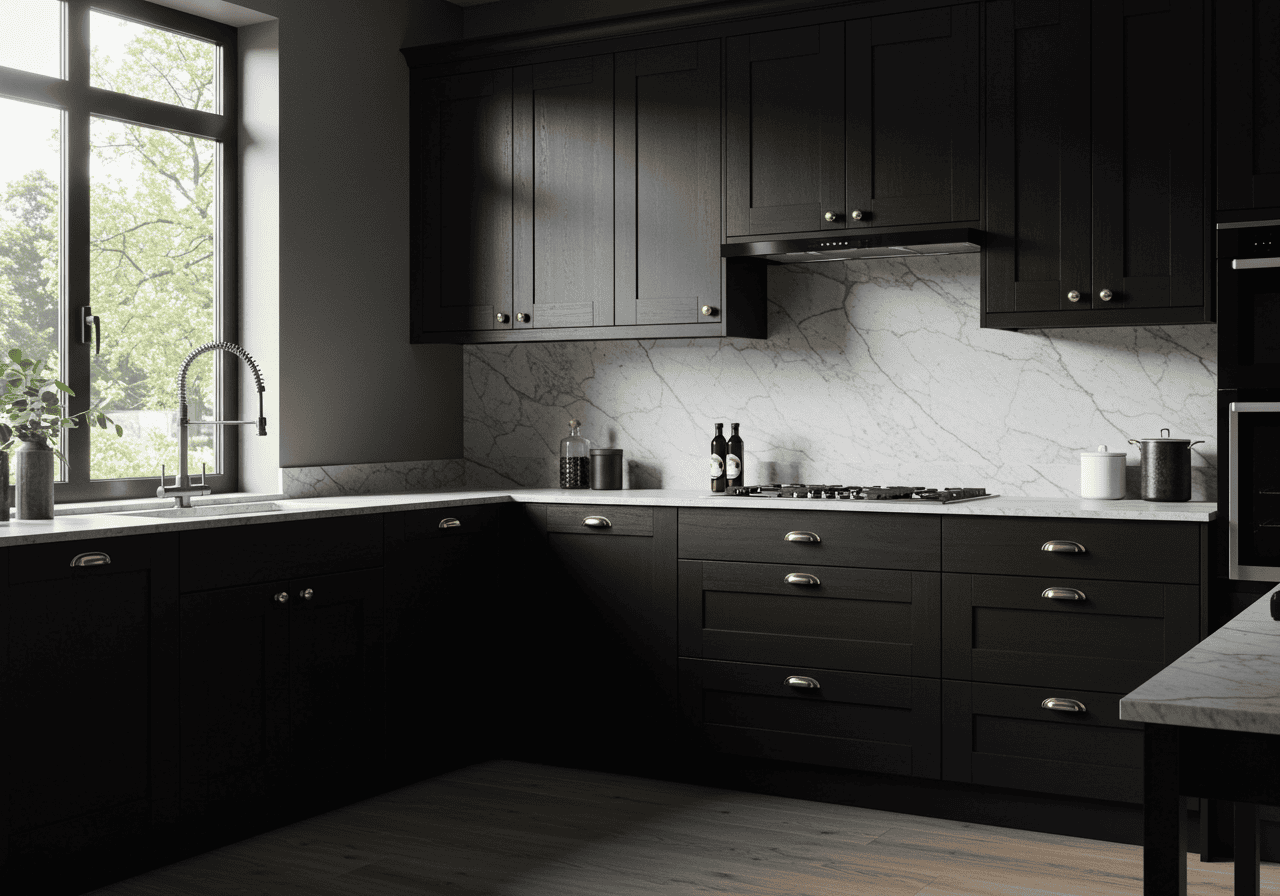
- Integrate Everything: Opt for integrated appliances that sit flush with your cabinetry. A seamless, uninterrupted line of beautiful cabinets, like sleek black kitchen cabinets, makes the wall feel more like a custom piece of furniture than a cluttered work zone.
- Reflect the Light: Use a glossy or mirrored kitchen backsplash to bounce light around the room. This simple trick can make a narrow kitchen feel twice as wide.
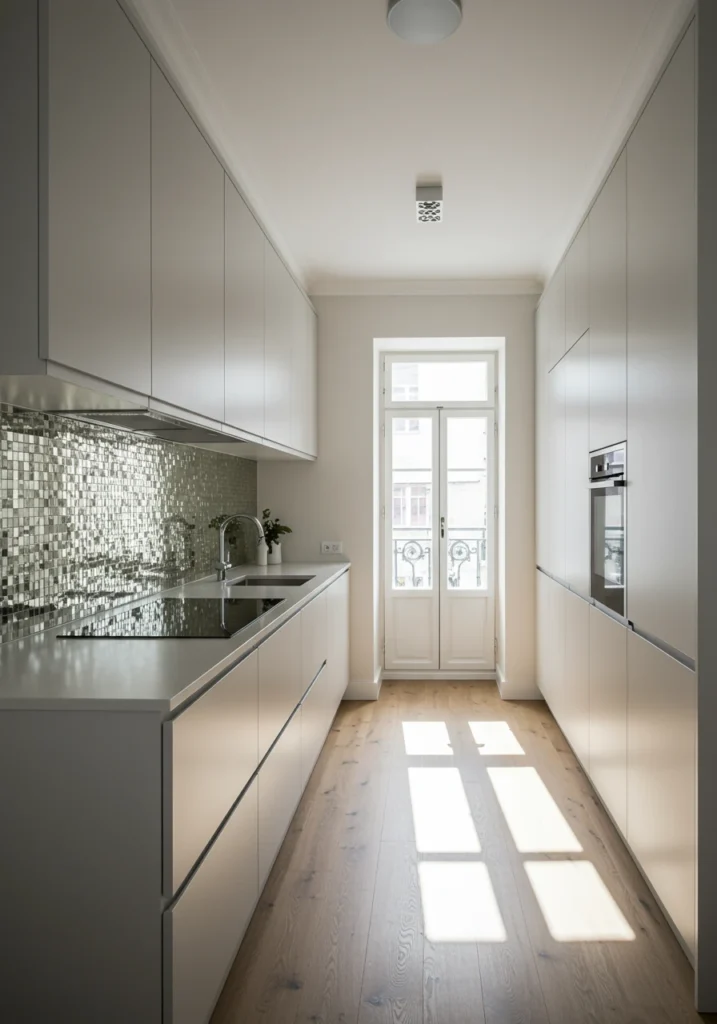
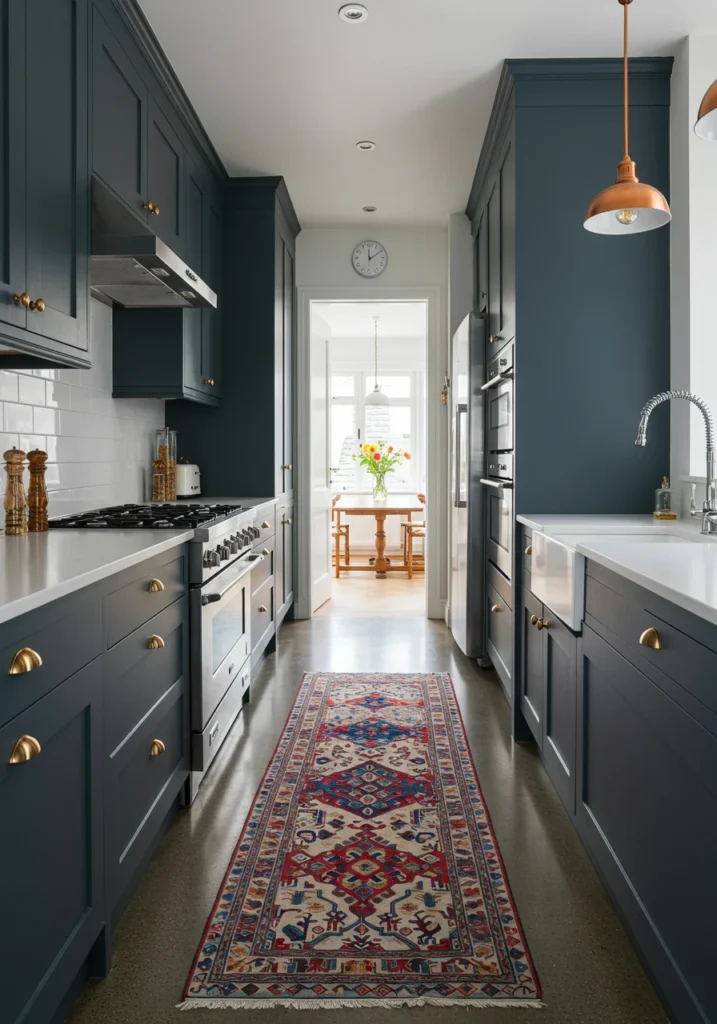
2. The Efficient Galley Corridor
There’s a reason professional chefs love the galley kitchen layout. With two parallel walls of counters and appliances, it’s an ergonomic powerhouse designed for pure efficiency. The classic “kitchen work triangle”—the path between your sink, stove, and fridge—is tight and intuitive, minimizing your steps and maximizing your productivity.
The challenge in a galley kitchen is to prevent it from feeling like a cramped, narrow tunnel. But with a few clever design choices, you can create a space that’s both functional and inviting.
- Mind the Gap: Ensure there’s at least 4 feet (1.2 meters) of floor space between the two counters. This provides enough room for you to move comfortably and for cabinet doors and drawers to open without obstruction.
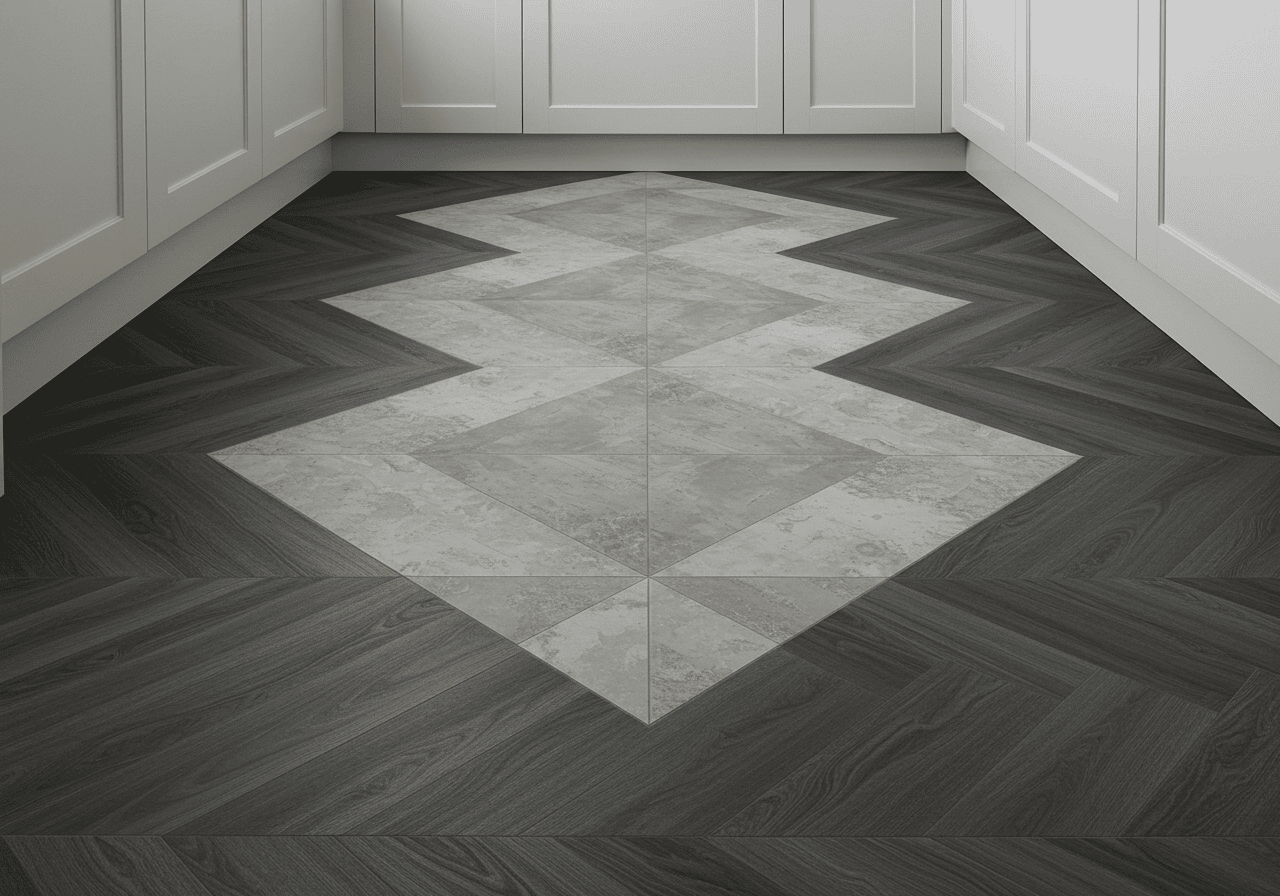
- Create Visual Flow: A patterned runner or bold kitchen flooring ideas can draw the eye down the length of the kitchen, making it feel longer and more dynamic.
- Lighten Up: If possible, place the sink under a window at the end of the galley. This not only provides a lovely view while you do dishes but also floods the corridor with natural light, making it feel open and bright.
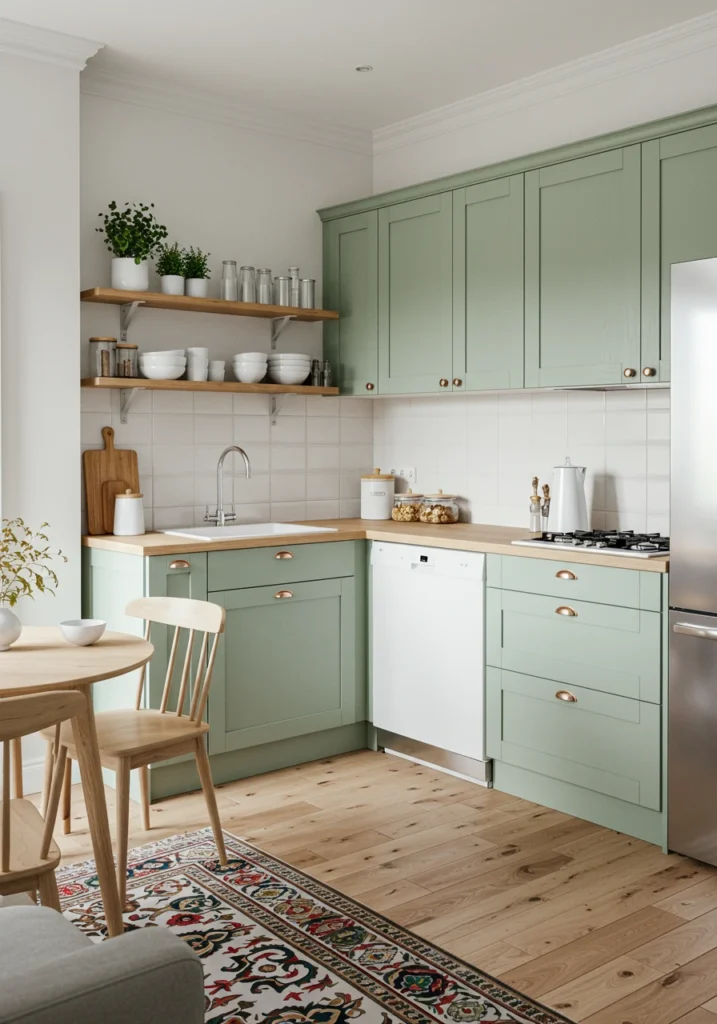
3. The Clever Corner-Hugging L-Shape
The L-shaped layout is one of the most popular and versatile choices for a small kitchen. By using two adjacent walls, it naturally opens up the space, making it perfect for corner kitchens in open-plan homes. This layout provides an excellent work triangle and leaves plenty of open floor space, which helps the kitchen feel connected to the dining or living area.
This layout is ideal for creating a more social cooking environment. While you’re busy at the counter, you can still easily chat with family or guests without anyone feeling crowded.
- Conquer the Corner: Don’t let that corner cabinet become a black hole! Install smart storage solutions like a Lazy Susan, magic corner pull-outs, or diagonal drawers to make every inch accessible.
- Add Flexible Furniture: The open space created by an L-shape is the perfect spot for a small, round dining table or a freestanding, movable kitchen island on casters. This gives you extra prep space when you need it and can be moved aside when you don’t.
- Balance the Visuals: To keep the space feeling open, consider using upper cabinets on only one of the two walls. On the other wall, install open shelving to display your favorite cookbooks, plants, and stylish dinnerware. This is one of our favorite kitchen decorating ideas for personalizing your space.
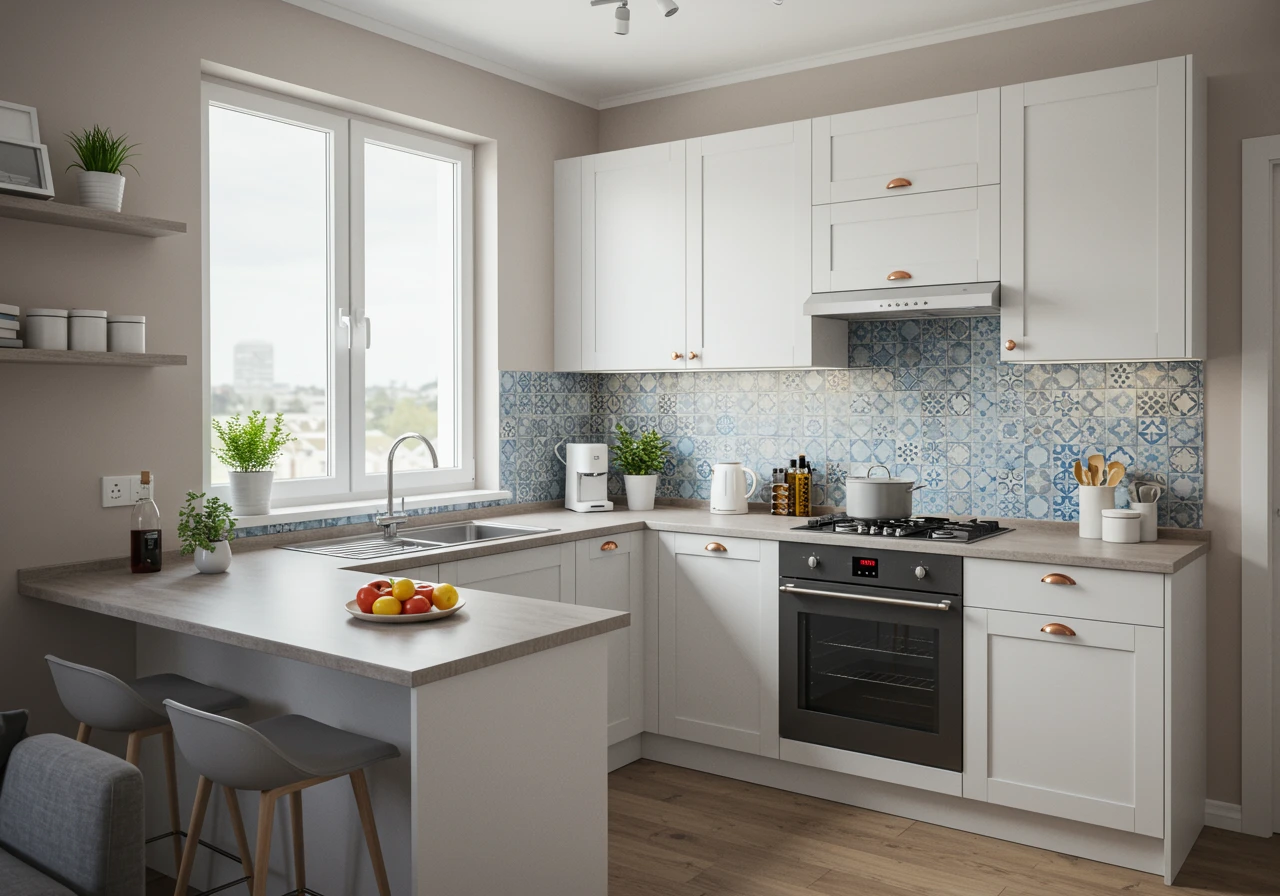
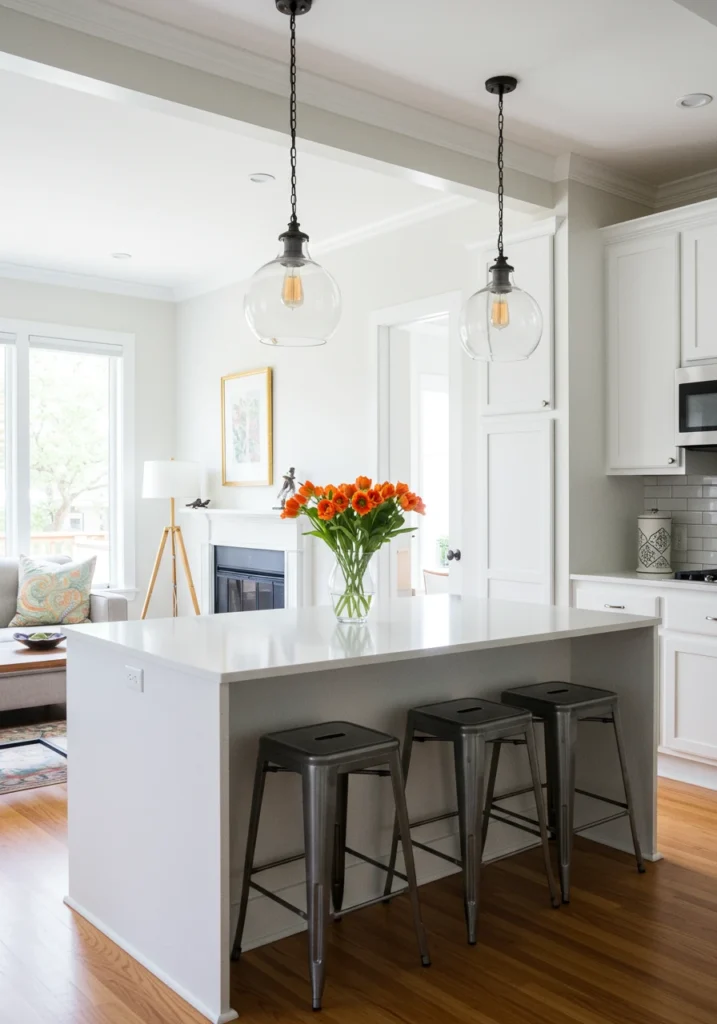
4. The Peninsula Pivot: Your Built-In Breakfast Bar
Think of the peninsula as the L-shaped layout’s savvy sibling. It’s essentially a connected island—a counter that juts out from a wall or cabinet run, accessible from three sides. This layout is a fantastic solution for small kitchens because it provides the social, space-defining benefits of an island without requiring the same amount of clearance.
A peninsula is a multitasking marvel. It can serve as a casual dining spot, a homework station for the kids, a buffet area for parties, or simply extra countertop space for food prep.
- Define Your Zone: Use the peninsula to create a soft visual barrier between the kitchen and the living or dining area. This helps define the kitchen as its own distinct zone without closing it off with a wall.
- Light It Right: Make the peninsula a focal point with statement lighting. A pair or trio of stylish pendant lights will not only illuminate the workspace but also add a huge dose of personality. Explore different kitchen lighting ideas to find the perfect fit for your style.
- Choose Smart Seating: Opt for backless or low-profile bar stools that can be tucked completely under the counter when not in use. This keeps walkways clear and maintains a clean, uncluttered look.
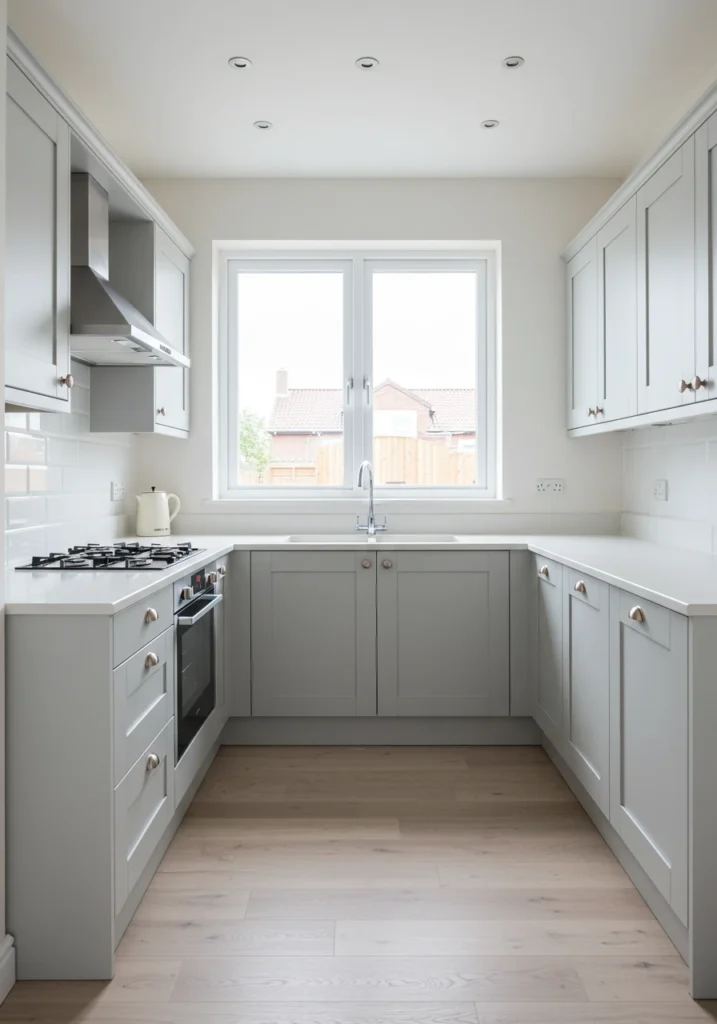
5. The U-Shaped Embrace
If you dream of having acres of countertop space for all your kitchen gadgets and baking projects, the U-shaped layout is for you. Utilizing three walls, this design creates a self-contained and highly efficient workspace. It offers abundant storage and a fantastic workflow, wrapping around you like a cozy command center.
The primary goal in a small U-shaped kitchen is to keep it from feeling boxed in. By making smart choices with surfaces and storage, you can have all the function without any of the claustrophobia.
- Open Up the Top: Consider ditching upper cabinets on at least one of the three walls, especially the one opposite the entrance. This immediately opens up the sightlines and makes the entire space breathe.
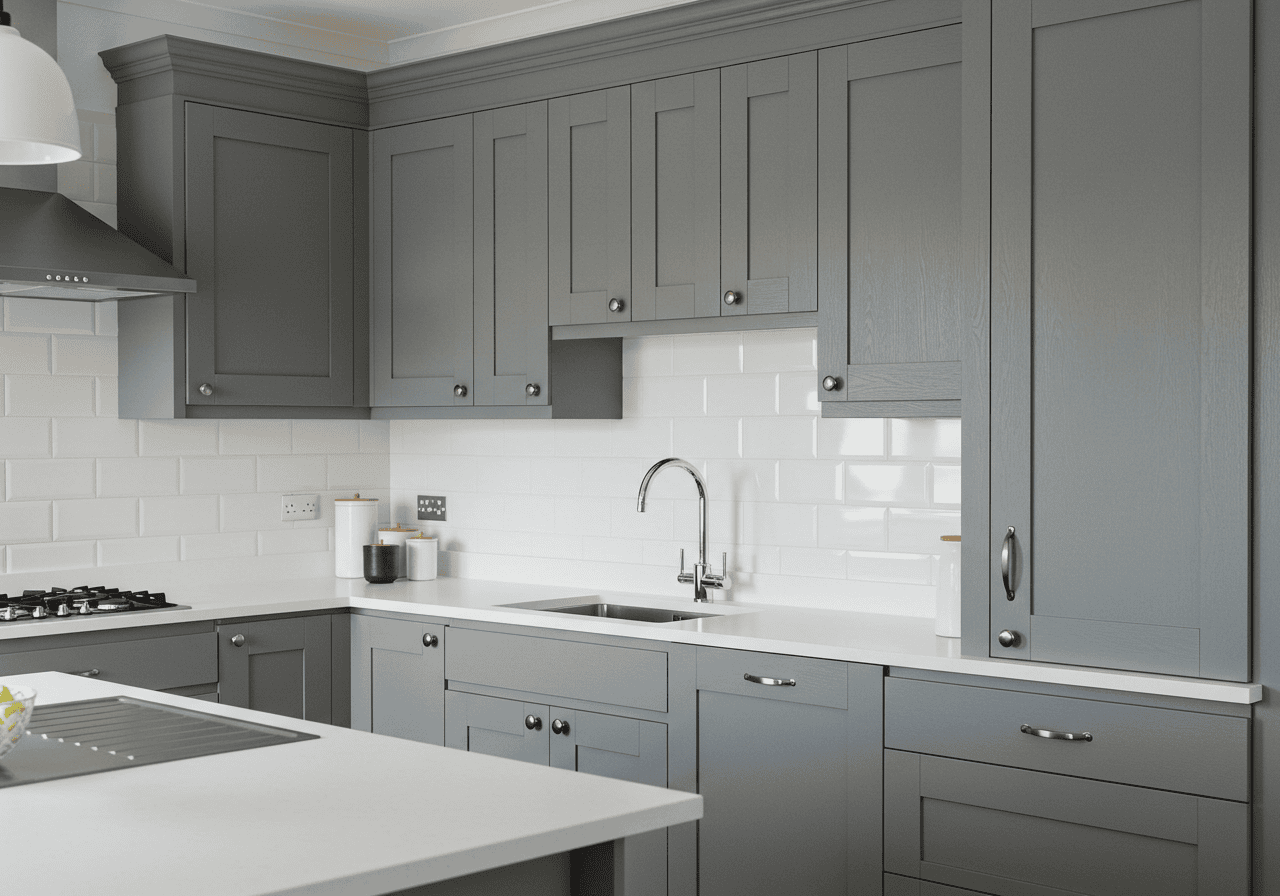
- Embrace Reflective Surfaces: A glossy countertop, polished hardware, or even high-sheen gray kitchen cabinets will bounce light around, creating a brighter and more spacious feel.
- Let There Be Light: If your U-shape includes a window, make it the star. Keep the windowsill clear and avoid heavy drapes. The natural light will work wonders.
6. The Tiny Island Dream
Who says islands are only for massive kitchens? A small, thoughtfully chosen island can be a game-changer in a compact space, acting as the multi-functional heart of your kitchen. The trick is to choose one that adds functionality without becoming a roadblock.
Think of a small island less as a fixed monolith and more as a versatile piece of furniture. It can provide that extra bit of prep space, a spot for a quick coffee, and some much-needed extra storage, all while looking incredibly stylish. For more inspiration, check out these modern kitchen ideas.
- Put It on Wheels: A rolling kitchen cart or island offers the ultimate flexibility. Roll it into the center when you’re cooking, and push it against a wall to free up floor space when you’re entertaining.
- Go Slim: Look for a narrow or “slimline” island design. A depth of just 24 inches can provide a significant amount of workspace without overwhelming the room.
- Think Multi-Function: Choose an island with built-in storage like shelves, drawers, or even a wine rack. A small overhang on one side can also create a tiny breakfast bar for one or two people.

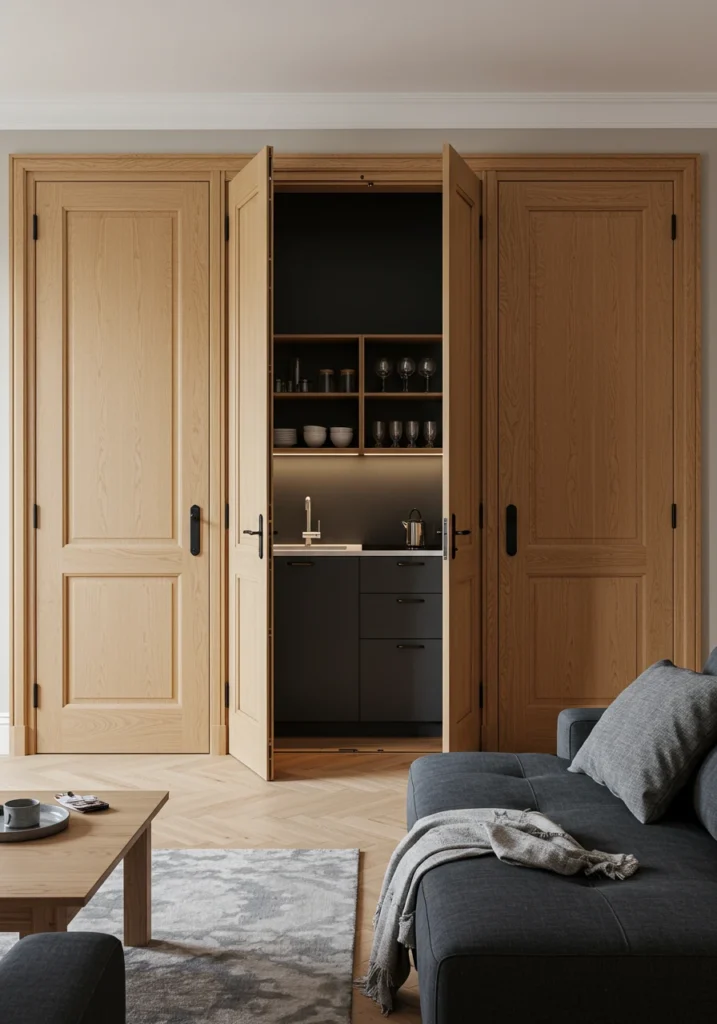
7. The “Disappearing Act” Kitchen
For the ultimate in minimalist living, especially in studios or open-plan spaces, the concealed kitchen is a stroke of genius. This layout hides the entire kitchen behind a set of stylish doors, allowing it to completely vanish when not in use. It’s clean, clever, and oh-so-sleek.
This design transforms a functional area into a seamless part of your decor. When guests are over, you can close the doors on any cooking mess and present a perfectly tidy living space. It’s a favorite in many modern and contemporary kitchens.
- Choose the Right Doors: Bifold or pocket doors are ideal as they fold away neatly, allowing full access to the kitchen without obstructing walkways.
- Match Your Surroundings: Have the cabinet doors custom-made to match the surrounding walls or cabinetry in the room. Painted the same color as the wall, the kitchen can become nearly invisible.
- Integrate Smart Lighting: Install under-cabinet LED strip lighting inside the kitchenette. This ensures the workspace is well-lit when open and adds a cool, sophisticated glow.
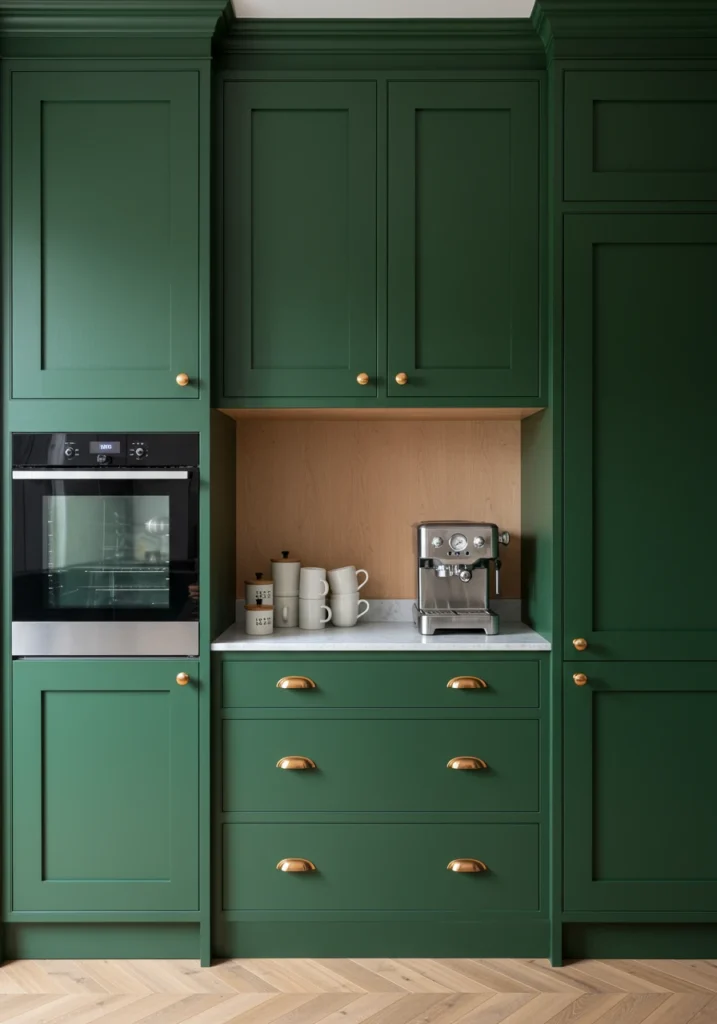
8. The Wall of Wonders (Floor-to-Ceiling Storage)
This layout takes the single-wall concept to its most logical and storage-packed conclusion. It dedicates one entire wall to a full-scale, integrated system of cabinetry and appliances, creating a powerful, unified statement. It’s a fantastic way to consolidate all your kitchen needs while leaving the rest of the room completely open.
This is more than just a wall of cabinets; it’s a meticulously planned storage powerhouse. It’s perfect for those who want a place for everything, keeping clutter completely out of sight.
- Break It Up Visually: To prevent the wall from looking like a heavy, solid block, incorporate a niche or a section of open shelving. This is the perfect spot for your coffee maker or to display treasured items.
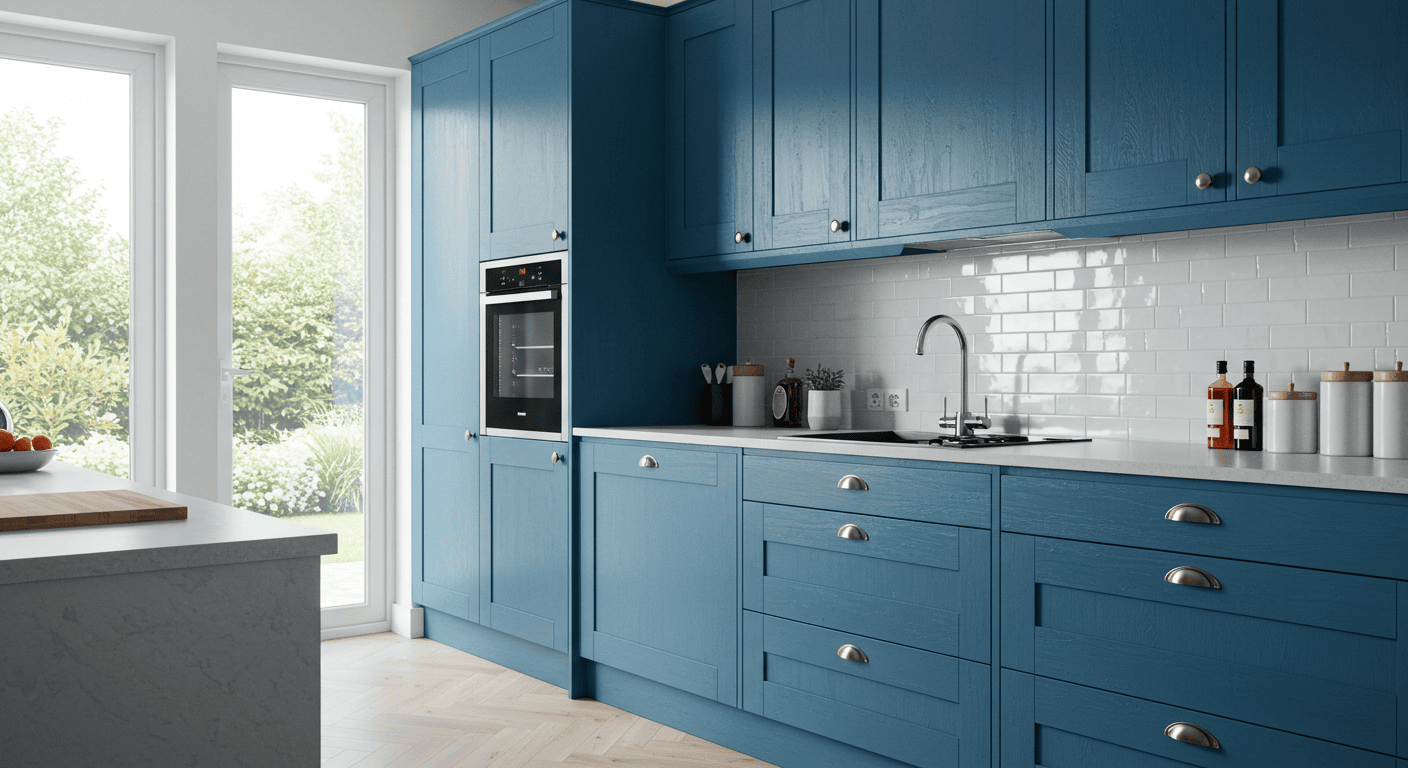
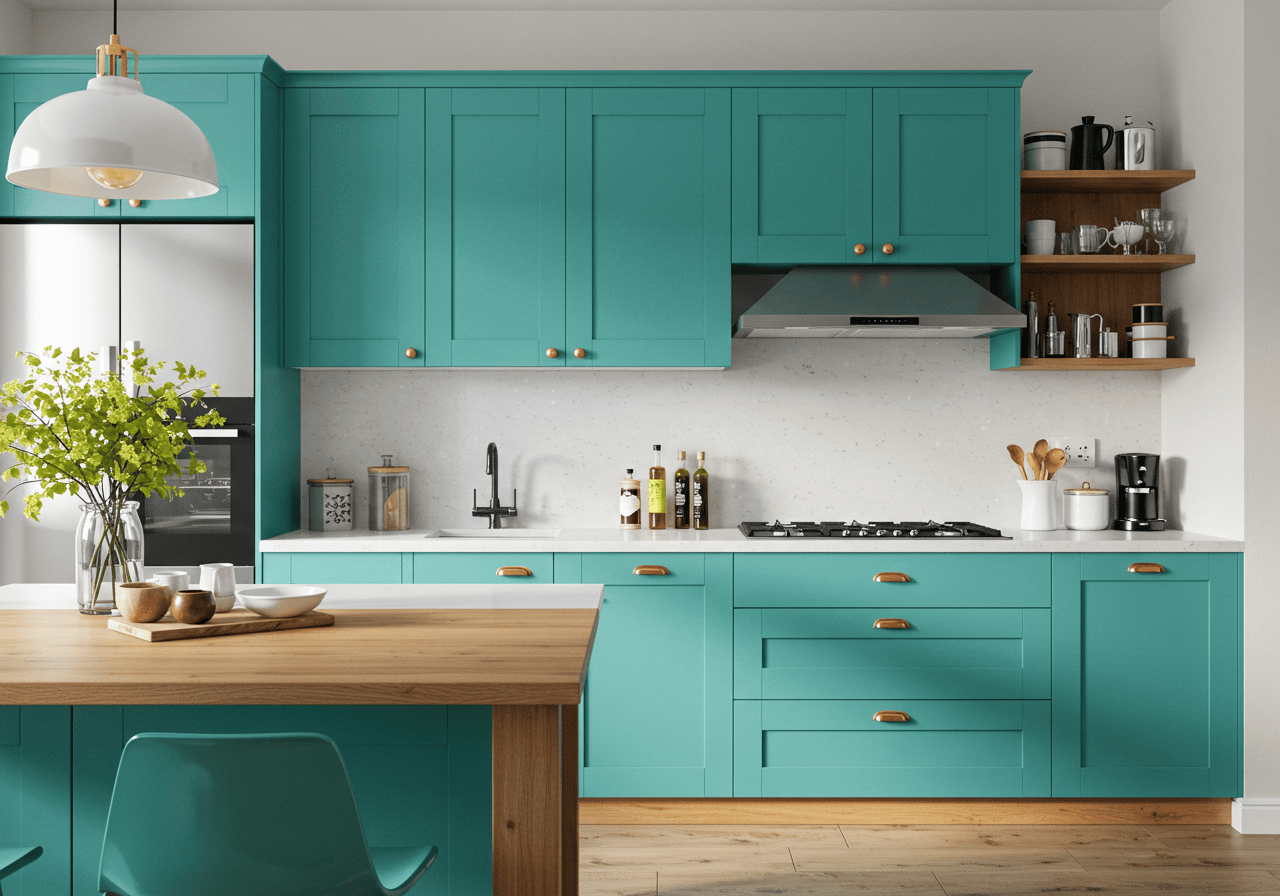
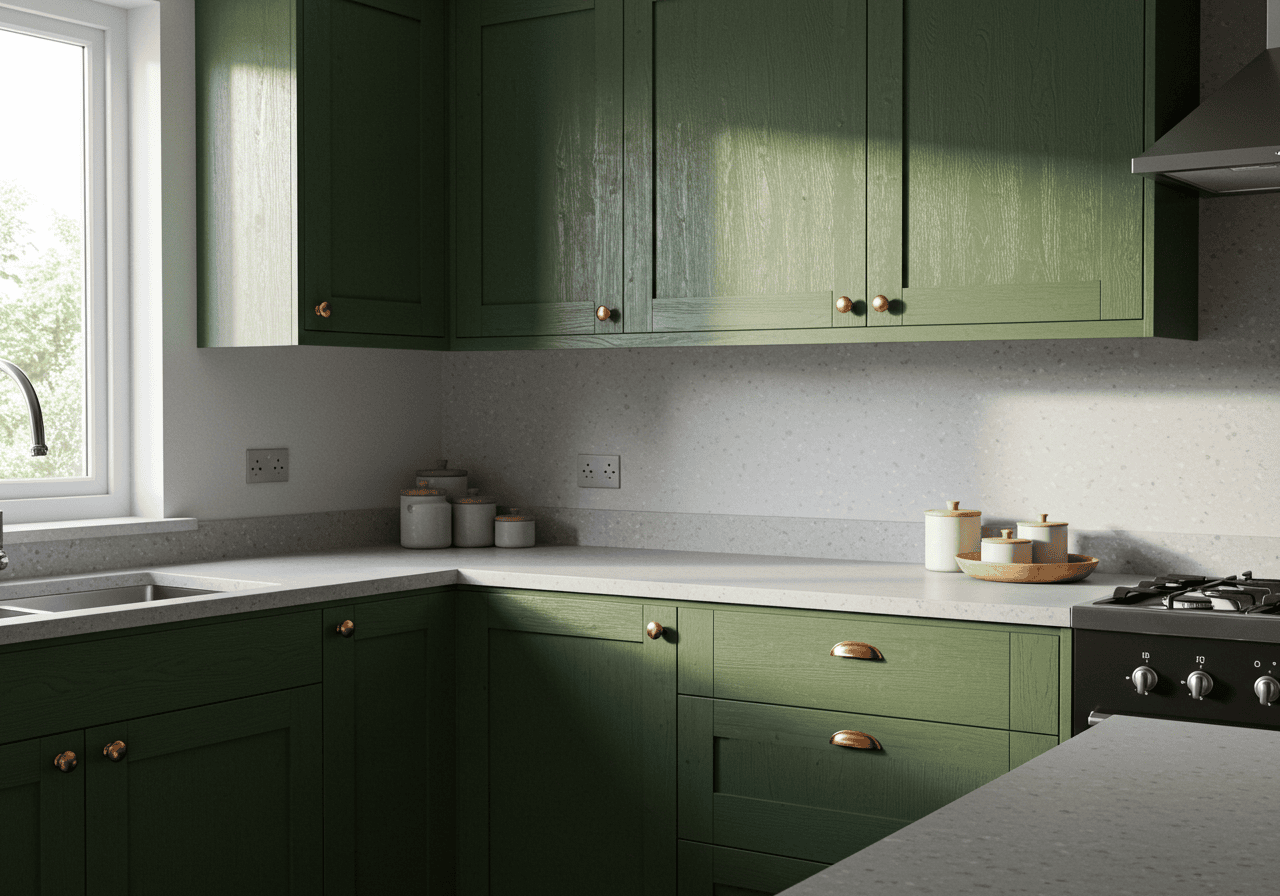
- Play with Color: A tall wall of storage is the perfect canvas for a bold color. A deep, dramatic hue, like one of these dark green kitchen cabinets, can turn the wall into a stunning feature.
- Integrate Everything: For the cleanest look, opt for fully integrated appliances (refrigerator, dishwasher, ovens) that are concealed behind panels matching your cabinetry.
9. The Mid-Century Minimalist
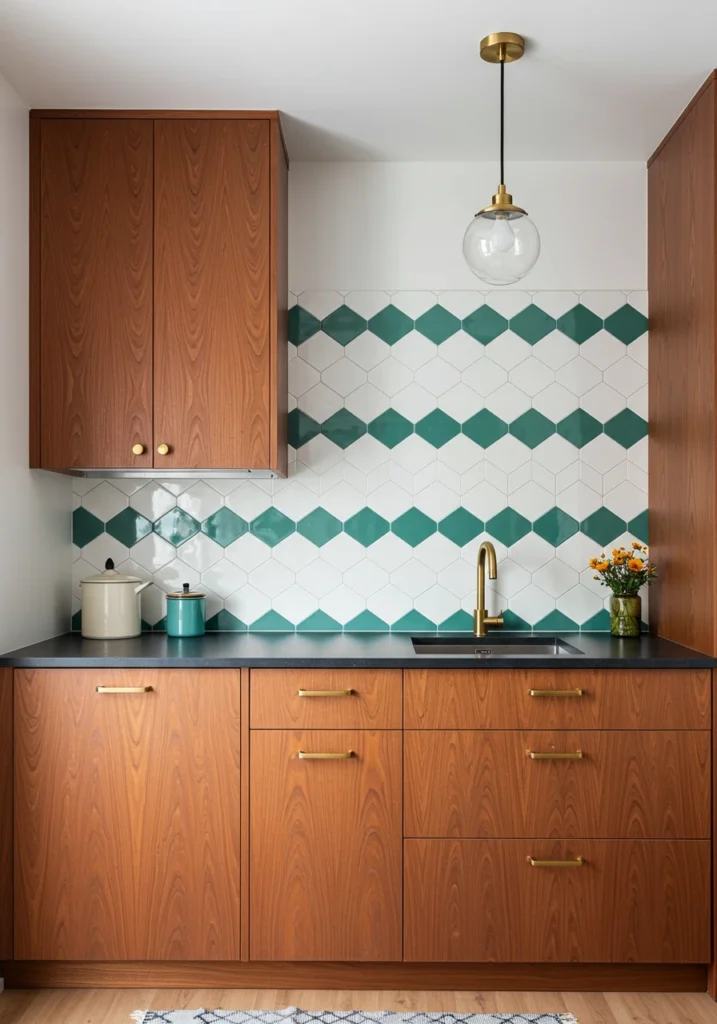
Bring the iconic, clean-lined aesthetic of the 1950s and 60s into your small kitchen. A mid-century modern kitchen layout emphasizes simplicity, natural materials, and the seamless integration of form and function—all perfect principles for making a small space feel stylish and uncluttered.
This layout is all about organic shapes, minimal ornamentation, and a connection to nature. It’s a timeless look that feels both retro and remarkably current.
- Focus on Flat-Panel Cabinets: The hallmark of this style is the flat-panel cabinet, often in a warm wood tone like teak or walnut. The lack of fussy detail creates a clean, serene look.
- Keep Hardware Simple: Opt for sleek, understated hardware like thin bar pulls or simple knobs. Sometimes, no hardware at all (using finger pulls) is the most authentic choice.
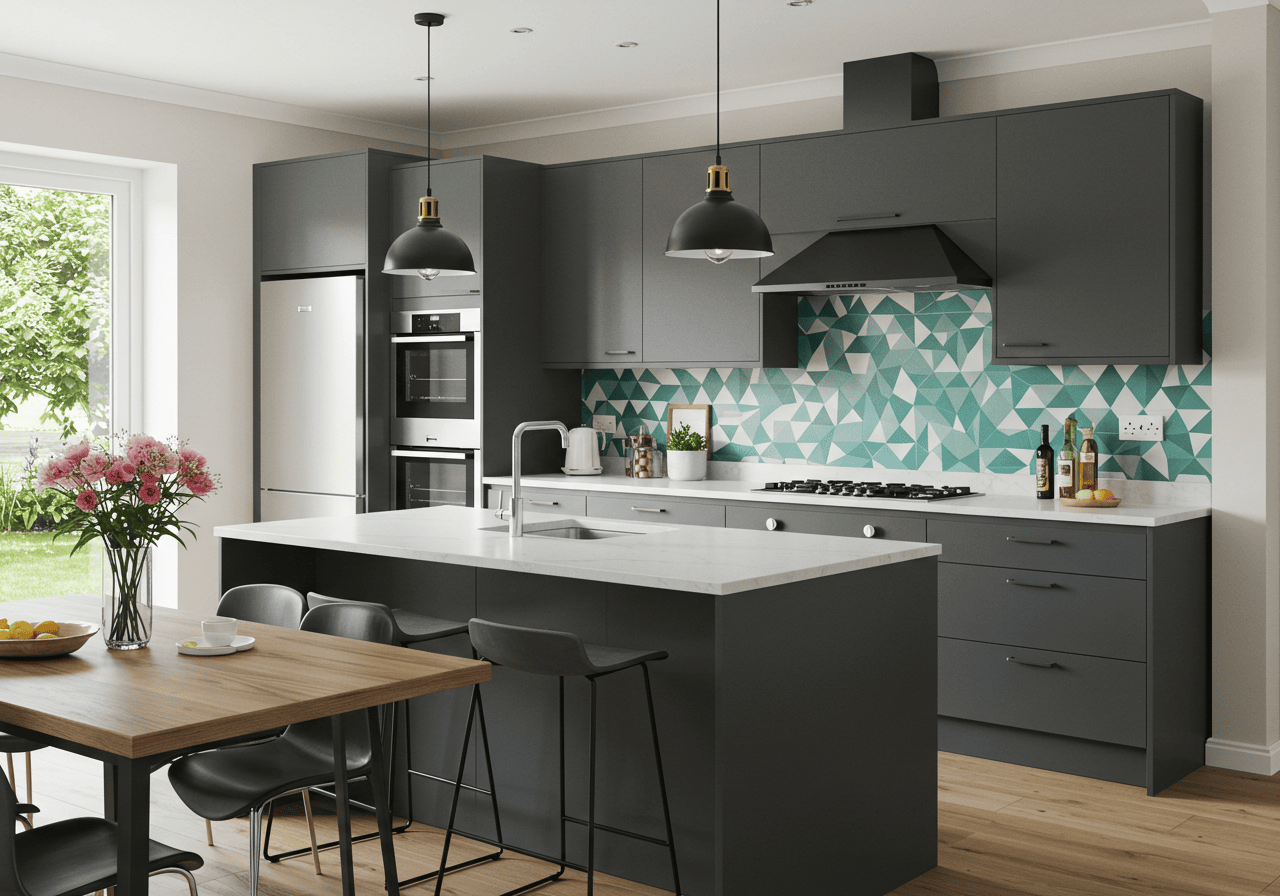
- Add a Pop of Color: Mid-century design isn’t afraid of color! Use a backsplash of colorful geometric tile or choose a single appliance, like your stand mixer, in a fun, retro color like turquoise or mustard yellow.
10. The Rustic Nook
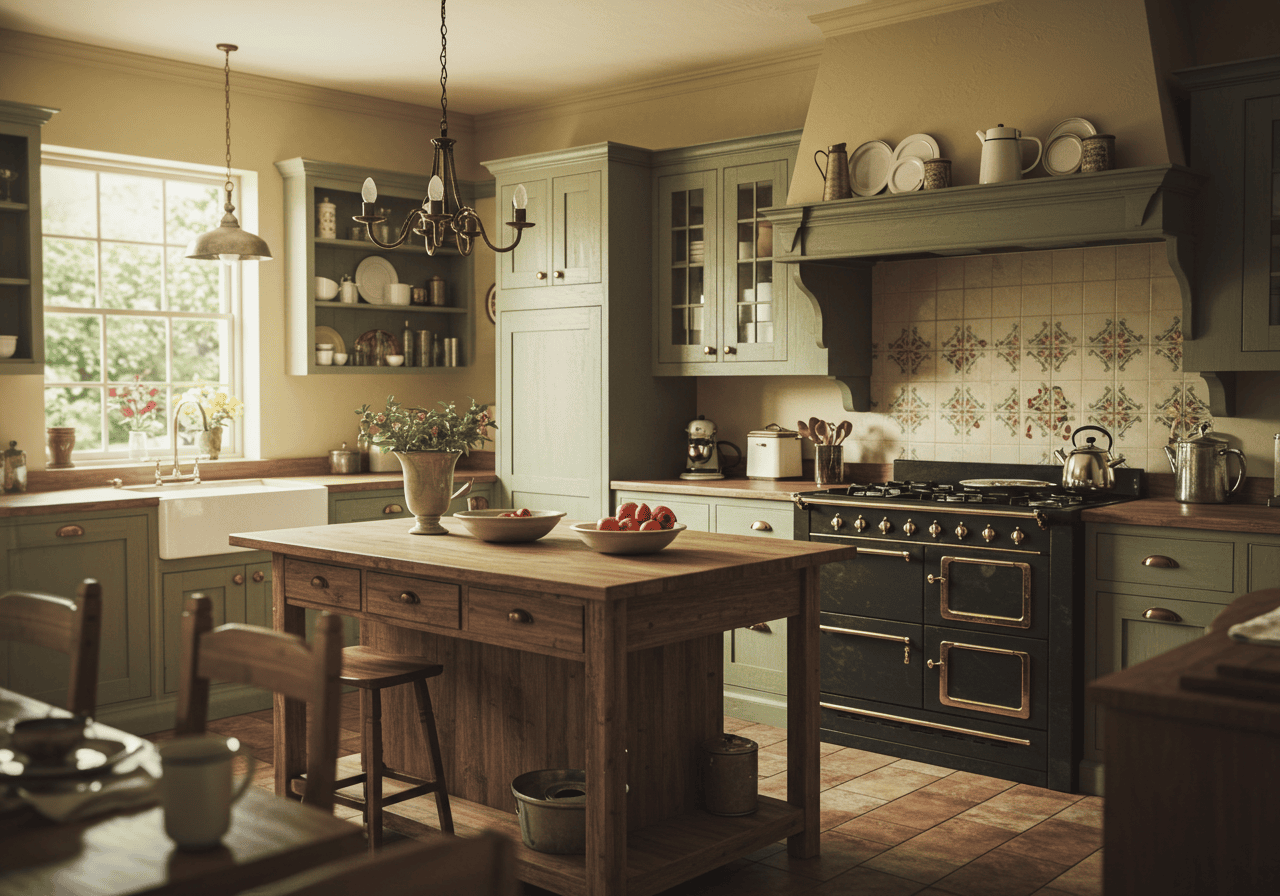
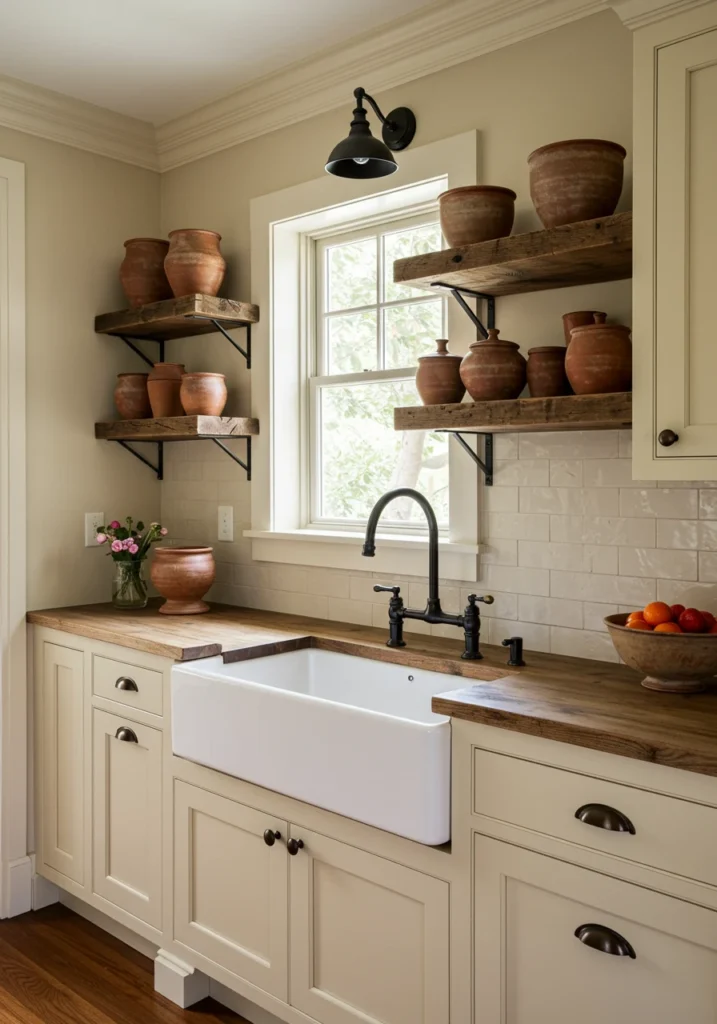
Create a cozy, welcoming heart of the home, no matter the size. A rustic kitchen layout embraces natural materials, texture, and a sense of history. In a small space, this translates to a kitchen that feels warm, personal, and full of character.
This style is perfect for cottages, cabins, or anyone who wants their kitchen to feel like a warm hug. It’s about celebrating the imperfections of natural materials and creating a space that feels lived-in and loved.
- Embrace Natural Wood: Use reclaimed wood for open shelving, a butcher-block countertop, or even as a feature wall. The warmth and texture of wood are essential to this look. You can find inspiration with rustic kitchen cabinets as well.
- Mix Your Metals: Don’t be afraid to mix metals. The combination of aged brass, oil-rubbed bronze, or hammered copper adds a layer of history and visual interest.
- Add a Skirted Sink: For a touch of old-world farmhouse charm, consider forgoing a cabinet under the sink in favor of a simple, patterned fabric curtain. It’s a soft, budget-friendly touch that’s full of personality.
11. The Smart Corner Solution
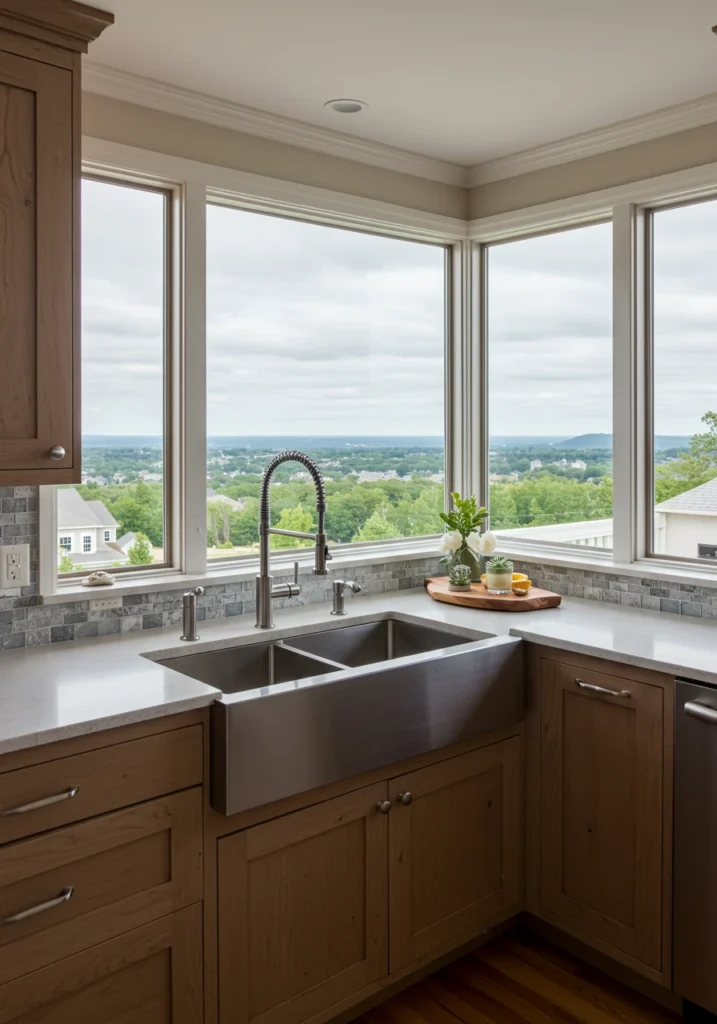
In many small kitchens, the corner is the most awkward, underutilized space. This layout flips that idea on its head by making the corner the star of the show. By placing a key appliance or your primary workspace in the corner, you can unlock a surprising amount of efficiency.
Instead of seeing the corner as a problem, view it as an opportunity. A well-designed corner can anchor your entire kitchen layout and free up valuable straight runs of counter space.
- Install a Corner Sink: A corner sink, especially one placed under a window, can be a fantastic solution. It frees up counter space on either side for prep work and makes the corner feel purposeful.
- Consider a Corner Range: Placing your cooktop or range in the corner, with a statement hood fan above it, can create a powerful and visually interesting focal point.
- Use Smart Storage: This is the place to invest in brilliant storage solutions. Corner drawers that pull out fully are a game-changer, providing far more accessible storage than a traditional blind corner cabinet. Experiment with different kitchen cabinet color ideas to make the corner a standout feature.
12. The Open-Shelf Oasis
For a look that is airy, modern, and beautifully personal, consider a layout that minimizes or completely eliminates upper cabinets in favor of open shelving. This approach instantly makes a small kitchen feel larger and more open by removing the visual bulk of traditional cabinetry.
This layout is perfect for people who are organized, love to display their beautiful dishes and glassware, and want a relaxed, café-like vibe. It’s a commitment to minimalism that pays off in style, creating a truly aesthetic kitchen.
- Curate with Intention: The key to successful open shelving is curation. Only display items you use often and that you find beautiful. Think neat stacks of plates, organized rows of glasses, and decanted dry goods in matching jars.
- Mix Materials: Combine different materials for a richer look. Think thick wooden shelves on sleek metal brackets, or minimalist floating shelves against a textured tile backsplash.
- Keep Base Cabinets for Clutter: Be practical! Use your lower cabinets and drawers to store all the less-attractive necessities—pots, pans, small appliances, and Tupperware.
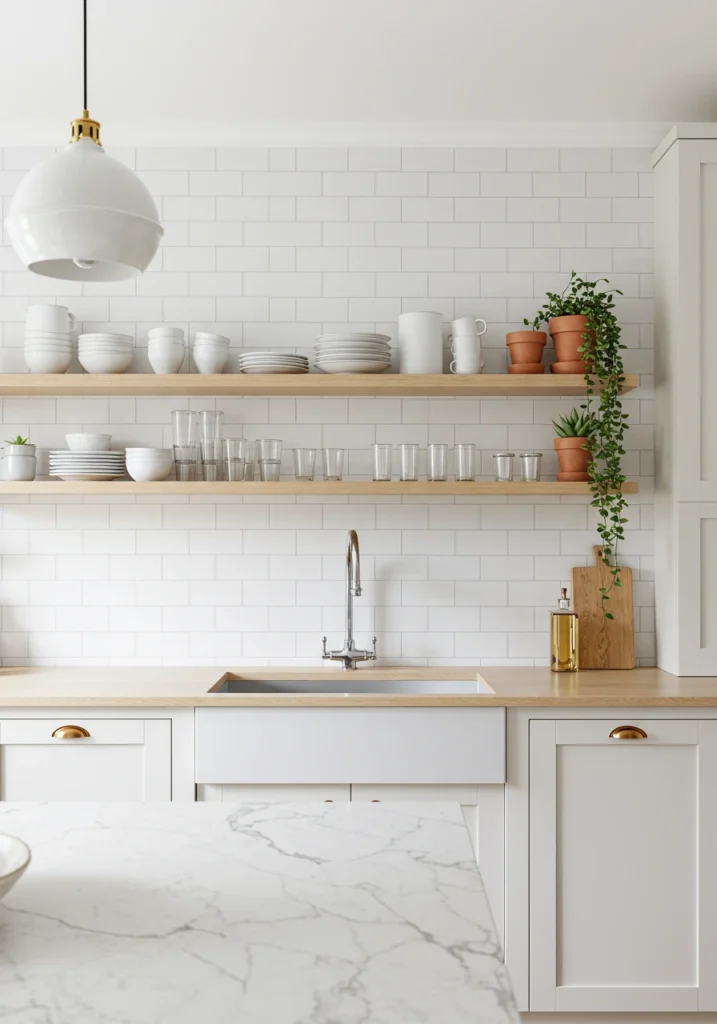
13. The Dynamic Diagonal
Who says kitchens have to be built on a 90-degree grid? In a space with an awkward footprint or challenging traffic patterns, introducing a diagonal element can be a revolutionary solution. Angling a counter, a peninsula, or an island can dramatically improve flow and create a unique, custom look.
This is a problem-solving layout for non-standard rooms. It’s about working with your home’s quirks, not against them, to create a kitchen that is both functional and architecturally interesting.
- Improve Traffic Flow: If a doorway or entry point creates an awkward path through the kitchen, angling the end of a cabinet run or a peninsula can help guide traffic more naturally and open up the walkway.
- Create a Focal Point: A diagonal element naturally draws the eye. Use this to your advantage by topping it with a stunning countertop material. Explore different kitchen countertops to find one that makes a statement.
- Maximize Awkward Corners: Use the triangular spaces created by the diagonal layout for clever storage, like a custom wine rack, a small bookshelf for cookbooks, or even just a spot for a tall plant.
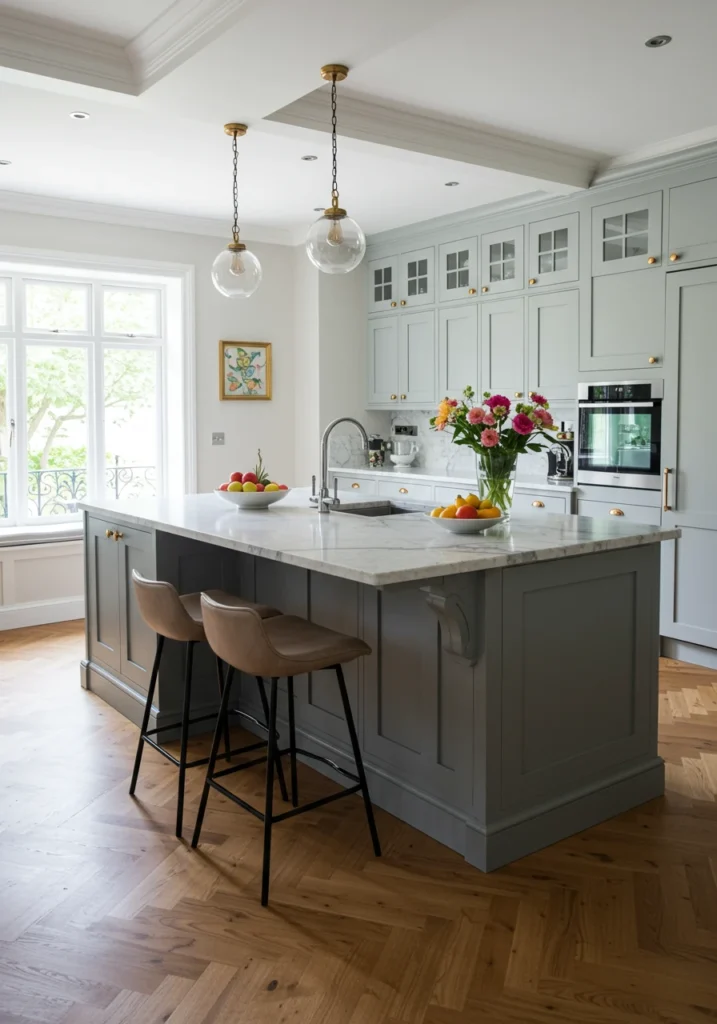
14. The Bold and Monochromatic
This layout strategy is less about the physical arrangement and more about a powerful color philosophy: go all in on one color. Drenching your cabinets, backsplash, and even walls in a single, unified hue can have a magical effect in a small kitchen. It blurs the lines and edges, tricking the eye into seeing a larger, more cohesive space.
This is a bold, high-fashion choice that exudes confidence. It can make a small kitchen feel incredibly luxe and intentional. While light colors work well, don’t be afraid of going dark for a moody, dramatic effect with dark kitchen cabinets.
- Play with Sheen: To prevent a monochromatic scheme from feeling flat, use the same color in different finishes. For example, pair matte cabinets with a glossy tile backsplash and an eggshell-finish wall. The way light hits the different surfaces will create subtle, sophisticated contrast.
- Add Texture: Introduce texture through materials. A fluted cabinet front, a zellige tile backsplash, or a honed (matte) stone countertop will add depth and interest without breaking the color scheme.
- Use Metallic Accents: Hardware, faucets, and lighting are your jewelry. In a monochromatic space, metals like brass, chrome, or black can pop beautifully, adding a touch of glamour and definition.
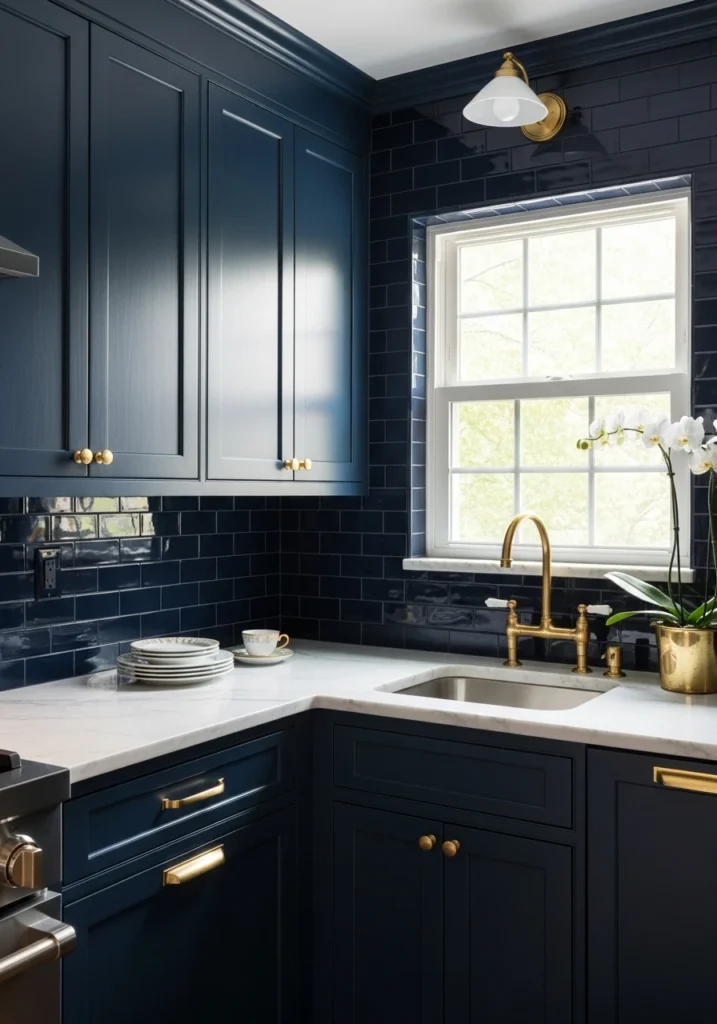
15. The Vintage-Inspired Kitchenette
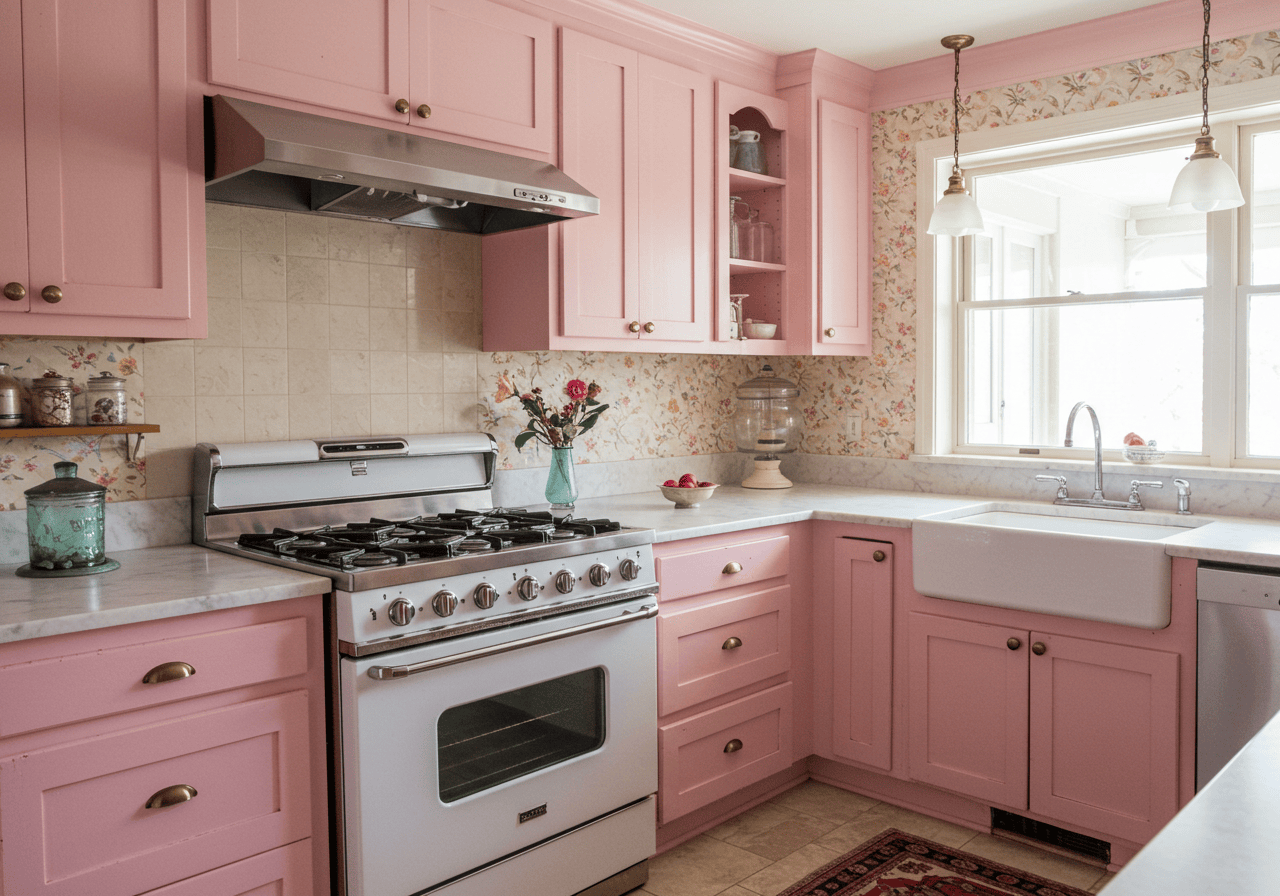
Step back in time with a charming and nostalgic layout. A vintage kitchen celebrates the playful colors, curved lines, and quirky details of bygone eras. In a small space, this theme is particularly effective because vintage kitchens were often smaller and more utilitarian by design.
This is for the homeowner with a passion for personality and a love for things with a story. It’s about creating a cheerful, unique space that doesn’t take itself too seriously.
- Source Retro Appliances: The easiest way to get the look is with a statement retro-style appliance, like a colorful SMEG or Big Chill refrigerator. They come in smaller sizes perfect for compact kitchens.
- Embrace Checkerboard Floors: Nothing says vintage like a classic black-and-white checkerboard floor. It’s a bold pattern that can actually make a small floor feel more expansive.
- Find Vintage-Style Details: Look for details like chrome-edged countertops, classic cabinet latches, and a schoolhouse-style light fixture to complete the look.

16. The “Broken Plan” Layout
Move over, open-plan. The “broken plan” layout is the sophisticated new trend that offers the best of both worlds. Instead of one vast, undefined space, this layout uses clever design elements to create distinct zones for cooking, dining, and living without building solid walls. It maintains an airy, connected feel while providing a sense of separation and purpose.
This is the perfect solution if you crave the spaciousness of an open layout but want to keep cooking messes partially hidden or create a cozier, more defined kitchen area.
- Use Glass Dividers: A Crittall-style glass and metal partition can separate the kitchen without blocking any light. It adds a cool, industrial edge and defines the space beautifully.
- Play with Levels: A subtle change in floor level—even a single step up or down—can create a powerful psychological distinction between the kitchen and the living area.
- Incorporate Half-Walls or Shelving Units: A half-wall topped with a counter or a tall, open-backed shelving unit can act as a room divider that provides storage and a surface without closing the space in. This concept works beautifully in a rustic modern kitchen.

17. The Organic Modern Mix
Bring the calming influence of nature indoors with an organic modern layout. This style is all about pairing the clean, minimalist lines of modern design with the warmth and texture of natural materials. In a small kitchen, this creates a serene, uncluttered, and light-filled atmosphere that feels both grounded and sophisticated.
An organic modern kitchen is a sanctuary. It prioritizes materials like wood, stone, and linen to create a space that feels honest, tactile, and deeply relaxing to be in.
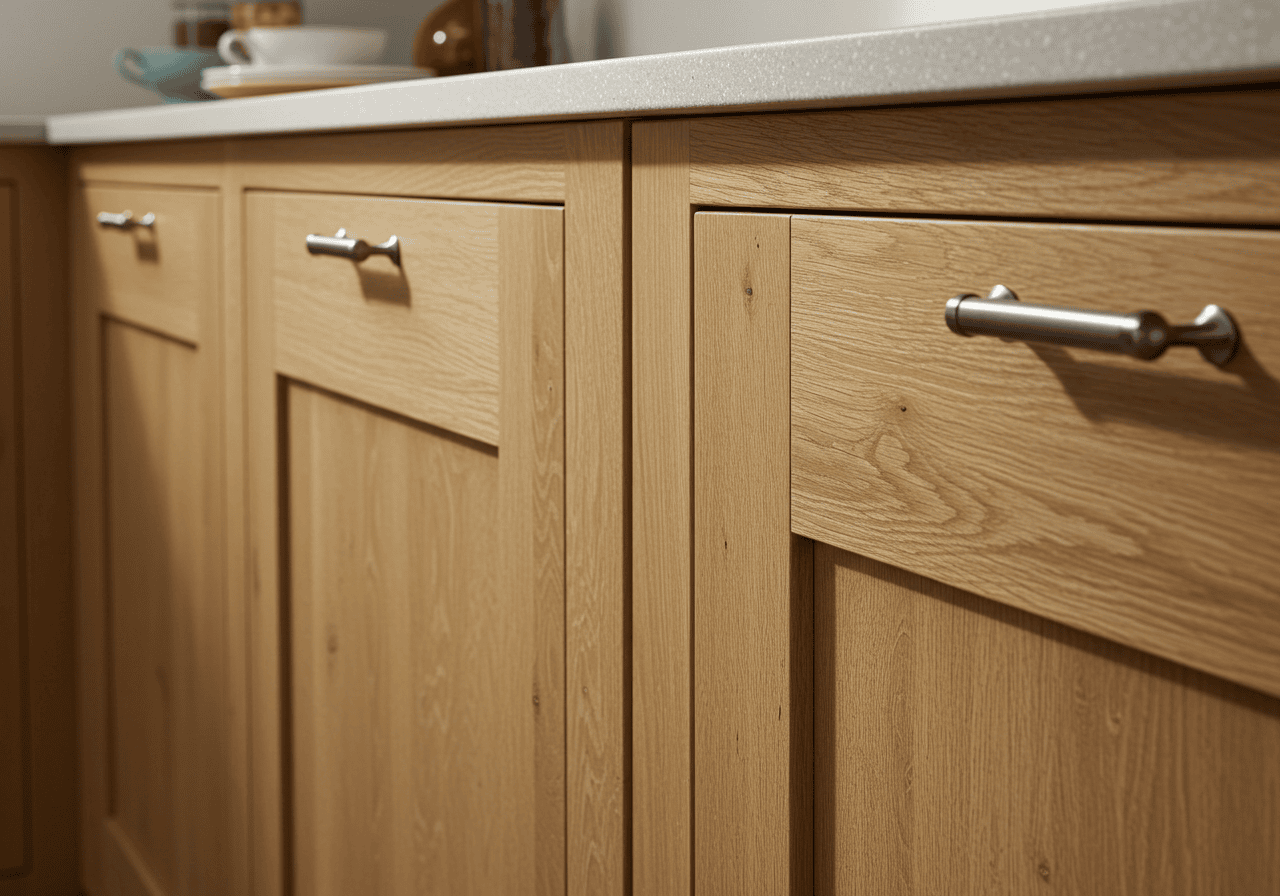
- Lean into Light Wood: Use light wood kitchen cabinets made of white oak or maple. Their subtle grain and warm tones create a perfect backdrop without overwhelming a small space.
- Choose Earthy Countertops: Opt for countertops that mimic natural stone, like a honed quartzite, a soft matte quartz, or even a beautifully crafted concrete.
- Accessorize with Nature: Bring the outside in! Add a potted fiddle-leaf fig in a corner, place a vase of eucalyptus on the counter, and use linen dish towels and ceramic dishware.
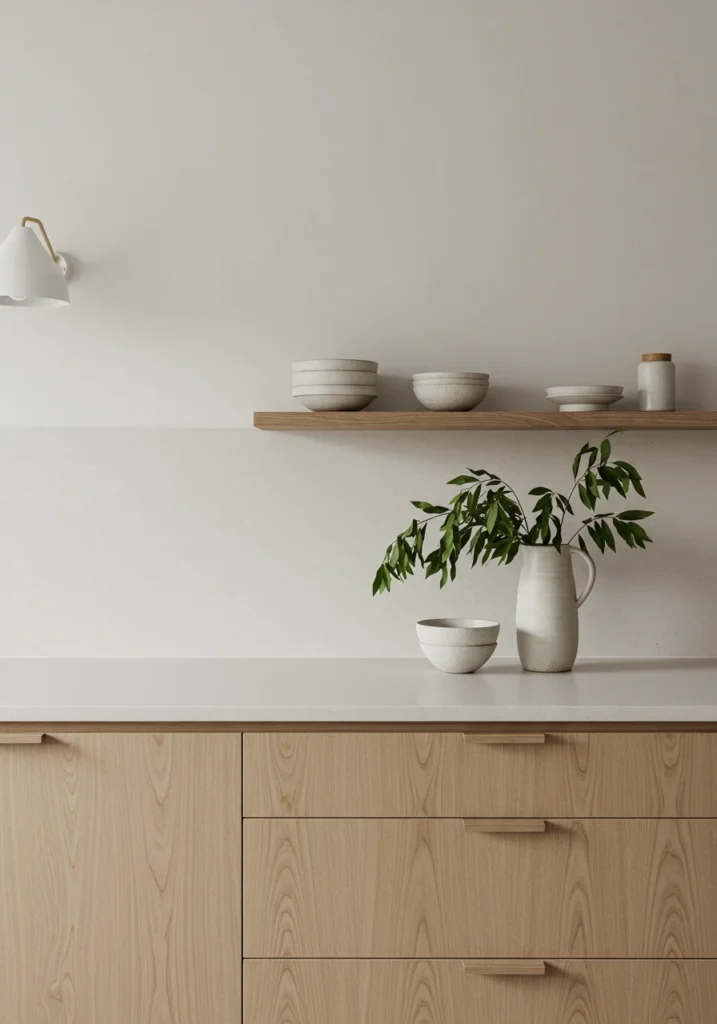
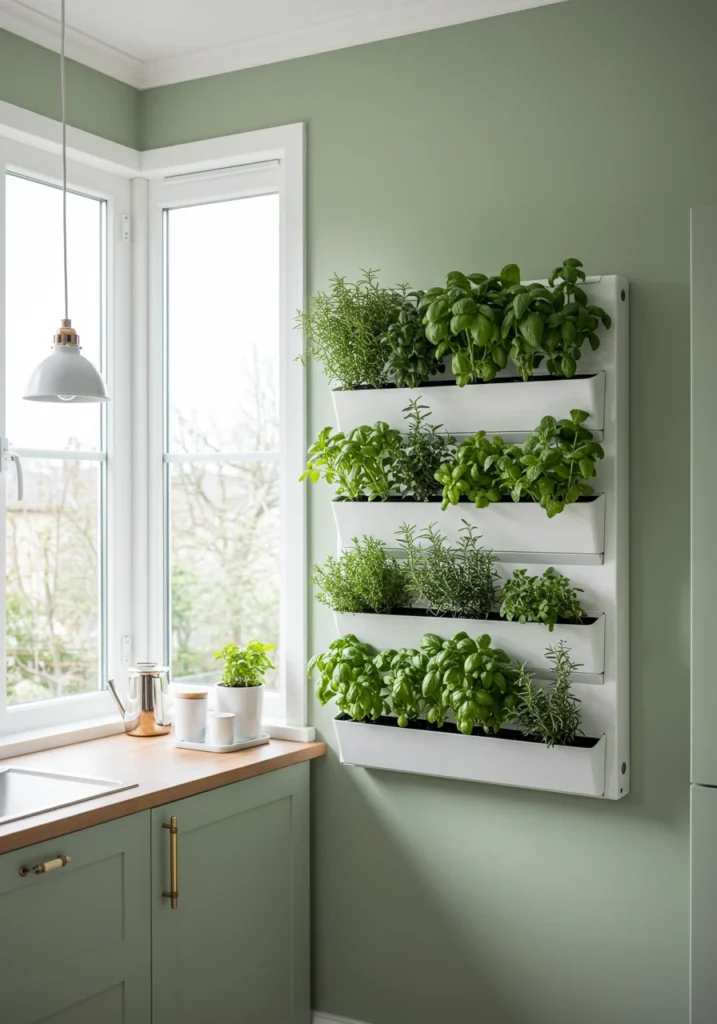
18. The Vertical Garden Wall
When horizontal space is at a premium, the only way to go is up! A vertical garden wall is an ingenious and beautiful layout solution for the tiniest of kitchens. It transforms a blank wall into a living, breathing feature that is both decorative and incredibly functional.
Imagine snipping fresh basil, mint, or parsley for your meals right from your kitchen wall. It’s a touch of garden-to-table freshness that adds life, color, and a wonderful aroma to your cooking space, making it a perfect addition to a sage green kitchen.
- Choose the Right System: There are many options, from wall-mounted pocket planters and modular hexagonal pots to sleek hydroponic systems. Choose one that fits your aesthetic and the amount of light the wall receives.
- Position It Smartly: Place your herb garden on a wall that’s out of the main traffic path but still easy to reach. A wall near a window is ideal for light-loving herbs.
- Keep It Simple: Don’t overcrowd the wall. A well-organized and curated selection of 3-5 different herbs will look chic and be easier to maintain than a chaotic jungle.
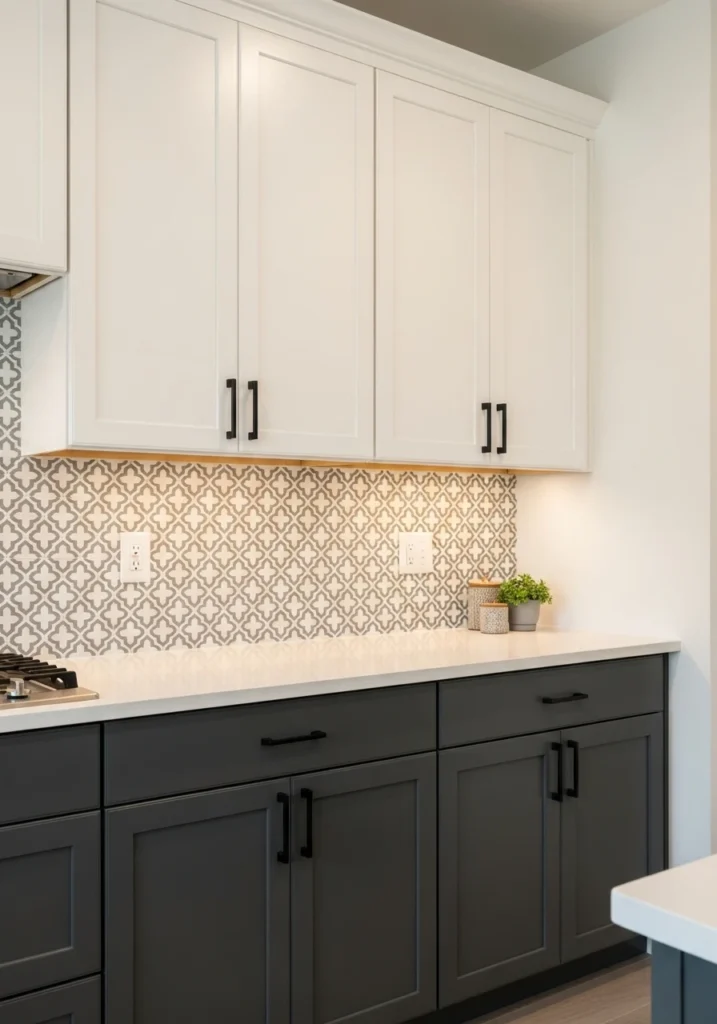
19. The Two-Tone Trick
This is a classic designer secret for making a small kitchen feel taller, lighter, and more interesting. The two-tone layout uses a darker, heavier color for the base cabinets and a much lighter color (often white or a pale neutral) for the upper cabinets and shelves.
This clever color play grounds the room while drawing the eye upward, creating an illusion of height and airiness. It’s a simple yet incredibly effective way to add depth and dimension to your layout.
- Ground the Space: Using a darker color like navy, charcoal, or forest green for the base cabinets creates a strong, stable foundation and can help hide scuffs and spills.
- Lift the Ceiling: By painting the upper cabinets the same (or a similar) light color as the walls, they visually blend in, appearing to recede. This makes the ceiling feel higher and the whole room more open.
- Connect with a Backsplash: Use your backsplash tile to bridge the two colors. A tile that incorporates both the light and dark tones can tie the whole look together seamlessly. It’s a hallmark of a stylish gray and white kitchen.
20. The Freestanding Furniture Approach
Break free from the built-in box! Instead of filling your kitchen with wall-to-wall fitted cabinetry, adopt a more flexible, eclectic approach using freestanding furniture. This “unfitted” kitchen style uses individual pieces that look more like furniture, which can make a small space feel less heavy and more personal.
This layout is perfect for renters or anyone who loves a collected-over-time, characterful vibe. It’s adaptable, charming, and allows you to take your favorite pieces with you if you move. It’s a key element in many retro kitchen designs.
- Use a Butcher’s Block Island: A classic wooden butcher’s block on legs can serve as a prep station and island without the visual weight of a built-in unit.
- Incorporate a Hutch or Armoire: Find a beautiful vintage hutch or a tall, narrow pantry cabinet to store your dishes, glassware, and dry goods. It adds instant character and a strong vertical element.
- Try Open Industrial Shelving: Swap some upper cabinets for a simple, wall-mounted metal and wood shelving unit. It’s perfect for storing everyday items and adds a light, airy feel.

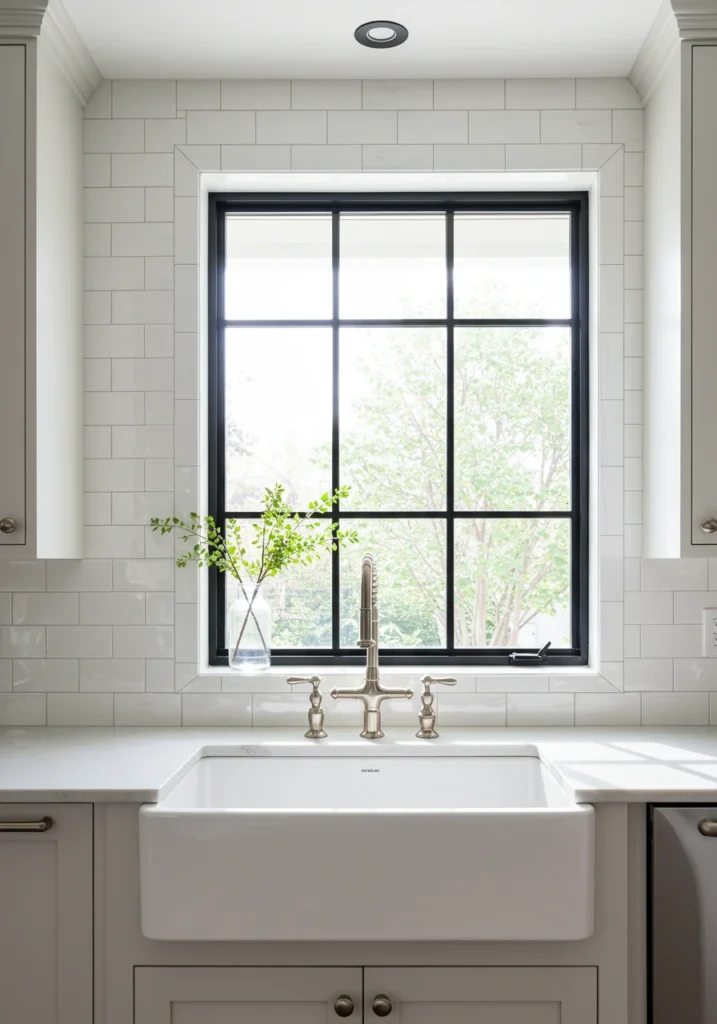
21. The Window-Forward Focus
If your small kitchen is blessed with a window, you’ve already won half the battle. Natural light is the single most effective tool for making any space feel bigger and brighter. This layout is all about maximizing that asset by designing the entire kitchen to revolve around the window.
Instead of treating the window as an afterthought, make it the undeniable star of the show. Frame it, celebrate it, and let the light pour in.
- Place Your Sink Strategically: The classic sink-under-the-window placement is popular for a reason. It gives you a pleasant view while doing chores and anchors the most-used spot in the kitchen with the best light.
- Keep the Surroundings Clear: Avoid placing bulky upper cabinets right next to the window frame. Opt for slim open shelves or simply leave the wall space clear to let the light spread.
- Frame It Beautifully: Add a simple Roman shade in a pretty fabric or paint the window trim in a contrasting color to draw attention to it. This approach is especially stunning in classic white kitchen ideas, where the window becomes a vibrant source of color and life.
Your Small Kitchen Can Be a Masterpiece
As you can see, a small kitchen is not a design dead-end—it’s an invitation to get creative! By choosing a smart layout that works for your space and your lifestyle, you can create a kitchen that is not only highly functional but also a true reflection of your personal style.
Whether you opt for a sleek single-wall design, a cozy U-shaped nook, or an airy open-shelf oasis, the right foundation will make all the difference. So embrace your compact space, pick your favorite ideas, and get ready to cook up a kitchen you absolutely love.