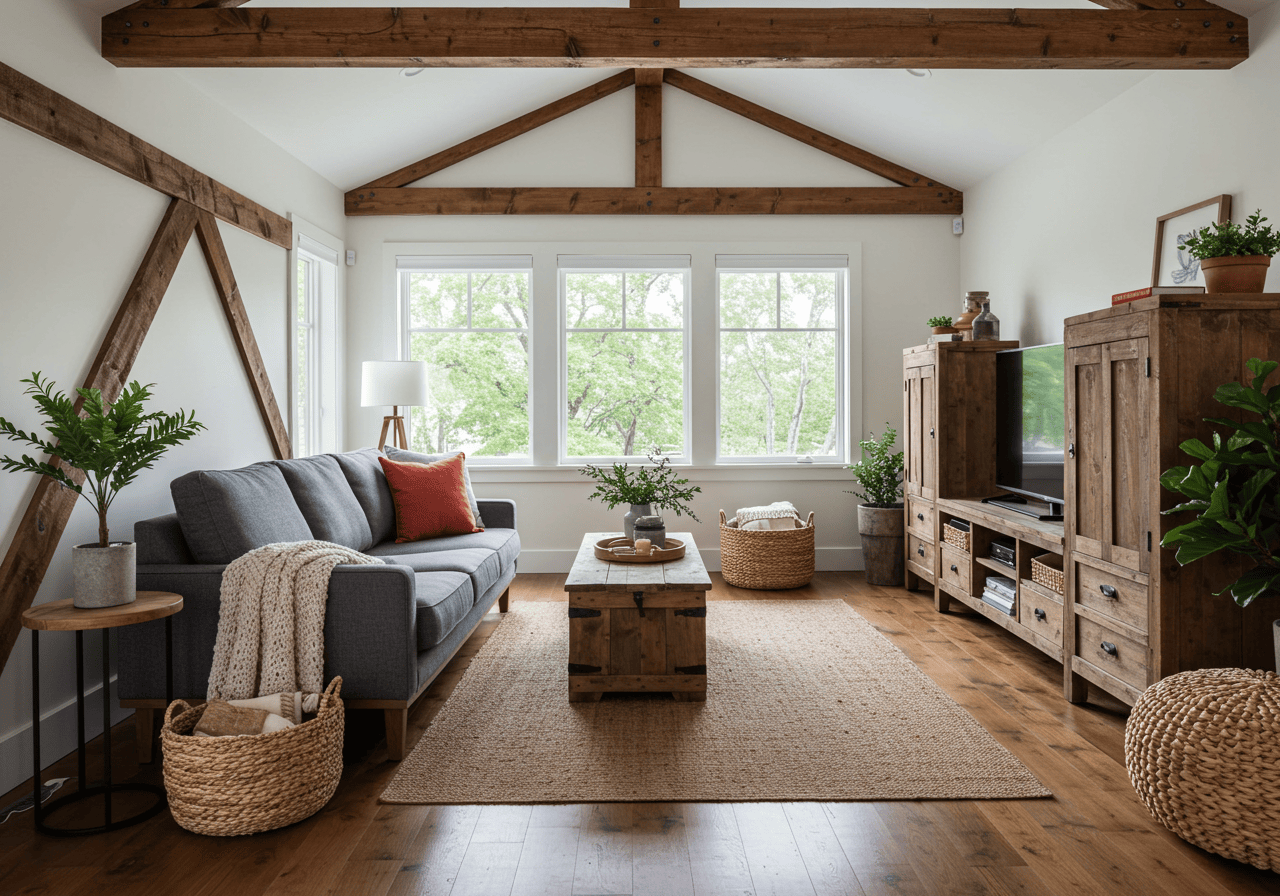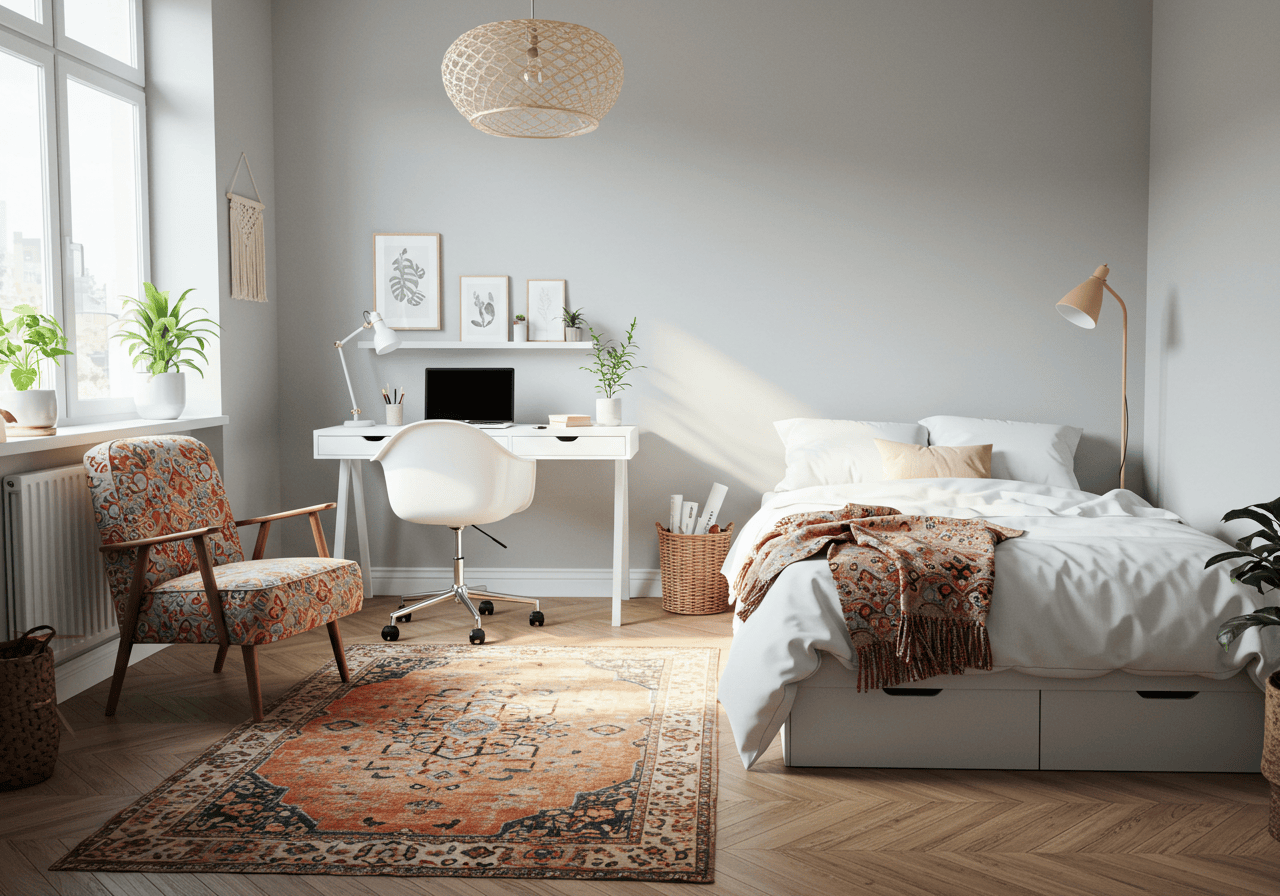

Let’s be real for a second. The TV is the focal point of the living room. I know, I know—we all pretend it’s the fireplace or that stunning piece of art on the wall, but when 8:00 PM hits, we’re all staring at the big black rectangle.
The problem? The console underneath it usually becomes a landing strip for chaos. It starts with a remote, then adds a router with blinking lights, a random candle you never light, and maybe a stack of mail you’re avoiding. Before you know it, your media console looks like a junk drawer turned inside out.
I’ve spent the last decade renovating homes, and I can tell you that styling a TV unit is a delicate dance between “lived-in” and “messy.” You want personality, but you don’t want visual noise competing with your favorite show.
If you’re tired of staring at a clutter trap, you’re in the right place. We’re going to fix this, hide those ugly cords, and make your media center look intentional.
The “Why”: Visual Calm in a High-Traffic Zone
Why does this matter? Because visual clutter creates mental clutter.
The TV area is usually the “heaviest” part of the room visually because screens are essentially giant black voids. If you surround that void with tiny, scattered trinkets, your eye never knows where to rest. By streamlining this space, you actually make your room feel bigger and your ceilings feel higher.
If you are working with a minimalistic interior design, getting this area right is non-negotiable.
Step 1: The “Clean Slate” Protocol
Before you buy a single vase, strip the unit. Take everything off. Yes, even the router (we’ll deal with him later).
Give the surface a good wipe down. Now, look at the blank canvas.
- Is the TV mounted or on a stand? If it’s on a stand, you have less surface area to play with.
- Where are the cords going? If they are visible, no amount of decor will fix the look.
- What is the scale? A tiny TV on a huge unit looks weird; a huge TV on a tiny unit looks dangerous.
The Golden Rule of Scale: Use fewer, larger items rather than a dozen small ones. Tiny items read as clutter from the sofa. Large items read as design.
Step 2: The Triangle Method (Your New Best Friend)
I use this method for everything from coffee table decor to bookshelves, but it is essential for TV units.
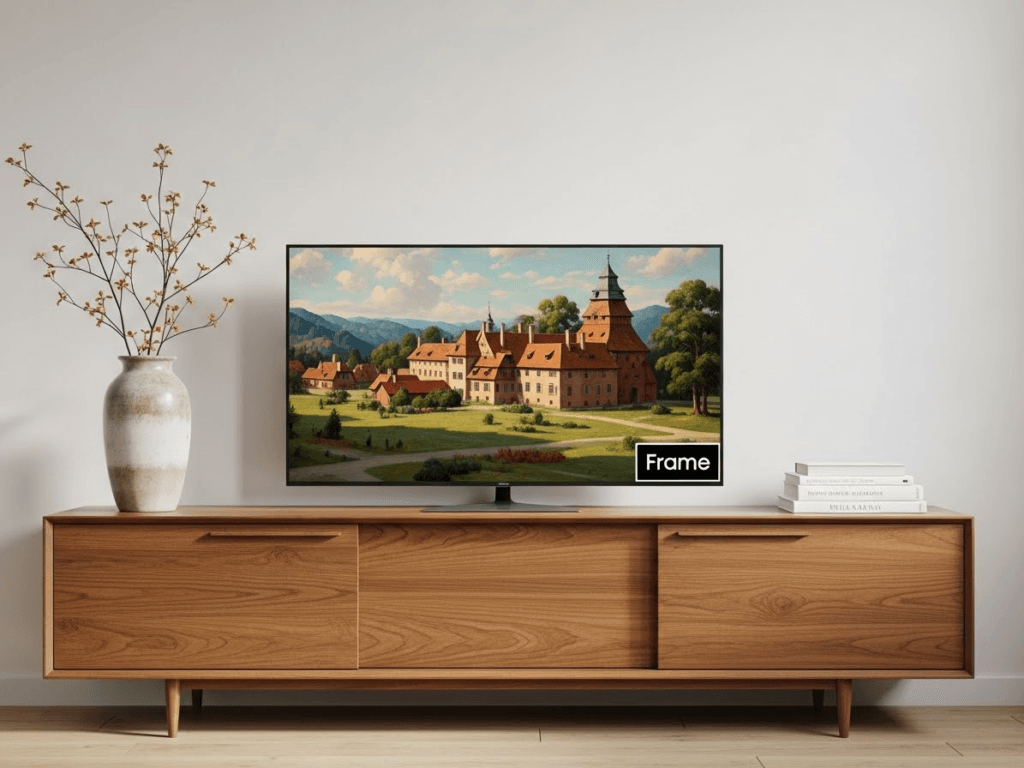
The visual weight needs to be balanced. Since the TV is a heavy, centered object, you need to flank it. Imagine a triangle where the TV is the top point, and your decor anchors the bottom two corners.
The Left Side: Height
Add something tall on one side to bridge the gap between the console surface and the TV.
- What works: A tall vase with branches (adds organic height without visual weight), a sculptural table lamp, or a tall candlestick.
- The Constraint: Ensure it doesn’t block the screen! I usually aim for an object that hits about 1/3 of the height of the TV screen.
The Right Side: Weight & Layering
On the opposite side, go lower and wider to create asymmetry.
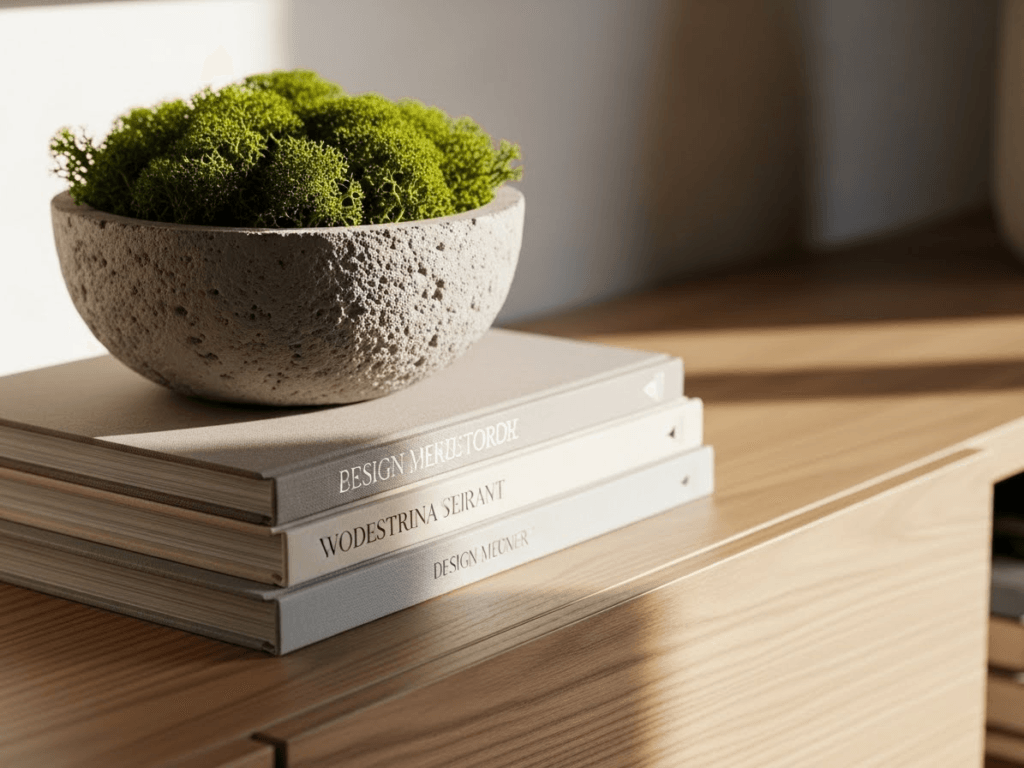
- What works: A horizontal stack of 2-3 hardbound books with a small decorative object (like a stone knot or heavy bowl) on top.
- Why it works: The horizontal lines of the books balance the vertical lines of the vase on the other side.
Step 3: Hiding the “Ugly Tech”
This is the part nobody likes to talk about, but we have to. Routers, cable boxes, and gaming consoles are aesthetically offensive. There, I said it.
If you are styling a small apartment or a studio where every inch is visible, you have to be sneaky.
- The Basket Trick: If your console has open shelves below, use identical woven baskets. Throw the gaming controllers and remotes in there. Texture hides a multitude of sins.
- The “Book” Concealment: I often hide vertical routers behind a large, propped-up piece of framed art or a stiff coffee table book leaning against the wall.
- Cord Management: If you are a renter and can’t drill holes for a pass-through, buy paintable cord covers. Run them straight down the center. It’s better to have one organized line than a spiderweb of wires.
Style Strategies by Unit Type
For the “Open Shelf” Console
If your TV stand is open (no doors), you have double the work because the bottom shelves are visible.
- Grid Layout: Treat the shelves like a grid. If the top left has a stack of books, the bottom right should have a stack of books.
- Negative Space: Leave at least 30% of the shelf empty.
- Use the 60-30-10 Rule: 60% neutral storage (baskets), 30% books/objects, 10% empty space.
For the “Floating” Wall Unit
These are popular in modern homes and loft apartments.
- Keep it clear: Since it floats, putting too much on it can make it look like it’s about to fall off the wall.
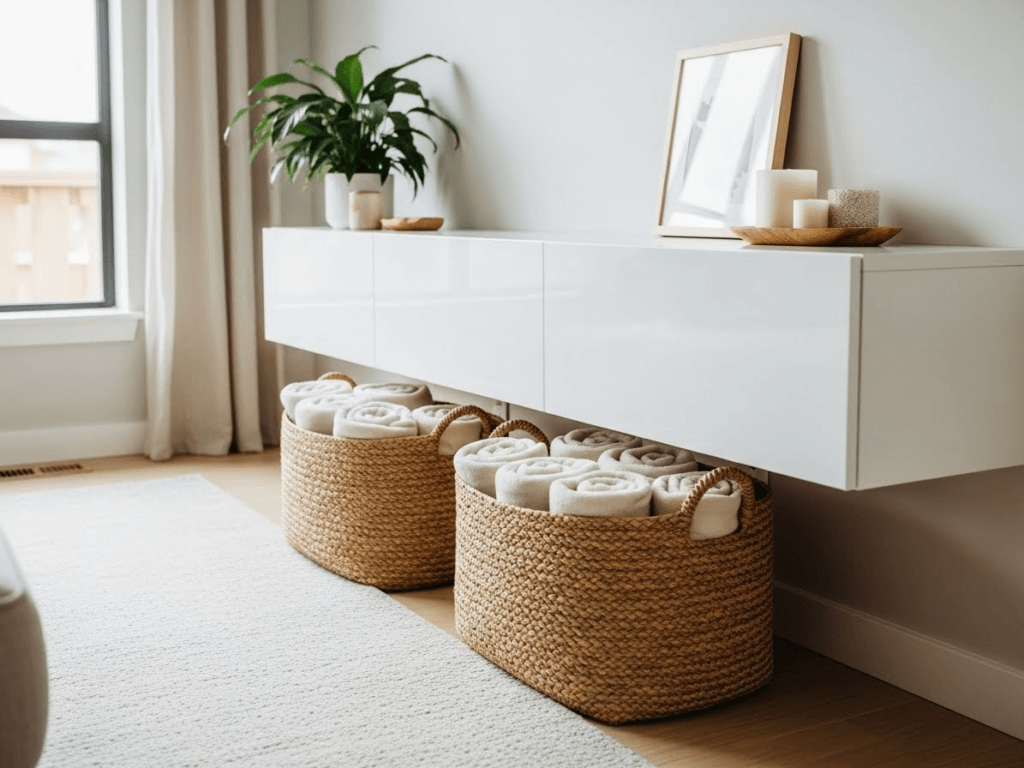
- Anchor underneath: If the gap between the floor and the floating unit is high, place two large floor poufs or substantial woven baskets underneath to “ground” the design.
For the Renter / Studio Dweller
If you are in a studio apartment, your TV unit often doubles as a dresser or storage.
- Dual Function: Use beautiful boxes with lids. They can hold paperwork or socks, but look like decor.
- The Tray Hack: Corral small items (remotes, coasters, lip balm) on a marble or wooden tray. If it’s on a tray, it’s “styled.” If it’s loose, it’s “mess.”
The “Do Not” List (Learn from My Mistakes)
I’ve ruined perfectly good designs by ignoring these rules. Save yourself the headache:
- Don’t use small photo frames: Unless they are large (8×10 or bigger) and leaning against the wall, small frames (4×6) look like clutter next to a massive TV. Move the family photos to a hallway gallery wall or a home library shelf.
- Don’t add candles near the heat: Electronics generate heat. Putting wax candles directly next to the TV vents is a recipe for warped candles (and a potential mess).
- Don’t ignore the “Black Hole”: If you have a black TV and a black console, add light-colored decor (cream vases, white marble) to create contrast. If you don’t, everything disappears into the shadows.
Comparison: Symmetrical vs. Asymmetrical Styling
There are two main schools of thought here. Neither is wrong, but one will definitely suit your personality better than the other.
| Feature | Symmetrical Styling | Asymmetrical Styling |
| The Vibe | Formal, traditional, organized. | Casual, modern, dynamic. |
| How to do it | Identical lamps on both sides; matching stacks of books. | A tall vase on the left; a low bowl and books on the right. |
| Best For | People who crave order and visual quiet. | People who want a “collected” and artistic look. |
| Risk Factor | Can look a bit like a hotel room (stiff). | Can look messy if the visual weight isn’t balanced. |
| Maintenance | High: If one item moves, the balance breaks. | Low: It’s more forgiving of daily life. |
Final Verdict: Unless you live in a formal showroom, go Asymmetrical. It feels more human and less robotic. It allows you to incorporate unique pieces, like wabi-sabi furniture or hand-thrown pottery, without needing to buy two of everything.
Expert Tips: The “Secret Sauce”
These are the small details that take a TV setup from “I cleaned up” to “I hired a designer.”
1. The Magic of Backlighting
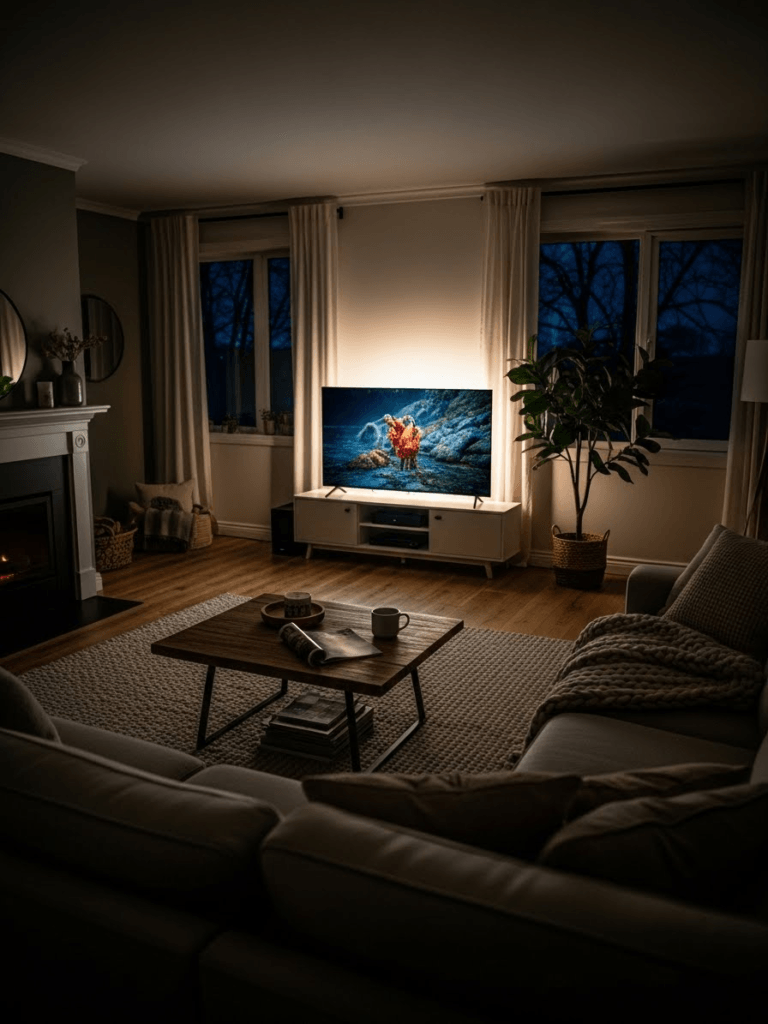
This is my favorite trick. Add a simple LED strip behind your TV (USB powered, plugs right into the TV).
- Why: It reduces eye strain by lowering the contrast between the bright screen and the dark room.
- The Look: It creates a soft, ambient glow that makes the TV setup look high-end. It also draws the eye away from any remaining cords. Think of it as a localized version of sophisticated ceiling design ideas—lighting changes everything.
2. Add Life (Literally)
Electronics are cold, hard, and plastic. You need to counteract that with something organic.
- A small trailing pothos plant on a shelf creates movement.
- If your room is dark (like a basement bonus room), opt for high-quality faux stems or dried eucalyptus.
- Design Rule: Don’t let foliage block the infrared sensor on the TV. There is nothing more annoying than doing yoga to change the channel.
3. Rotate Seasonally
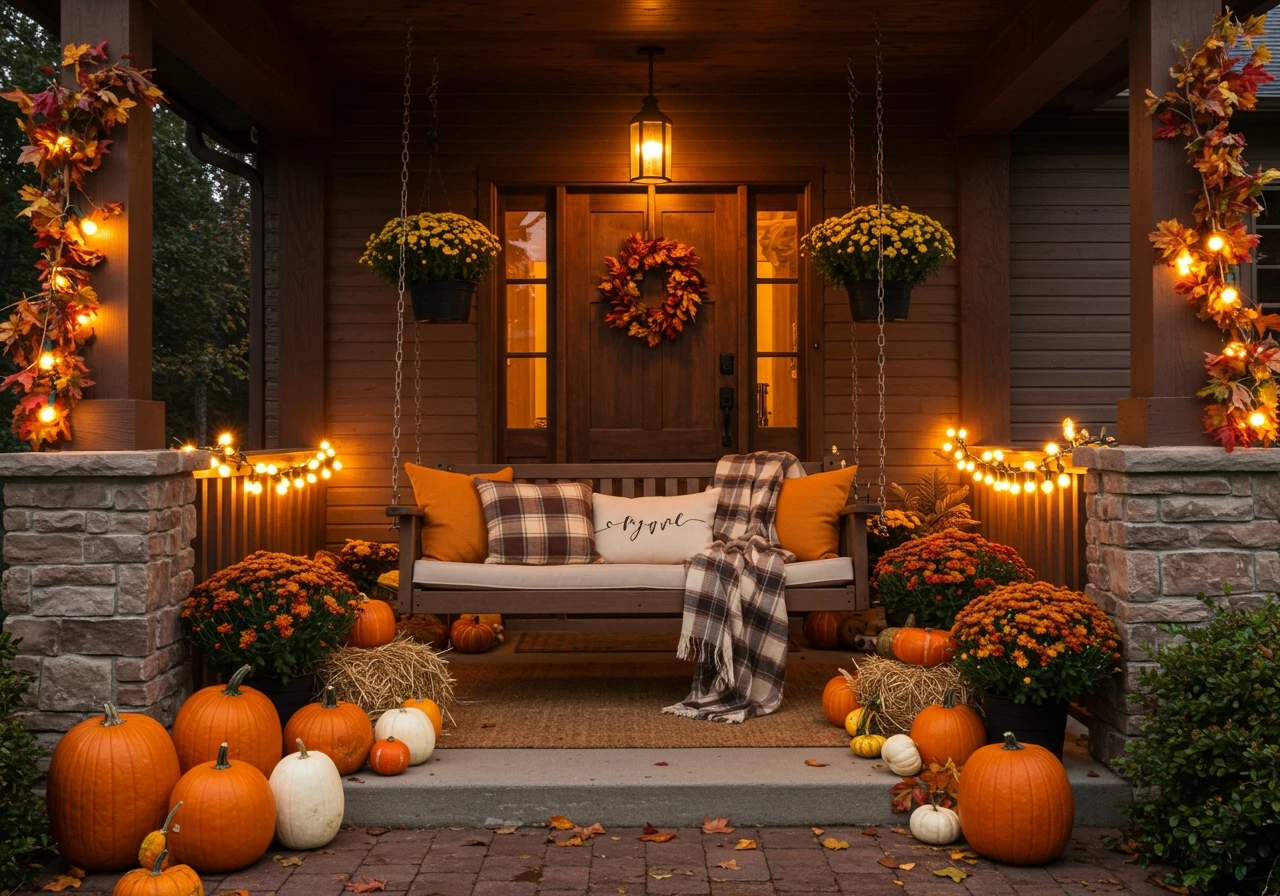
Your TV unit isn’t a tattoo; it’s not permanent. If you have too much decor, don’t jam it all on there. Rotate it. Keep your heavy velvet pumpkins for your front porch fall decor or entryway, and keep the TV area light and airy for summer. If you have leftover decor, move it to the guest room or spare room.
Frequently Asked Questions
1. What should I put on the wall
Honestly? Usually nothing. If you have a console, a TV, and decor on the console, adding a gallery wall above the TV is visual overload. Let the wall breathe. If the ceiling is incredibly high, a single long floating shelf mounted 12-18 inches above the TV can work, but keep styling minimal.
2. Can I use a dresser as a TV stand?
Absolutely. In fact, for small apartment ideas, I prefer it. Dressers are taller (better viewing height for bedrooms) and offer way more storage than standard media consoles. Just make sure you drill a hole in the back for cords so they don’t drape over the front.
3. How do I style a corner TV unit?
Corner units are tricky because they are deep. Pull the TV forward to the front edge of the unit. Use the dark triangular space behind the TV to hide the ugly cords and surge protectors. Do not try to put decor behind the TV in that corner; it will just look like clutter in a cave.
4. My TV is mounted. What do I do with the empty console surface?
Since the TV isn’t taking up surface space, you have more room to play. Create three distinct groupings: Left, Center, Right.
- Left: Tall Vase/Lamp.
- Center: A low, wide tray or coffee table book.
- Right: A sculptural object or plant.
- Ensure the tallest item doesn’t overlap the bottom of the TV frame.
Final Words
Styling your TV unit doesn’t require a degree in design—it just requires the discipline to edit. Remember: the TV is the star of this specific show. Your decor is the supporting cast.
Start by clearing the surface today. Toss the junk mail, hide the router, and find one tall item and one stack of books. You’ll be shocked at how much lighter the whole room feels.
Now, go enjoy your Netflix binge in a clutter-free zone.