

Choosing the centerpiece for your kitchen layout is a major decision. It dictates workflow, storage, and the overall social dynamic of the space. Two of the most popular contenders are the kitchen island and the peninsula. While both offer extra counter space and seating, they function in fundamentally different ways.
A kitchen island is a freestanding social hub, perfect for large, open-concept homes where flow is paramount. A peninsula is a space-saving extension, ideal for defining a kitchen area within a smaller or more traditional layout. This guide will break down every aspect, from cost to style, to help you confidently decide which is the perfect fit for your home and lifestyle.
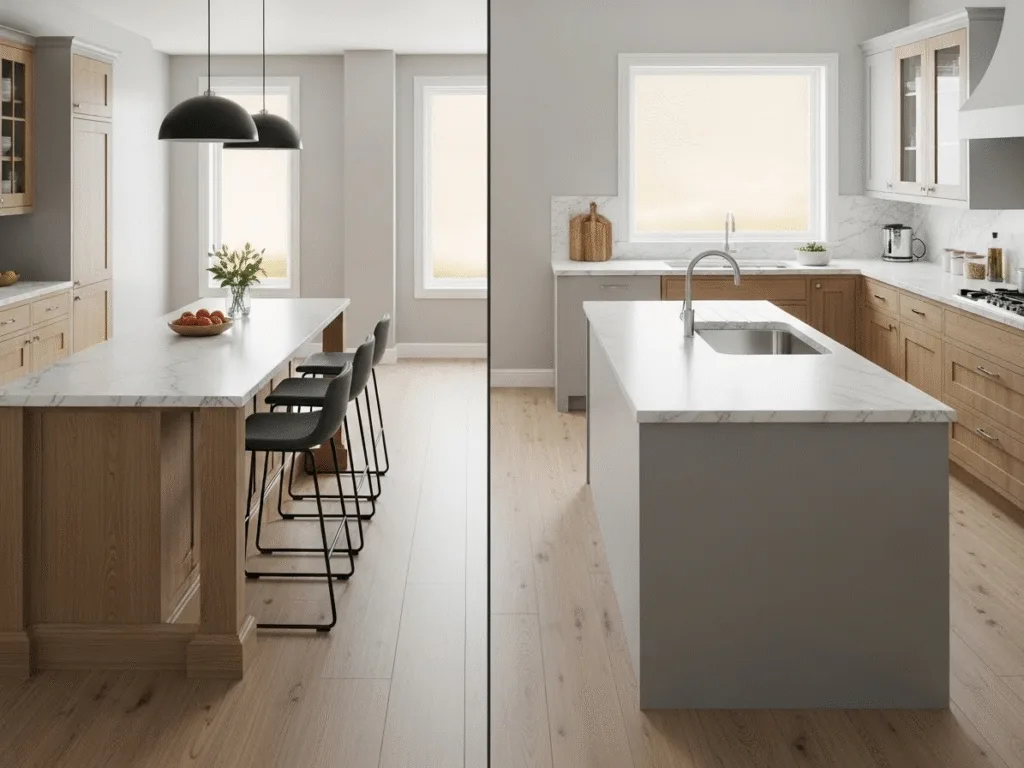
Understanding the Basics: What is a Kitchen Island?
A kitchen island is a freestanding counter and cabinet unit, completely detached from the other kitchen counters. Because it’s accessible from all four sides, it’s a versatile and dynamic feature that can act as the true heart of the kitchen.
Islands can be designed for a specific purpose—like a prep station with a second sink or a cooking center with a built-in range—or they can be a multi-functional hub for dining, homework, and entertaining. Their independent nature makes them a powerful design statement in any kitchen.
Benefits of a Kitchen Island
- Excellent Traffic Flow: An island allows for multiple pathways around the kitchen, preventing traffic jams when more than one person is cooking or cleaning.
- The Ultimate Social Hub: People can gather on all sides, making it perfect for entertaining guests or keeping an eye on kids while you cook.
- Versatile Functionality: You can pack in incredible features, from wine fridges and microwave drawers to dedicated chopping blocks. Check out these kitchen island ideas for inspiration.
- Ample Storage: The entire base of the island is an opportunity for deep drawers, pull-out spice racks, and hidden storage for small appliances.
Limitations of a Kitchen Island
- Requires Significant Space: This is the biggest drawback. Islands need a large footprint plus adequate clearance on all sides to be functional.
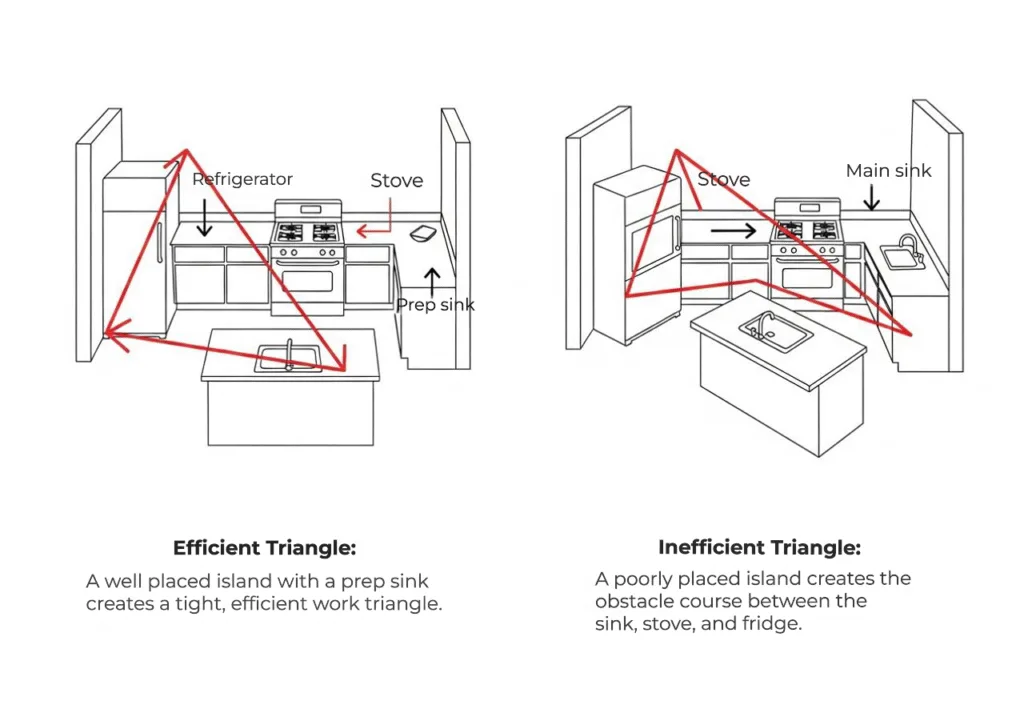
- Can Disrupt the Work Triangle: If not planned carefully, an island can become an obstacle between your sink, stove, and refrigerator, making your workflow less efficient.
- Higher Cost: Due to needing finished panels on all four sides and potentially complex plumbing or electrical work, islands are often more expensive to install.
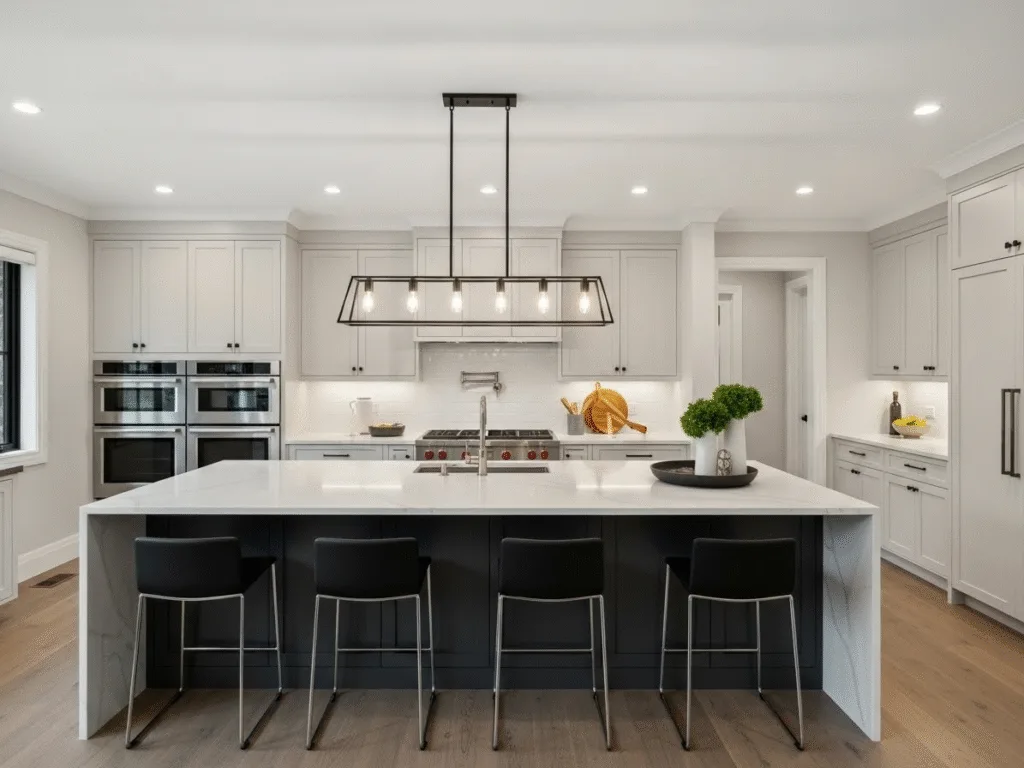
Understanding the Basics: What is a Kitchen Peninsula?
A kitchen peninsula is a counter unit that is connected to a wall or the main run of cabinets on one end, with three accessible sides. Think of it as an island that’s tethered to the rest of the kitchen. It’s often used to transform an L-shaped kitchen layout into a more functional U-shape.
Peninsulas are excellent at creating a soft boundary that defines the kitchen area without completely closing it off from an adjoining dining or living room. They offer a continuous work surface, connecting seamlessly with your main kitchen countertops.
Benefits of a Kitchen Peninsula
- Highly Space-Efficient: Because one end is attached, a peninsula requires less overall floor space than an island, making it a brilliant solution for small kitchen ideas.
- Defines the Kitchen Zone: It creates a clear and practical border in an open-plan home, separating the cooking area from the living or dining space.
- Uninterrupted Workflow: A peninsula can neatly organize the kitchen into a compact work triangle, keeping everything you need within easy reach.
- More Affordable: Generally, peninsulas are less expensive to build and install. They require fewer finished panels and often don’t need new plumbing or electrical lines run under the floor.
Limitations of a Kitchen Peninsula
- Can Create Bottlenecks: With only one entry and exit point to the main kitchen area, a peninsula layout can feel cramped and create traffic jams, especially in busy households.
- Less Accessible Seating: Seating is typically limited to one or two sides, making it feel less communal and conversational than an island.
- Fixed Placement: Its position is determined by the existing wall or cabinet layout, offering little flexibility.
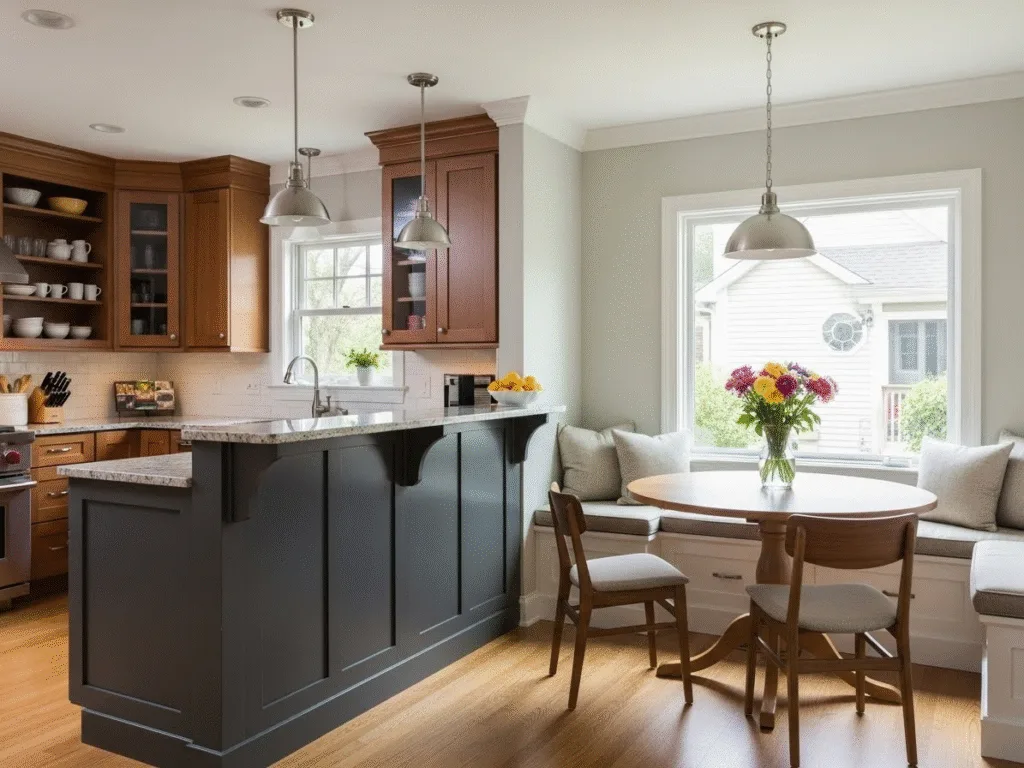
Kitchen Island vs. Peninsula: A Head-to-Head Comparison
Now that we understand the fundamentals, let’s put them side-by-side. Seeing how they stack up in key areas will help clarify which one is the better choice for your specific needs.
Quick Comparison Table
| Feature | Kitchen Island | Kitchen Peninsula |
| Traffic Flow | Excellent. Allows for multiple pathways and open movement. | Restricted. Creates a single entry/exit point, which can cause bottlenecks. |
| Space Required | Large. Needs significant floor space and 36-48″ of clearance on all sides. | Moderate. A more compact solution that works well in smaller kitchens. |
| Seating Style | Communal & Social. Seating can wrap around multiple sides. | Linear & Directed. Seating is usually along one side, facing away from the kitchen. |
| Installation Cost | Higher. Often requires more materials and complex utility hookups. | Lower. Simpler construction and often utilizes existing utility lines. |
| Best For | Large, open-concept homes, avid entertainers, and creating a dramatic focal point. | Small to medium-sized kitchens, defining zones, and maximizing counter space in a compact area. |
Aesthetics and Visual Impact
The visual statement each option makes is dramatically different.
- Kitchen Island: An island is an instant focal point. It draws the eye, anchors the room, and feels grand and luxurious. Its freestanding nature creates a sense of openness and space. In a modern kitchen design, a waterfall island with a sleek countertop can be a piece of architectural art. It commands attention.
- Kitchen Peninsula: A peninsula is more integrated and subtle. It works to unify the kitchen, creating a cohesive and contained look. It’s less of a showstopper and more of a practical, visual boundary. This can make a space feel cozier and more intentionally designed, especially when matching the wooden kitchen cabinets or a bold color like these stunning blue kitchen cabinets.
Practicality, Workflow, and Functionality
How you use your kitchen day-to-day is arguably the most important factor.
Workflow (The Kitchen Triangle): The “kitchen work triangle” is an age-old design principle connecting the sink, refrigerator, and stove.
- An island can either enhance this or obstruct it. If poorly placed, you’ll constantly be walking around it. A well-designed island, however, can form one point of the triangle (e.g., with a prep sink or cooktop) for ultimate efficiency.
- A peninsula naturally creates a very compact and efficient work triangle. Everything is just a few steps away, making it a powerhouse for a solo cook.
Storage: Both offer significant storage, but in different ways.
- An island provides deep, accessible storage on all four sides. It’s ideal for storing large pots, small appliances, or even creating a dedicated baking zone.
- A peninsula provides an uninterrupted run of cabinets, but you may have a “blind corner” cabinet where the peninsula meets the wall, which can be awkward to access without specialized hardware.
Seating:
- An island promotes face-to-face interaction. Seating can be placed on two or even three sides, making it feel like a café or bar. This is perfect for casual family meals and entertaining.
- Peninsula seating is typically in a straight line along the outer edge. This is great for quick breakfasts or homework sessions, but it’s less conversational.
Expert Insights: Getting the Details Right
Professional designers know that success lies in the details. Here are some key principles to consider.
Essential Measurements and Clearances
- Walkway Clearance: This is non-negotiable. You need a minimum of 36 inches (91 cm) of clear floor space around an island or peninsula. However, interior designers strongly recommend 42-48 inches (107-122 cm) in a multi-cook kitchen or for high-traffic paths. This allows for doors and drawers to open without blocking the walkway.
- Island Size: An island should look proportional to the room. A good rule of thumb is that it shouldn’t take up more than 10% of the kitchen’s total square footage. The minimum functional island size is about 4 feet long by 2 feet deep.
- Countertop Overhang for Seating: For comfortable seating, allow for a countertop overhang of at least 15 inches (38 cm) for bar-height seating and 12 inches (30 cm) for counter-height seating.
Compatibility with Popular Design Styles
- Modern & Minimalist: Both can work, but the clean lines of a waterfall-edge island often make it the star of a modern kitchen. A sleek, handleless peninsula can also look incredibly chic.
- Farmhouse & Traditional: A butcher-block island with carved legs feels classic and inviting. A peninsula attached to a run of shaker-style grey kitchen cabinets creates a cozy, established feel.
- Boho & Eclectic: An island offers a chance to introduce a contrasting color or material, like a reclaimed wood base. A peninsula can be topped with colorful tiles to define it as a unique zone.
Scenario-Based Recommendations: What’s Best for Your Home?
Let’s apply this to real-world situations.
For Small Spaces & Apartments:
Winner: Peninsula. A peninsula maximizes counter and storage space without eating up the precious floor area needed for an island’s clearance. It’s the undisputed champion for any small kitchen layout.
For Avid Entertainers & Large Families:
Winner: Island. The superior traffic flow and social, multi-sided seating make an island the perfect party hub. It allows guests to gather without getting in the cook’s way.
For Renters (or a Non-Permanent Solution):
Winner: Neither (Consider a Rolling Cart). If a permanent installation isn’t an option, a freestanding rolling cart or butcher block provides the flexible prep space of an island without the commitment.
For Maximizing a Tight Budget:
Winner: Peninsula. With fewer finished sides and simpler utility connections, a peninsula is almost always the more cost-effective option. This leaves more budget for things like learning how to paint kitchen cabinets for a fresh look.
For Creating a Luxury, High-Impact Look:
Winner: Island. A grand, oversized island made from marble or quartz is the ultimate statement piece. It anchors the room and exudes a sense of luxury and permanence that’s hard to replicate with a peninsula.
Which One Should You Choose? A Simple Guide
Still undecided? Answer these simple questions to find your perfect match.
- Do you have at least 10 feet x 12 feet of open kitchen space?
- Yes: An island is a strong possibility. You likely have the room for proper clearances.
- No: A peninsula is the safer and more functional choice.
- Is your kitchen primarily a social hub for family and guests?
- Yes: An island’s communal design is perfect for your lifestyle.
- No: A peninsula provides the workspace you need without prioritizing social gathering.
- Is your top priority an efficient, one-person cooking zone?
- Yes: A peninsula creates a compact, step-saving work area that is a dream for solo cooks.
- No: An island’s separated nature might better suit a two-cook kitchen.
- Are you working with a strict budget?
- Yes: A peninsula will likely save you significant money on materials and labor.
- No: You have the flexibility to explore the more complex and costly island option.
Frequently Asked Questions (FAQs)
1. What is the minimum space needed for a kitchen island?
You need at least 36 inches, but preferably 42 inches, of clearance on all sides. This means for a standard 2-foot deep island, your kitchen width should be at least 12 feet to accommodate the island and surrounding cabinets comfortably.
2. Can a peninsula look modern and high-end?
Absolutely! A peninsula with a sleek waterfall countertop, flat-panel cabinets, and integrated appliances can look incredibly modern and sophisticated. The key is in the materials and finishes you choose.
3. Is a kitchen island better than a dining table?
They serve different purposes. An island is for casual dining and prep, while a table is for more formal, seated meals. This kitchen island vs. table comparison breaks down the choice in more detail.
4. Can you add a peninsula to an existing kitchen?
Yes, this is a very common renovation. It’s often easier than adding an island because you can extend it from an existing cabinet run, simplifying construction and plumbing/electrical work.
5. Does an island add more resale value than a peninsula?
Generally, a well-designed kitchen island is a highly desirable feature for homebuyers and can add significant resale value, especially in open-concept homes. However, a poorly placed island that ruins workflow can detract from value. A functional peninsula is always better than a dysfunctional island.
The Final Verdict: A Summary
| Aspect | Kitchen Island | Kitchen Peninsula |
| Best For | Large, open-plan kitchens & social entertaining. | Smaller kitchens & defining a work zone. |
| Workflow | Flexible but can create obstruction. | Compact, efficient, but can create bottlenecks. |
| Cost | Higher | Lower |
| Visuals | Strong, dramatic focal point. | Integrated, cohesive, and space-defining. |
Ultimately, the choice between a kitchen island and a peninsula comes down to space and lifestyle.
Choose a kitchen island if you have a large, open kitchen and you envision it as the bustling, social heart of your home—a place for homework, morning coffee, and party guests to gather.
Choose a kitchen peninsula if your space is more modest, if you want to create a clear visual separation between your kitchen and living area, or if you prize a highly efficient, compact workspace above all else. Both are fantastic additions, but the right one will feel like it was always meant to be there.


