
Let’s be honest: buying curtains sounds easy until you’re standing in the aisle at Home Goods, staring at fifty shades of beige, wondering if “grommet top” is a good thing or a crime against design.
I have seen more living rooms ruined by bad window treatments than I care to admit. We’re talking “high-water” drapes that hover six inches off the floor (a total tragedy), flimsy fabrics that look like bed sheets, and curtain rods hanging so low they make the ceiling feel like it’s caving in.
Curtains are like the eyebrows of a room. They frame the face. Get them right, and the whole room looks lifted, expensive, and finished. Get them wrong, and… well, it’s just awkward.
This guide is going to strip away the confusion. I’m going to tell you exactly how to measure so you don’t screw it up, which fabrics actually drape well, and the styling secrets designers use to make a room look huge. Grab your tape measure (seriously, go get it), and let’s fix your windows.
Why Curtains Make or Break the Room (The “Why”)
You might be thinking, “Can’t I just slap up some blinds and call it a day?” Technically, yes. But aesthetically? Please don’t.
Curtains add softness to a room full of hard edges (TV screens, coffee tables, window frames). They introduce texture, control light, and—most importantly—they are the single best trick for faking architectural height. When you hang curtains correctly, you are visually stretching your walls. It’s like wearing vertical stripes; suddenly, everything looks taller and leaner.
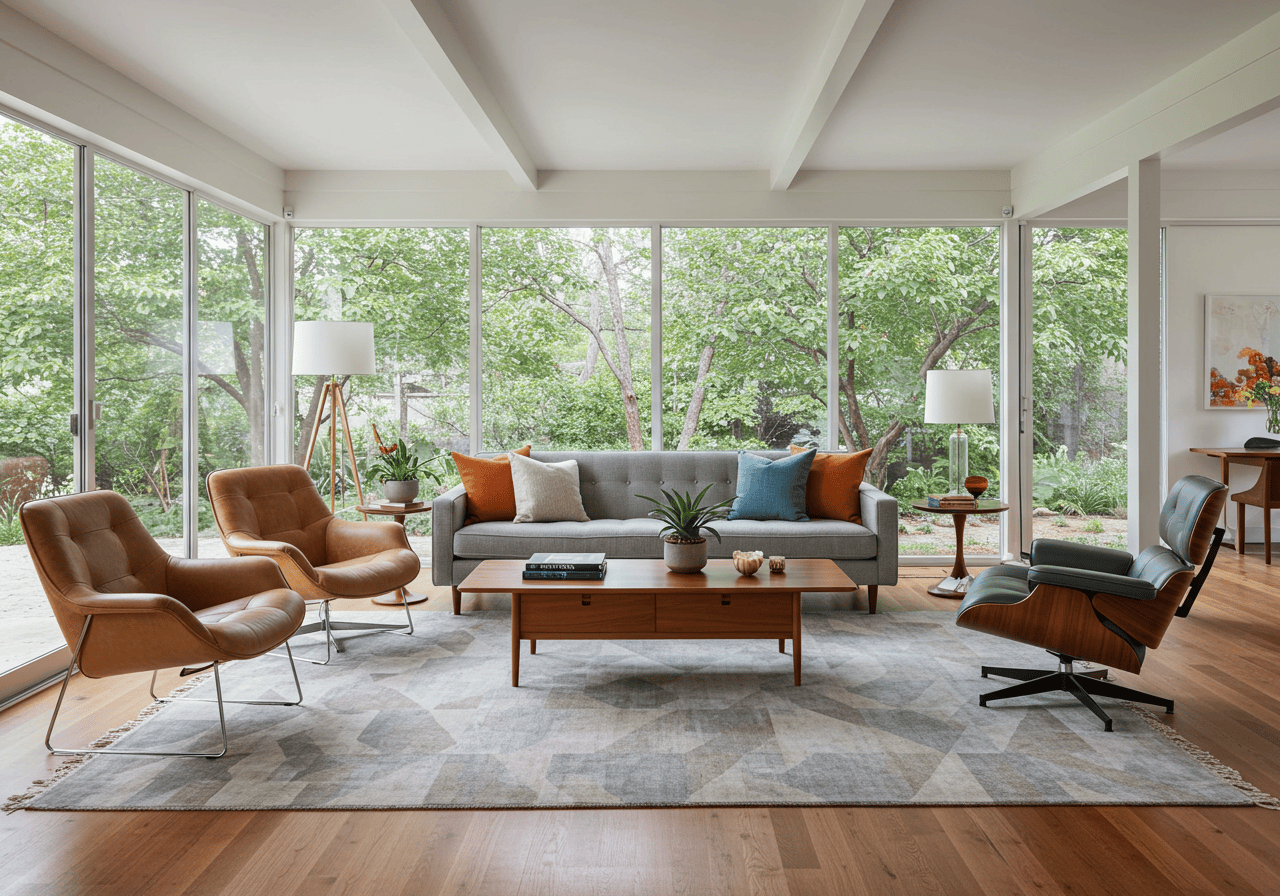
Whether you are working with a cozy rustic living room or a sleek contemporary space, the fabric you put on your windows dictates the mood.
The Golden Rules of Curtain Sizing (Do Not Skip This)
If you take nothing else from this post, please memorize these two rules. They are the gospel of window treatments.
Rule #1: High and Wide
The biggest mistake people make is hanging the rod directly on the window frame. Don’t do it.
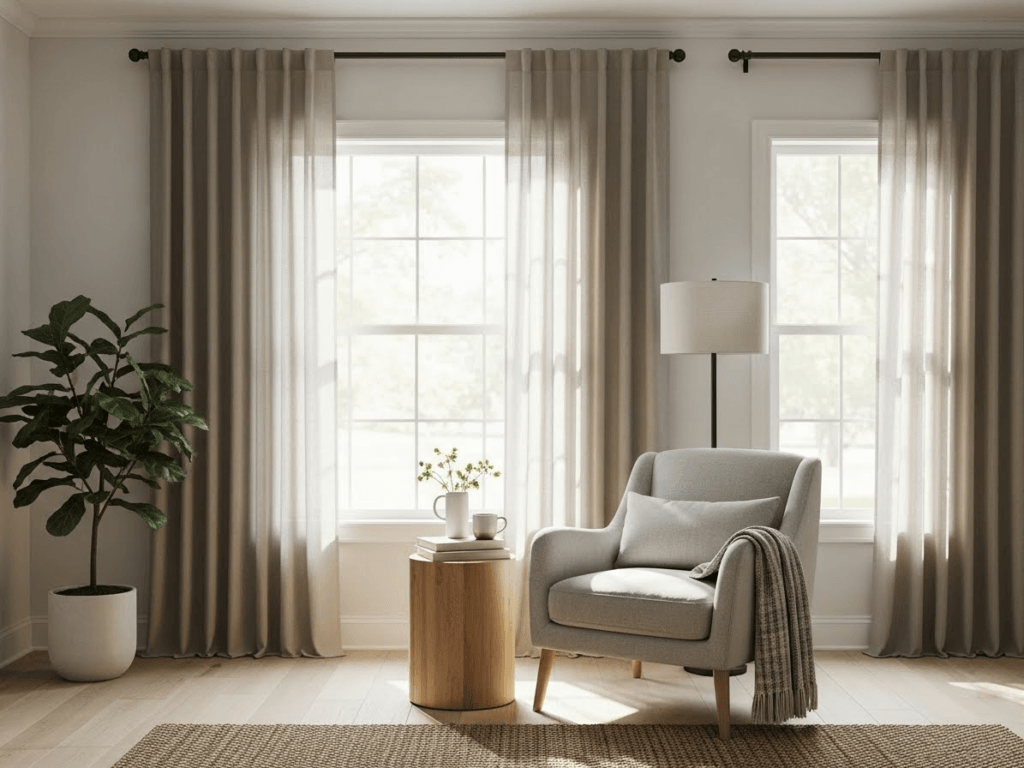
- Height: Mount your curtain rod 4 to 6 inches above the window frame, or even halfway between the frame and the ceiling molding. If you have low ceilings, go as high as possible. This draws the eye up.
- Width: Extend the rod 8 to 12 inches past the window frame on each side. When the curtains are open, they should stack against the wall, not cover the glass. This lets maximum light in and makes the window look massive.
Rule #2: The Kiss or The Puddle
How long should they be? You have two acceptable options:
- The Kiss: The fabric just barely touches the floor. This is clean, modern, and easy to vacuum around. This is best for a Scandi-style living room.
- The Puddle: The fabric has an extra 1-3 inches pooling on the floor. This is romantic and luxurious, but high maintenance (dust bunnies love puddles).
The “High Water” Look: If your curtains stop at the windowsill or hover an inch above the floor, you need to return them. It looks like your room had a growth spurt and its pants don’t fit anymore.

Fabric Matters: Choosing the Right Material
The fabric determines how the curtain hangs (the “drape”) and how long it lasts.
1. Linen & Cotton (The Casual Cool)
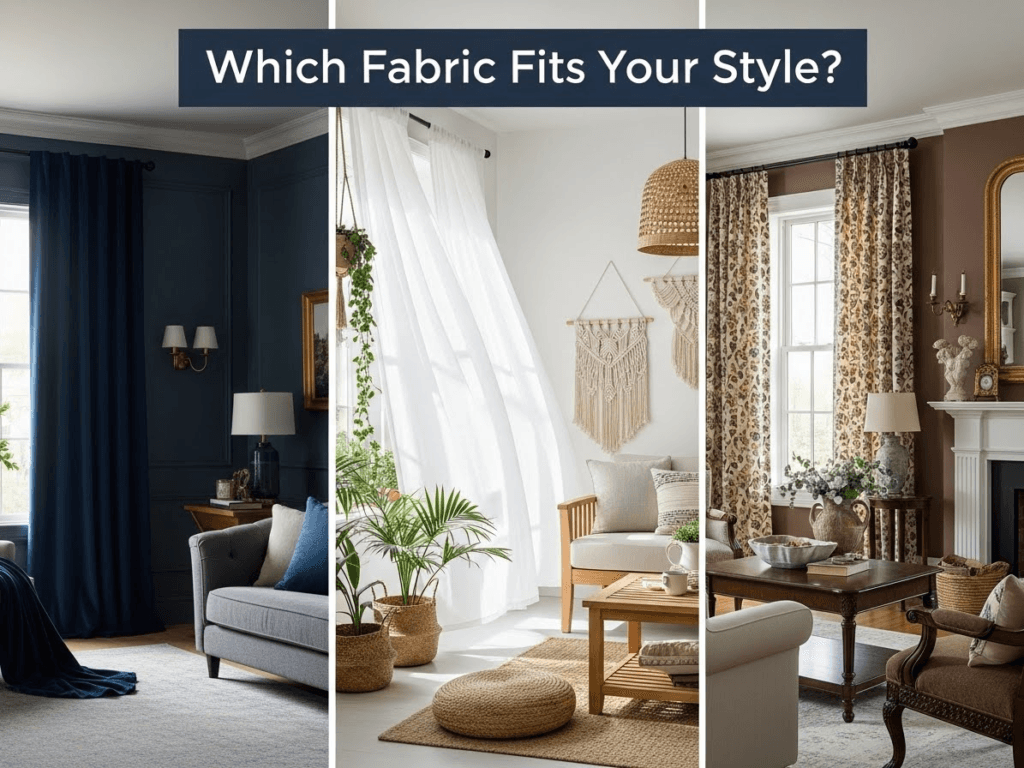
If you want that breezy, effortless vibe, go for linen or a cotton blend. They filter light beautifully rather than blocking it out completely.
- Best For: Mid-century modern living rooms or farmhouse styles.
- Warning: Pure linen wrinkles if you look at it wrong. Look for a linen-poly blend to keep the look without the ironing headache.
2. Velvet (The Drama Queen)
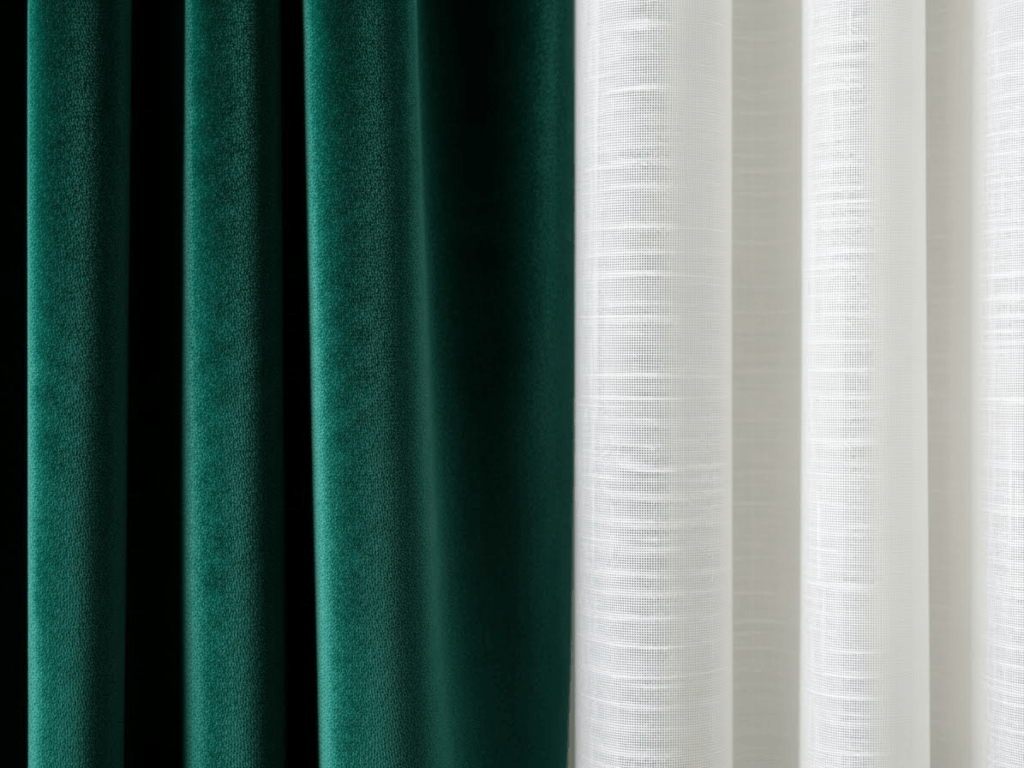
Velvet is heavy, insulates against drafts, and blocks light. It screams luxury.
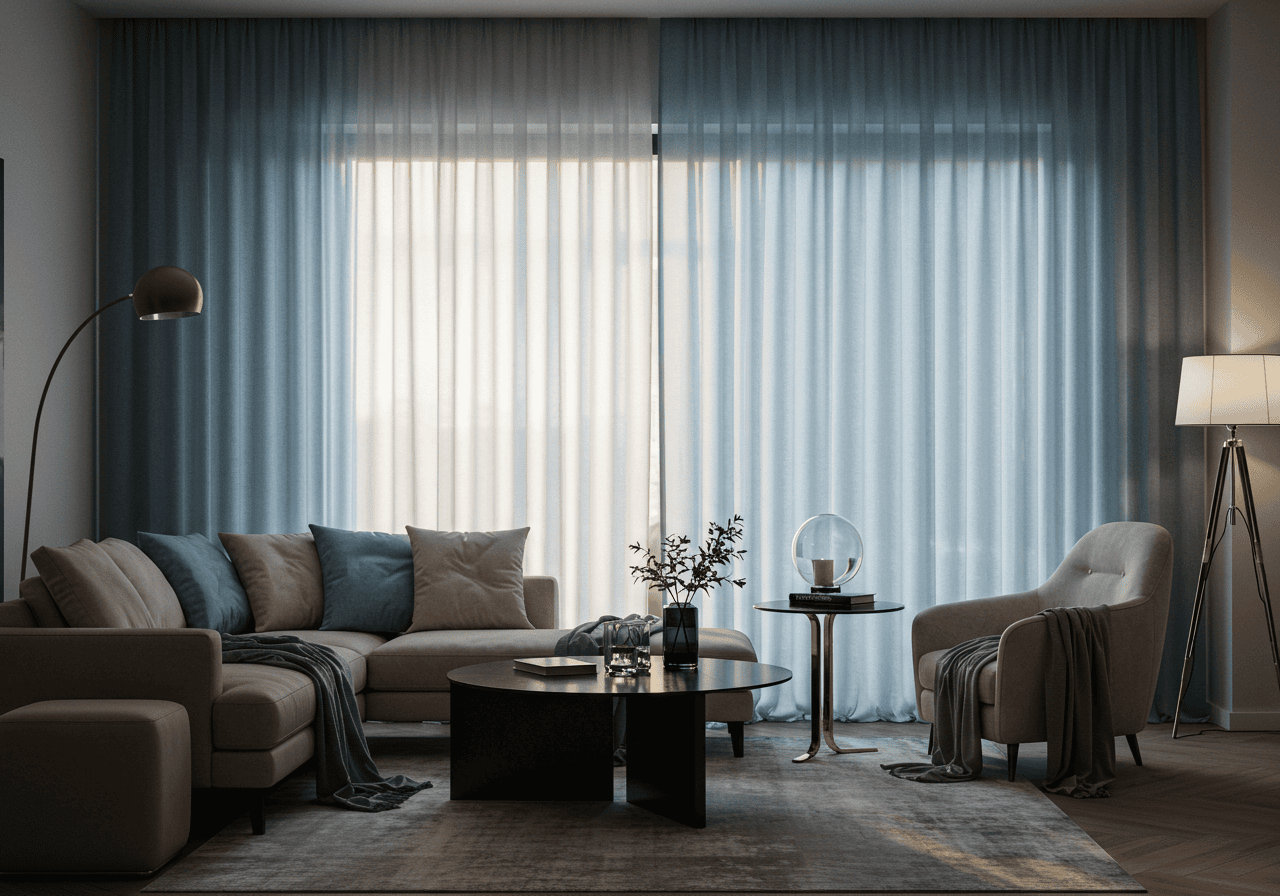
- Best For: A moody luxury living room or a space that needs warmth.
- Style Tip: If you have a grey sofa, try navy or rust-colored velvet drapes to add depth.
3. Sheers (The Light Layer)
Sheers are great for privacy during the day but offer zero privacy at night.
- Best For: Layering under heavier drapes or for dark rooms that need all the sun they can get.
- Pairing: Combine these with a blue couch for a beachy, airy aesthetic.
| Fabric Type | Vibe | Light Control | Maintenance |
| Linen | Relaxed, Airy | Medium (Filters) | Dry Clean usually |
| Velvet | Luxe, Cozy | High (Blackout) | Vacuum/Dry Clean |
| Cotton | Crisp, Clean | Medium | Machine Washable (often) |
| Silk/Faux Silk | Formal, Elegant | Medium | Delicate/Sun damage risk |
Header Styles: It’s All in the Pleats
The “header” is the top part of the curtain that attaches to the rod. It changes the look entirely.
- Rod Pocket: The rod slides through a tube in the fabric.
- My take: Hard to slide open and shut. Avoid this for living rooms unless the curtains stay stationary.
- Grommet (Metal Rings):
- My take: Very modern, very industrial. Sometimes looks a bit “dorm room” if not done in high-quality fabric. Good for a transitional living room if the hardware matches.
- Pinch Pleat: Fabric is gathered and sewn at the top.
- My take: The Gold Standard. It looks custom, expensive, and tailored. Use rings with clips or hooks to hang these.
- Back Tab: Loops of fabric hidden behind the curtain.
- My take: My favorite budget hack. It creates nice folds (like a pleat) without the cost of custom sewing.
Color & Pattern: To Blend or To Pop?
Should your curtains match the wall or stand out?
Option A: The Blender (Monochromatic)
Pick a curtain color that is one shade darker or lighter than your walls. This makes the room feel larger because the eye doesn’t get interrupted. This is perfect for small living room spaces.
Option B: The Contrast (Pop of Color)
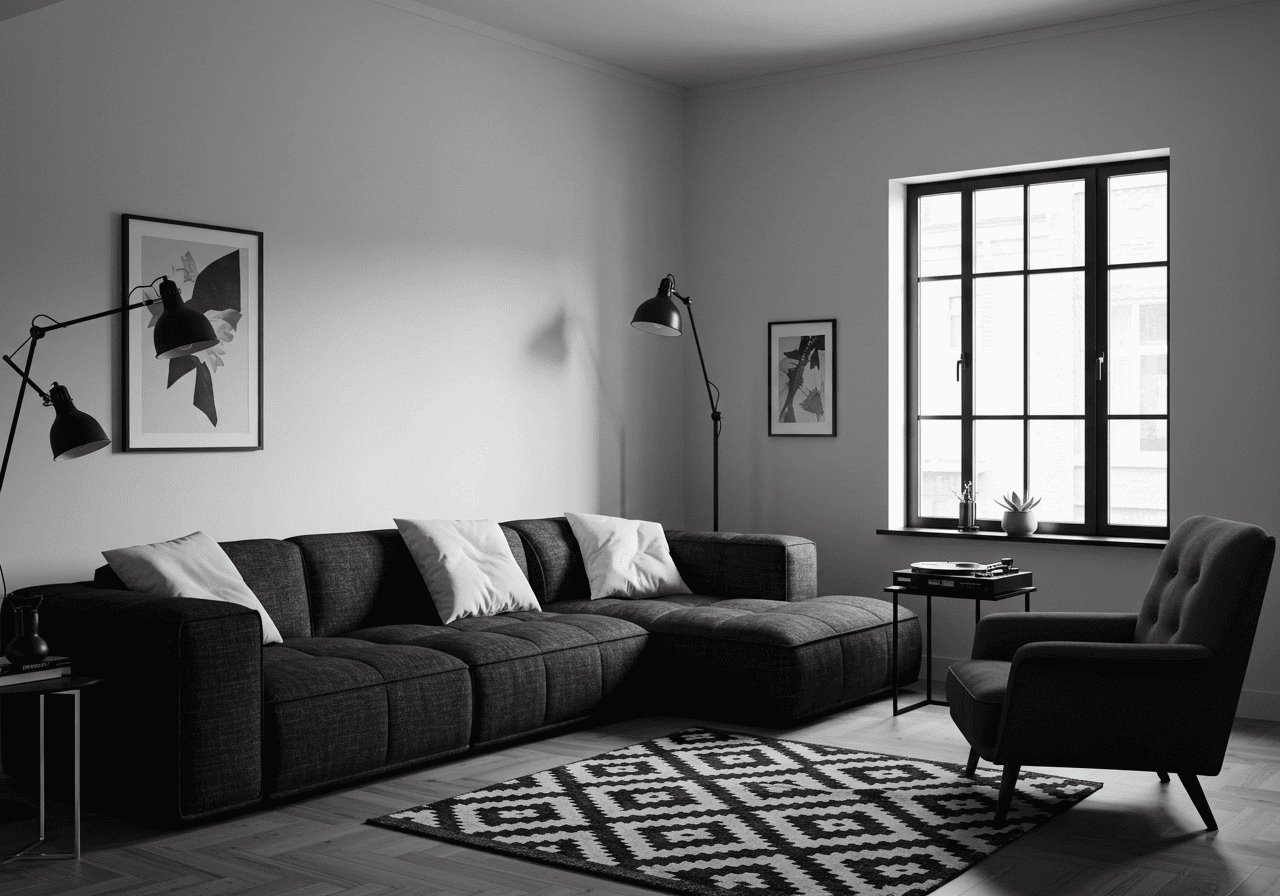
If your furniture is neutral, let the curtains be the art. In a black and white living room, add mustard yellow or deep olive drapes. If you have a dark brown couch, try cream or sage green curtains to lift the heaviness.
Option C: Pattern Play
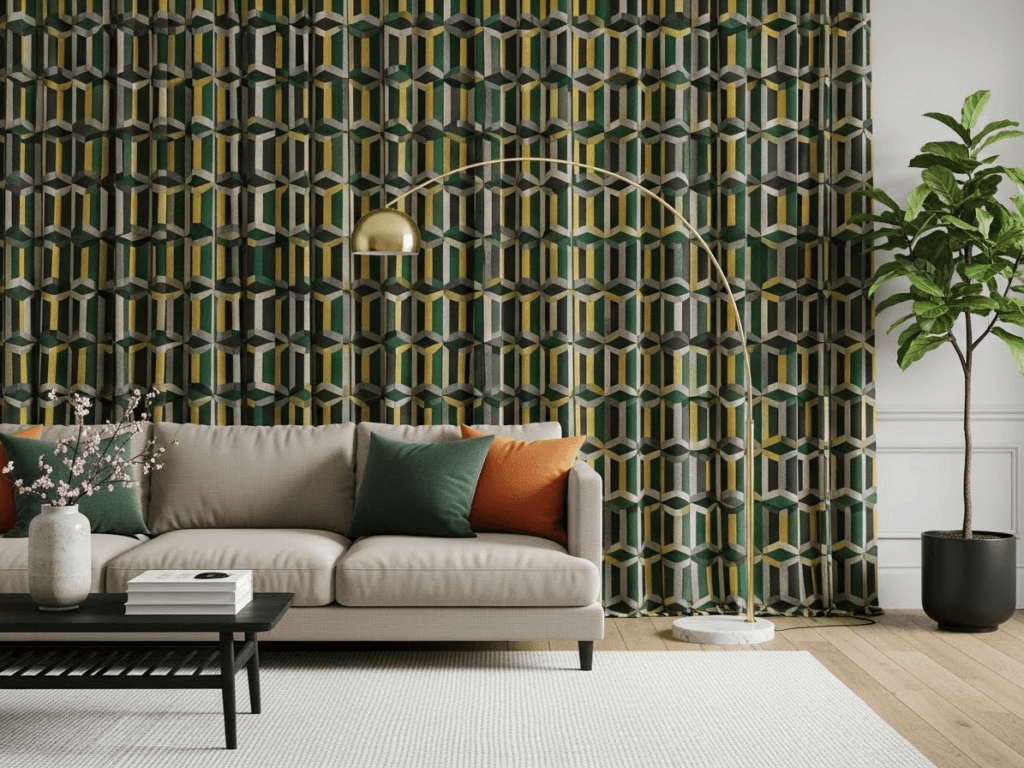
Patterns hide stains (great for kids/pets) but can look busy. If you have a patterned rug, stick to solid curtains. If your rug is solid, go wild with the drapes.
For more inspiration on color pairings, check out our guide on colorful living room ideas.
Expert Tips: The “Secret Sauce”
Here are the little details that separate a DIY job from a designer look.
- The “Train” Trick: When you buy packaged curtains, they will have fold lines. You must iron or steam them. Nothing looks cheaper than grid lines on your drapes. To “train” them to hang in nice folds, fold the curtain like an accordion while it’s hanging, tie a loose ribbon around the middle and bottom, and leave it for two days. When you untie it—perfect pleats.
- Width is King: A standard panel is usually 50 inches wide. That is rarely enough for a standard window. You want the curtains to look full, not skimpy. Aim for the total width of your panels to be 2 to 2.5 times the width of the window. If your window is 60 inches wide, you need 120-150 inches of fabric total. You might need 2 panels on each side.
- For the Renters: If you can’t drill holes, use high-tension rods inside the frame (less ideal visually but functional) OR use “Command” style heavy-duty hooks specifically designed for curtain rods. Alternatively, look for curtain ideas for living rooms that utilize ceiling tracks if you have a concrete ceiling.
FAQ: Common Curtain Conundrums
1. Should living room curtains touch the floor?
Yes. Always. Unless there is a radiator directly under the window that poses a fire hazard, your curtains should touch the floor (The Kiss) or pool slightly. Short curtains are visually jarring.
2. Can I mix blinds and curtains?
Absolutely. In fact, I encourage it. Layering bamboo shades or roman blinds under curtain panels adds incredible texture and gives you better light control. It looks fantastic in rustic modern living rooms.
3. What color curtains make a room look bigger?
Light, cool colors. White, off-white, or soft greys that match the wall color will blur the boundaries of the room. Avoid heavy, dark patterns if you are trying to expand the space visually.
4. How much space should be between the curtain rod and the ceiling?
Ideally, mount the rod as close to the ceiling crown molding as possible (leave about 1-2 inches of breathing room). If you don’t have molding, half the distance between the window frame and ceiling is a safe bet, but higher is usually better.
5. Are grommet curtains out of style?
They aren’t “out,” but they are definitely more casual. If you want a timeless, elevated look, switch to back-tab or pinch-pleat styles. They tend to look more expensive, even if you bought them at a budget store.
Final Verdict
Choosing curtains doesn’t have to be a headache. Just remember: hang them high, make sure they kiss the floor, and don’t skimp on the width.
Whether you are going for a green living room vibe with velvet or keeping it clean with linen, these rules apply. Now, go steam those fold lines out of your panels—I’ll know if you don’t!
Ready to tackle the rest of the room? Check out our other guides to get your home looking like a Pinterest board.